A temple oracle, one hundred verses long
Chinese Fortune Sticks draw one of Guanyin's hundred sticks
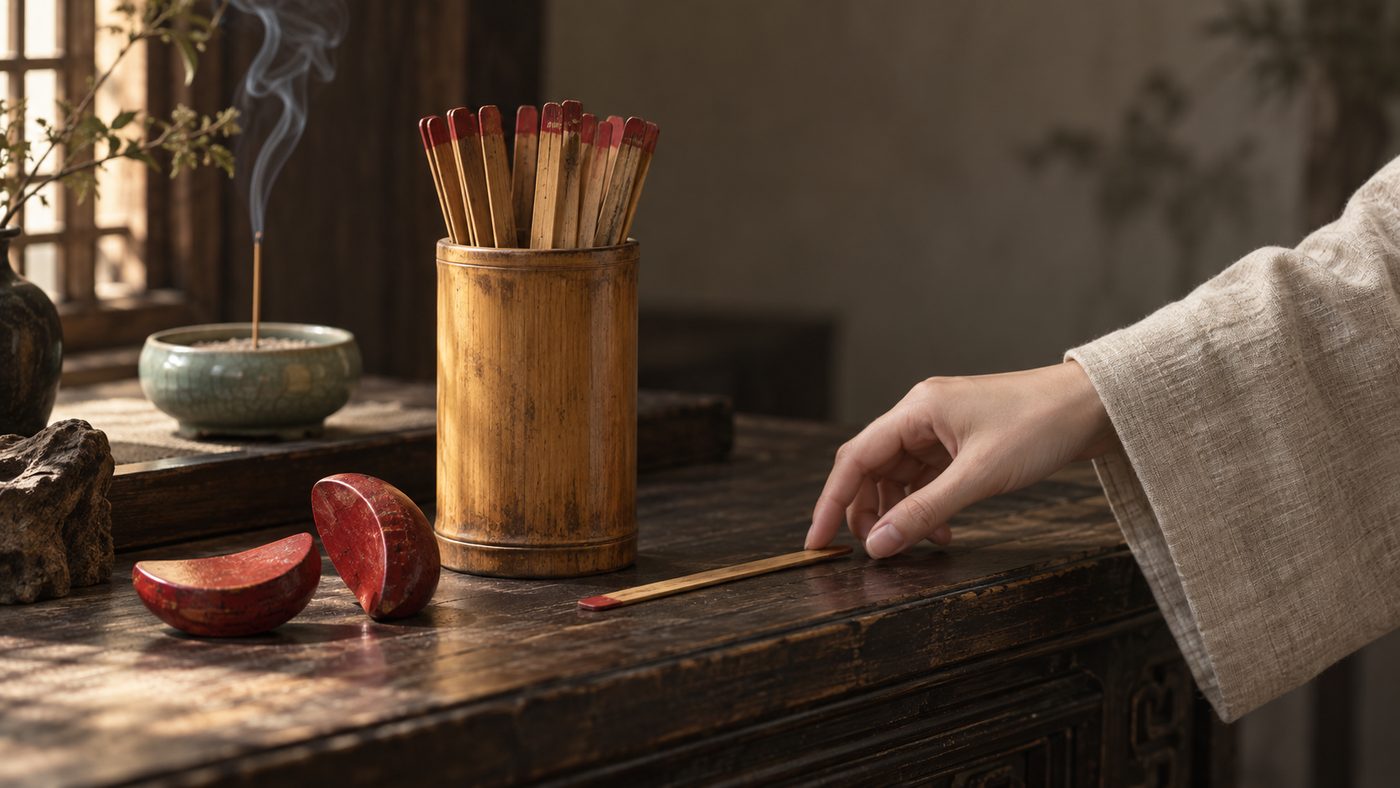
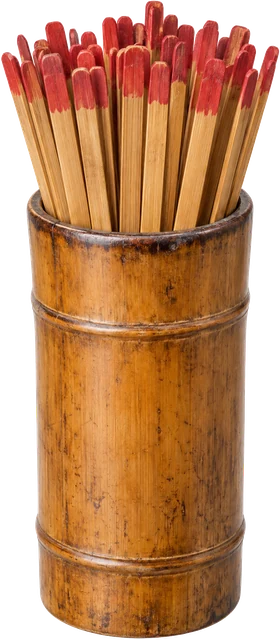
In a Guanyin temple there is a bamboo cup on the altar holding a hundred numbered sticks. You hold one question in mind, tilt the cup and shake it, gently, until a single stick slips out. Then you ask the moon blocks whether that stick is really meant for you. If they agree, its number leads to a four-line verse, and the verse is your answer. Here, Chinese fortune sticks, kau cim in Cantonese, take one click: draw, and read your verse in plain English, all hundred of them. The moon blocks are waiting under the reading if you want the full temple ritual.
One question per stick, as specific as you can make it. Typing it is optional, and it never leaves this page.

How a temple does it
The order matters more than the equipment. At the altar you introduce yourself first, name, birth date and where you live, the way Xingtian Temple in Taipei asks of anyone putting a question to a god, and then you state one matter, not three. BW Monastery in Singapore, which runs these Guanyin draws every day, puts it plainly: one question per lot, and as specific as you can make it.
Then the cup. You kneel or stand, tilt it forward and shake until one stick works its way out; the Donghai temple in Taitung asks you not to shake too hard. The stick is not yours yet. You lay it down and throw the two moon blocks. One flat side up and one round side up is a holy cup, and the stick is confirmed. Both flat is a laughing cup, which Donghai treats as a reason to throw again, and both round is an angry cup, which sends the stick back to the cup. The Mazu temple at Lukang is stricter and sends you back to the cup on a laugh as well. Only after the blocks agree do you take the number to the counter for the printed verse. If you want the blocks on their own, for a plain yes or no, the yes or no oracle throws them three times the way a careful temple does.
All one hundred Guanyin sticks
Every verse in the Guanyin set paints one picture, a carp waiting below the Dragon Gate, a swallow rebuilding a nest of mud, a boat with a fair wind, and the temple's book names it in a single line. Each also carries a grade. In this set 22 sticks are upper, 60 are middle and 18 are lower, so a middle stick, good on conditions, is the most likely draw by far. Drew a Guanyin stick at a temple? Find its number below and open the full reading.
- 1 Pangu Opens Heaven and Earth
- 2 The Carp Not Yet Changed Lower
- 3 The Swallow Carrying Mud Lower
- 4 The Ancient Mirror Made Whole
- 5 Boring the Earth for a Spring Middle
- 6 The Eagle Beneath the Cliff Middle
- 7 Wading Through Mud and Water Lower
- 8 Pines and Cypresses in a Dense Wood
- 9 The Bright Moon in the Sky Middle
- 10 Holding a Lamp to Look for Fire Middle
- 11 Fortune Out of Misfortune
- 12 Fortune Hidden in Misfortune
- 13 Meeting at the Dragon Gate Middle
- 14 The Crane Leaves Its Cage Middle
- 15 Birds Leaving the Wood Middle
- 16 Yin and Yang in Harmony Middle
- 17 A Painted Cake for Hunger Middle
- 18 Yin and Yang Wax and Wane
- 19 A Boat on Rushing Rapids Middle
- 20 First Clear Sky After Long Rain Middle
- 21 Yin and Yang in Harmony
- 22 Sweet Rain After Drought Middle
- 23 Reaching for the Moon's Cassia Middle
- 24 The Fool Whose Road Is Blocked Lower
- 25 An Old Well Finds a Spring Middle
- 26 A Name Without Substance Middle
- 27 A Sound House With Solid Walls Middle
- 28 The Moon Behind Clouds Middle
- 29 The Sword Leaves Its Case Middle
- 30 Keeping to Your Own Place Middle
- 31 Keeping the Old Ways in Peace Middle
- 32 Cutting the Stone to Find Jade Middle
- 33 Jade Within, Searching Without Middle
- 34 The Red Sun Overhead Middle
- 35 Putting Robe and Cap in Order Middle
- 36 The Monkey Slips Its Chain Middle
- 37 A Candle Shaken by Wind Middle
- 38 Mist Over the Moon Lower
- 39 Keeping Still and Steady Lower
- 40 Yin Rises as Yang Wanes Middle
- 41 Taking a Thief for a Son Middle
- 42 Heaven Sends Down Its Grace
- 43 Heaven and Earth in Harmony
- 44 Meeting a Match at Chess Middle
- 45 Kindness and Good Deeds
- 46 The Withered Tree Blossoms Middle
- 47 Adding Flowers to Brocade
- 48 The Small Bird Becomes the Roc Middle
- 49 Water Freezing Into Ice Middle
- 50 Sailing With a Fair Wind Middle
- 51 Everyone Suffering the Heat
- 52 Fishing for the Moon in Water Middle
- 53 The Dragon Roars, the Tiger Howls Middle
- 54 Finding Treasure in a Dream Lower
- 55 Bamboo Pipes Carrying Spring Water Middle
- 56 A Boat Through Shallow Rapids Middle
- 57 A Child Finds Its Mother Middle
- 58 Keeping the Old and Waiting Middle
- 59 Holding Steady Until the Time Comes Middle
- 60 Carrying Firewood to Fight a Fire Lower
- 61 Keeping the Old, Moving With Time Middle
- 62 Hidden Protection of Gods and Buddhas Middle
- 63 Searching the Sea for a Needle Middle
- 64 The Fish Caught in a Net Lower
- 65 Cutting Flesh to Patch a Sore Lower
- 66 A Broken Boat Down the Rapids Lower
- 67 A Heart Level and Upright
- 68 Good Fortune at the Gate Middle
- 69 The Plum Blossom Takes First Place Middle
- 70 The Bee Gathering Nectar Lower
- 71 One Bow, Two Arrows Middle
- 72 Keeping Bees, Seeking Sweet, Finding Bitter Middle
- 73 Spring Thunder Wakes the Insects
- 74 A Swan Flying Into a Cage Lower
- 75 Carrying a Tiger Over the Mountain Middle
- 76 Fish Not Yet Turned Dragon Middle
- 77 Finding Treasure in a Dream Middle
- 78 Doing Things Plainly and Well
- 79 Trust the Real, Not the Empty Middle
- 80 A Patron Leads You In
- 81 The Parasol Tree Drops Its Leaves
- 82 The Lotus Born in Fire Middle
- 83 The Moon Not Yet Full Middle
- 84 The Cold Fish Out of Water Lower
- 85 Flowers Bloom Again After Spring Middle
- 86 Audience With the Emperor
- 87 Panning Sand to Find Gold Middle
- 88 The Wooden Tiger at the Gate Middle
- 89 Treasure Hidden in Stone
- 90 Rank and Honor Achieved
- 91 A Bright Road Ahead Middle
- 92 Trading Since Childhood
- 93 The Phoenix in the Rain Middle
- 94 Meeting the One Who Understands Lower
- 95 Ambition and Honors Middle
- 96 Blessing and Virtue Revealed
- 97 Lighting a Candle in the Wind Middle
- 98 Keeping to the Old Ways Lower
- 99 Half Worry, Half Joy Lower
- 100 Holding Still and Waiting Lower
Two books, one hundred verses, and very few exact matches
Here is something the sites that print these verses rarely mention: there is no single official text. The Guanyin set has been copied from temple to temple and printed by many hands, and the copies drift. We took two published editions of the hundred verses and compared them line by line. Only 3 of the 100 verses matched exactly. Of the 400 lines, 115 matched character for character. And 24 sticks had a different grade, with one edition using a fourth, "two-sided" grade the other does not have at all.
The drift is rarely in the picture. The second verse is a carp in one book and a whale in the other, but both are waiting in the river for their moment; the ninety-ninth is a reckless rider and a house on fire in both, in different words. So the meaning of a stick survives the copying better than its wording does. The verses on this page follow the edition used by a working Guanyin temple, BW Monastery in Singapore, which also matched a third copy we checked; every English line is our own.
Where the sticks come from
Drawing a numbered lot and reading a verse is old. One of the earliest known sets is the Tianzhu lingqian, literally the numinous lots of India, from the Southern Song dynasty (1127 to 1279). Its verses crossed to Japan and still stand behind the hundred-verse fortunes sold at temples there as omikuji. The Guanyin set used in Chinese temples today is a different book, of seven-character verses, and no source we could check records who first compiled it or when.
Why Guanyin? Because in Chinese folk practice she is the default: the figure on the shelf in the restaurant and the taxi, the one people turn to first. Her full story, from a male Indian bodhisattva to the figure people turn to first, is on our Guanyin page.
Questions people ask
How do Chinese fortune sticks work?
You hold one question in mind and shake a bamboo cup of numbered sticks, tilted forward, until a single stick slips out. Then you throw two moon blocks to ask whether that stick is really yours: one flat side up and one round side up, a holy cup, confirms it. The number leads to a four-line verse, and the verse is the answer. In Cantonese the practice is called kau cim, in Mandarin qiu qian.
What does my fortune stick number mean?
Only what it points to in that temple's set of verses. A number is an index, not a meaning, and different temples use different sets, so stick 37 at a Guanyin temple and stick 37 at a Wong Tai Sin temple are different verses. The list on this page is the Guanyin set of one hundred; many Guanyin temples use it, though editions vary in wording.
What is a lower stick, and should I worry?
Each Guanyin verse carries a grade: upper, middle or lower. In this set 22 sticks are upper, 60 middle and 18 lower, so about one draw in 6 is a lower stick. The temples that run these draws say to read an unlucky one with an open mind, as a prompt to reflect and change course, and to stay grounded after a lucky one. A verse warns; it does not sentence.
Can you draw fortune sticks online?
You can simulate the draw, which is what this page does, and some temples run online draws themselves; the Mazu temple at Lukang in Taiwan asks you to confirm an online stick with the blocks, the same step offered under every reading here. The randomness on this page is real and every stick is equally likely. Whether a bodhisattva is listening to a browser is a question for your own beliefs.
Can I draw again if I do not like my stick?
Temples discourage it. The stick has already been confirmed by the blocks, and asking the same question over and over until a better verse turns up is treated as both disrespectful and pointless, since a second draw is only a second draw. Ask a different question, or come back to the same one after some time has passed.
Why do Guanyin fortune stick verses differ between websites?
Because the set has never had one official text. We compared two published editions of the hundred Guanyin verses line by line: only 3 of the 100 verses matched exactly, 115 of the 400 lines matched character for character, and 24 sticks had a different grade. Most differences are a word or a phrase, with the same picture in each verse. This page follows the edition used by a working Guanyin temple, BW Monastery in Singapore.
Keep going
- Yes or no oracle The moon blocks on their own: three throws, a straight answer.
- Guanyin The bodhisattva of compassion, and how she became everyone's first call.
- Mazu The sea goddess whose temples confirm every stick with the blocks.
- Chinese horoscope today Not a question but a day: where your sign stands with today's almanac page.
- Cast your chart For questions of timing, the reading that knows your years.
Sources
- BW Monastery (吉祥宝聚寺), Singapore, "Guanyin Lots": the book of 100 lots (verse, grade, verdict) and the temple's FAQ on asking and on ominous lots. Base text for every verse here
- Master Sean Chan, "Guanyin Oracle": a second published edition of the 100 verses, compared line by line
- Wikipedia, "O-mikuji": the Southern Song Tianzhu lingqian (1127 to 1279) behind Japan's hundred-verse temple fortunes
- Donghai Longmen Tiansheng Temple, Taitung (台東東海龍門天聖宮), fortune-stick procedure (求籤流程): drawing, and confirming the stick with the blocks
- Lukang Tianhou Temple (鹿港天后宮), drawing a fortune stick (求籤): a laughing or angry cup sends you back to the cup
- Xingtian Temple, Taipei (行天宮), "Throwing the blocks" (擲筊): introducing yourself, one matter at a time, not asking the same thing again at once
- 50th National Primary and Secondary School Science Fair (Taiwan), entry 030408: 3,031 measured throws of the blocks, the source of the odds used here