Guanyin fortune stick

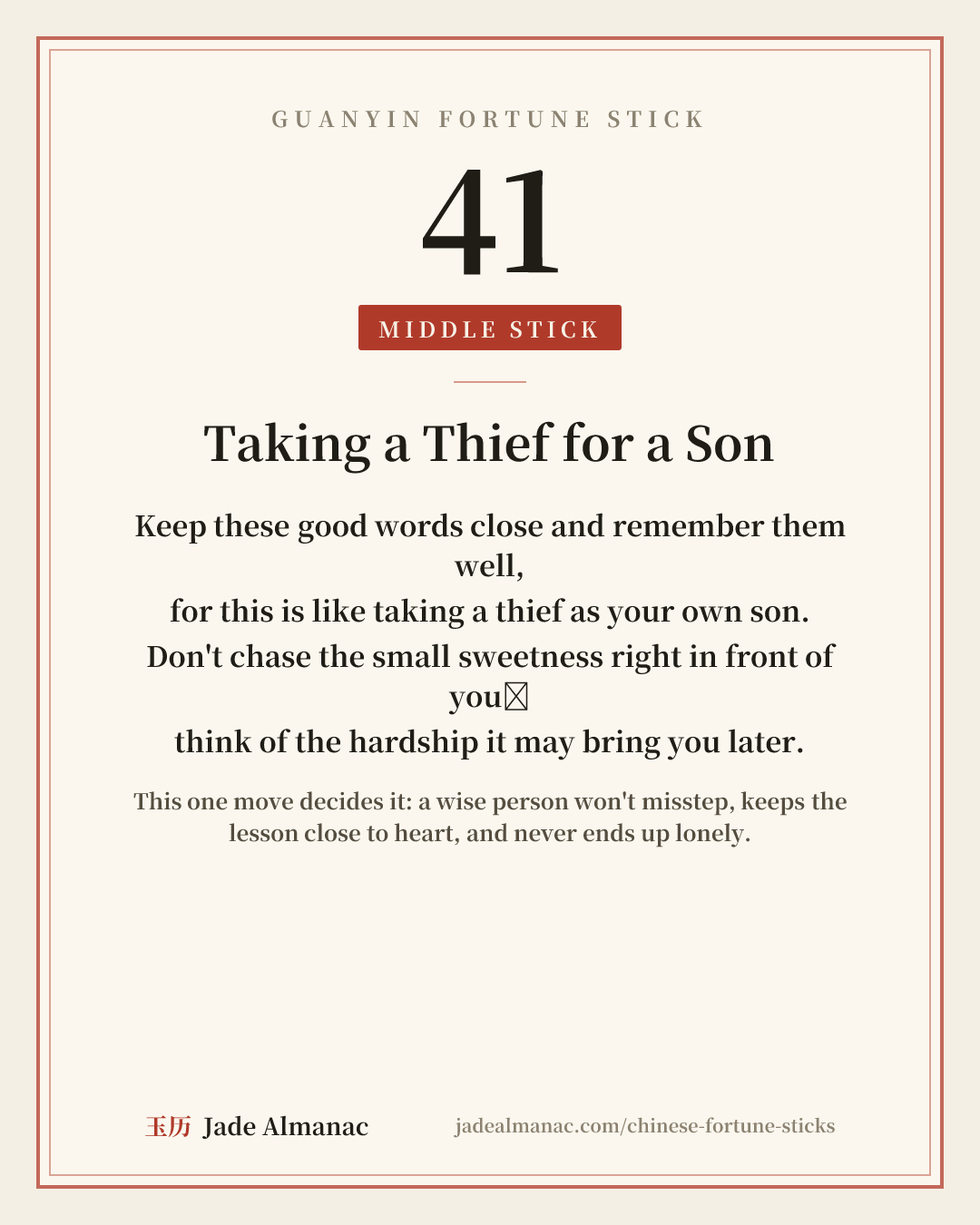
41

Middle stick

Guanyin fortune stick 41: Taking a Thief for a Son

Keep these good words close and remember them well,
for this is like taking a thief as your own son.
Don't chase the small sweetness right in front of you;
think of the hardship it may bring you later.

jadealmanac.com

Save image

The verdict
This one move decides it: a wise person won't misstep, keeps the lesson close to heart, and never ends up lonely.
What it says to you
Someone or something close to you may not be what it seems. The image is stark: raising a thief as your own child, giving trust and a place at your table to what will rob you. The poem's warning is about sweetness. Whatever is tempting you right now feels good today, and that is exactly why you should look at it twice. Ask what it costs later, who benefits, and whether the story holds up. The stick doesn't say disaster; it says check before you adopt. Pick the one offer, person or habit you have been waving through, and test it this week.

Matter by matter

Love
Not a match yet; look closely before trusting.
Money
Hold what you have and wait for a better moment.
Work and study
Move carefully; this is no time to push ahead.
Health
The stick points to prayer and offerings; keep up your care.
Home
Unsettled at home; watch what you let in.
Travel
The traveler has already arrived.
Lost things
Unlikely to be found.

The story behind the stick

Lot 41 points to Dong Zhuo, the warlord who seized the Han court at the end of the second century. Wanting a bodyguard no one could match, he won over the fierce Lu Bu with gifts, including, in the novel's telling, the famous horse Red Hare, and took him as an adopted son. Dong also hoarded grain and treasure in his fortress at Mei, planning a comfortable old age. The alliance turned on him. Lu Bu, already estranged and drawn into a plot by the minister Wang Yun, killed Dong Zhuo in 192. One edition names the story for the fortress hoard, another for the adoption. Either way it is the thief taken as a son. The grade stays middle because the warning comes in time.
Line by line

  1. Keep these good words and remember them. Readers take the opening as the stick flagging its own importance: what follows is a warning meant to be carried, not skimmed.

  2. Taking a thief as your own son is the central image. Temple readers read it as misplaced trust, giving a close place to someone or something that will turn against you.

  3. Don't crave the little sweetness in front of you. Readers take the line as a caution about flattery, easy money or tempting offers whose real cost comes later.

  4. Think instead of the hardship in years to come. Readers read the closing line as the test to apply: judge a present pleasure by what it will cost down the road.

The original verse

无限好言君须记
恰如认贼作为子
莫贪眼下有些甜
更虑他时还受苦

Seven characters a line, as printed in the BW Monastery edition.

Sources for the story: https://www.sheup.org/constellationmatch/guanyinlingqian/guanyin41.htm; https://www.masterseanchan.com/guanyin-oracle/lot-41/; BW Monastery Singapore, Guanyin lots (base text); Records of the Three Kingdoms, biography of Dong Zhuo.

Optional: the temple way

At a temple the stick is not yours until two moon blocks agree: one flat side up and one round side up, a holy cup.

About stick 41

Is Guanyin stick 41 good or bad?

Stick 41, "Taking a Thief for a Son", is a middle stick, a mixed stick, good with conditions. This one move decides it: a wise person won't misstep, keeps the lesson close to heart, and never ends up lonely.

What does Guanyin stick 41 say about love?

Not a match yet; look closely before trusting.

What does Guanyin stick 41 say about money?

Hold what you have and wait for a better moment.

What does Guanyin stick 41 say about work?

Move carefully; this is no time to push ahead.

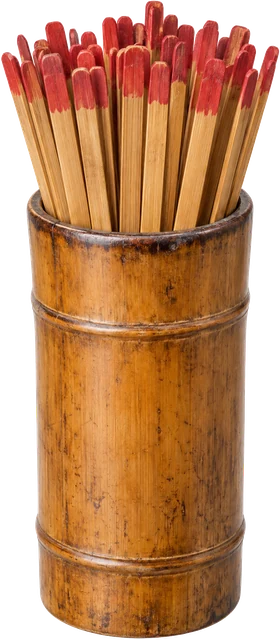
A bamboo fortune-stick cup

Draw another stick , or for a straight yes or no, throw the moon blocks

The verse follows the BW Monastery edition of the Guanyin set; the English rendering and reading are Jade Almanac's own. A drawn stick is a tradition and a prompt for reflection, not advice about health, money or the law.

Stay in the loop.

Chinese mythology, the zodiac, and the meaning behind names and symbols, rooted in the classics and read back to you. No spam. Unsubscribe anytime.