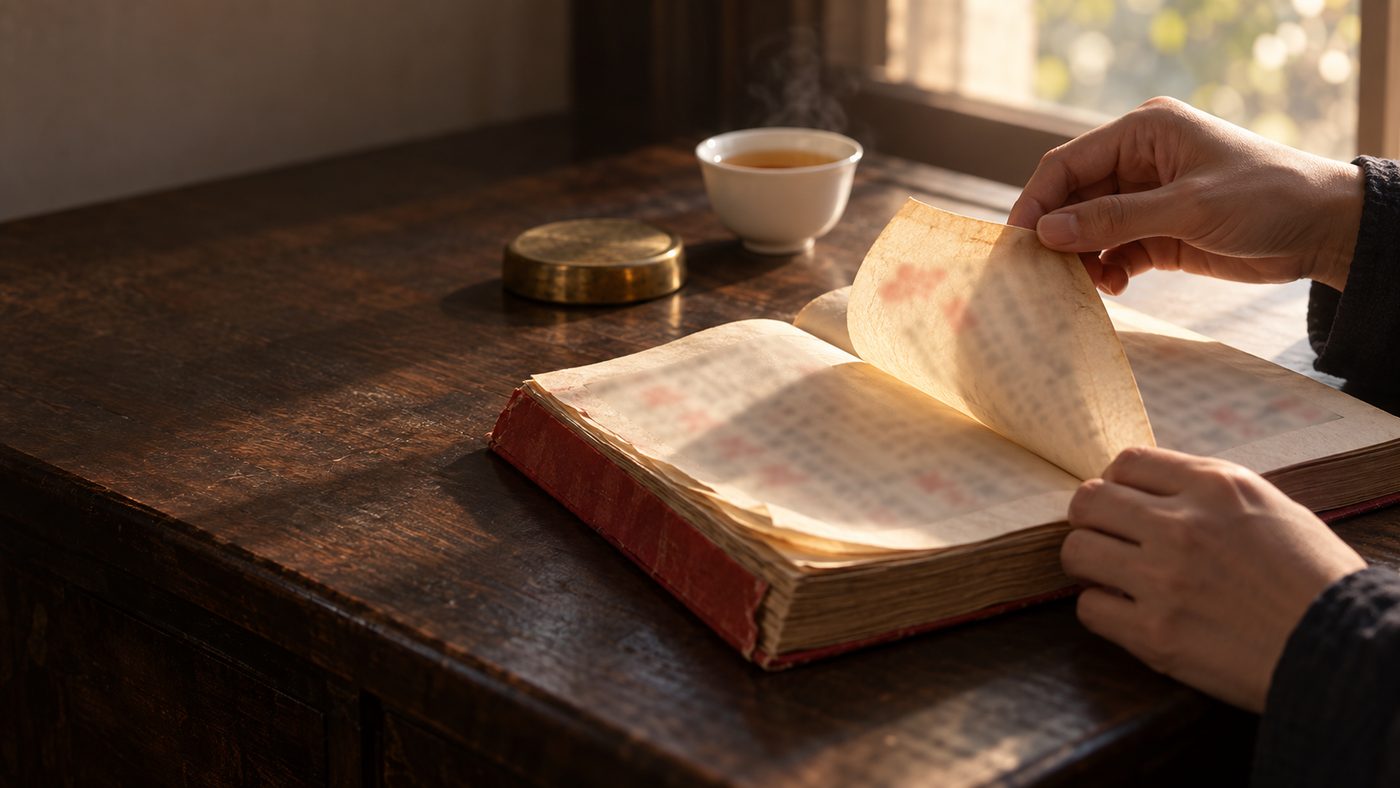
In December 1975, in a Qin tomb at Shuihudi in Hubei, archaeologists found the library
of a county clerk named Xi, over eleven hundred bamboo slips, buried with him in a grave
that his own chronicle dates to no earlier than 217 BC. Among them were two texts the
excavators called daybooks: 166 slips by his head and 257 by his feet, sorting days into
those suited and unsuited to marriage, travel, building and burial. That is the verdict
layer of the almanac, and it predates paper and printing.
The twelve words that still head the verdict on every leaf are in a text from 139 BC.
The Huainanzi, in its chapter on the patterns of heaven, runs through the
twelve branches and assigns each a word: the third branch is Establish, the fourth
Remove, then Full, Level, and so on through Break, Danger and Complete to Open and
Close, with a note on what each group governs. In the sentence just before it, the
same text places the Vermilion Bird, the Hooked Array, the Dark Warrior, the White
Tiger and the Azure Dragon around the sky. Those five are, with seven others, the day
spirits of the modern almanac. Both rows of the leaf you can buy this year were on the
page two thousand one hundred years ago.
Then the almanac met printing, and printing met the state. The Old Book of Tang
records that on a day in the twelfth month of 835, a few weeks after the Sweet Dew
Incident had left the palace full of executed ministers, the court found time to order
that no prefecture might privately keep printing blocks for calendars. The calendar was
the emperor's to issue; it said when the year began and what each day was for, and a
private printer selling it early was selling the emperor's authority. It is the earliest
order regulating printing on record in China, and it is about the almanac. By 1328 the
Yuan state was printing over three million copies a year of its own.
The verdict layer was finally standardized in 1739, when the Qianlong emperor, the same
one whose name changed the book's title, ordered a compendium on day selection. The
Xieji Bianfang Shu ran to thirty-six volumes, threw out the contradictory
spirits and folk rules that had accumulated, and became the rulebook that every private
almanac house has reprinted, under its own shop name, ever since.
Shuihudi: Chinese Wikipedia on the find, 1,155 slips and 80 fragments, the two daybooks
of 166 and 257 slips, the chronicle ending in 217 BC. Day-officers and beasts:
Huainanzi, Tianwen, read on Wikisource. The 835 order: Old Book of Tang,
juan 17b, twelfth month of Taihe 9, read on Wikisource. 1328 and the 1739 compendium:
Chinese Wikipedia, Huangli and Xieji Bianfang Shu.