Feng Shui
Feng shui, personalized to you
Feng shui (风水) is the Chinese practice of siting and arranging buildings and rooms by landform and compass direction so that qi, the tradition's word for the moving energy of a place, gathers rather than scatters. The name means "wind and water" and comes from a line in the Book of Burial, the classic attributed to Guo Pu: qi rides the wind and disperses, and stops when it meets water. On this site the compass side is computed, not copied: your favorable directions come from your birth year, the annual charts from the calendar, and when a rule is a modern add-on rather than a classical one, the page says so.
This year's compass
Feng shui 2027: the flying star chart, sector by sector
The annual chart moves every February: where the Tai Sui sits, which sector not to dig in, where the wealth star and the illness star land, all computed from the calendar. Still in 2026? The 2026 chart is here too.
What is feng shui? The meaning of the word, and of the practice
Feng shui is the Chinese practice of siting and arranging places so that they work with the way energy moves through them rather than against it. It began as a method for choosing ground: where to put a grave, a temple, a capital, a house. Applied to a home today it decides which way a building faces, where the door opens, where the bed and the desk go, and which compass directions suit the particular person living there. It is a design and orientation discipline, roughly two thousand years old, and it is still in daily professional use across the Chinese-speaking world.
The literal meaning of feng shui is "wind and water", and the two words are not decorative. They come from the sentence that gave the discipline its name, in the Book of Burial, which says that qi rides the wind and scatters, and halts when it meets water. Wind disperses; water gathers and holds. Everything the practice does follows from that one pair of verbs, which is why so much of it is about drafts, sightlines, and what stops a current from running straight through a room. The passage is quoted in full, with its commentary, on the living room page.
Two things feng shui is not. It is not a religion, and no Chinese tradition asks you to believe anything to use it. And it is not a decorating style: the classical material is overwhelmingly about placement and direction, which cost nothing, rather than about objects you are meant to buy. When a rule on this site belongs to the modern commercial layer instead, we say so on the page where it appears.
Two feng shui traditions, and which one this is
Feng shui splits into two old branches. The form school reads the physical landscape: the shape of hills and water, what sits behind a building and what opens in front of it. It is the older instinct, and most of it survives in advice you already half know, like not putting your back to a door. The compass school came later and works in directions, using a ringed instrument called a luopan to divide a site into eight directional zones, each carrying a different quality.
This site works the compass side, using a classical method called Eight Mansions. That choice is what makes the advice here personal: your directions are computed from your birth year, so two people in the same apartment can correctly get different answers.
Your four good directions, in one paragraph
Eight Mansions turns your birth year and sex into a single number from 1 to 9, the kua number. That number maps to a trigram, and the trigram hands you four favorable directions and four unfavorable ones, ranked. Everyone lands in one of two halves: the East group (kua 1, 3, 4, 9), whose good directions are north, south, east and southeast, or the West group (kua 2, 6, 7, 8), whose good directions are the other four. One group's best direction is the other group's worst, which is the tradition's honest answer to why a room can suit one person in a couple and not the other.
The full grid, all eight kua numbers against all eight directions, is on the kua number calculator, derived from the trigram transformations rather than copied off a chart. If the question is a move, where should I move sets your good directions against the axis the year closes. Where the kua number itself comes from, and why the birth-date "Lo Shu grid" calculators are not Chinese, is on Chinese numerology.
How to actually take a direction reading
Knowing your four good directions is useless until you can find them in the room you are standing in, and this is the step most English-language feng shui skips entirely. The traditional instrument is the luopan, a magnetic compass ringed with concentric bands of formulas. The magnetic part matters: because the tradition was built on a magnetic needle, magnetic north is the north it means. You do not need to correct to true north, which saves you the one adjustment people most often get wrong.
- Use the compass app on your phone. It is a magnetometer, which is the same instrument the luopan is built around. For domestic purposes it is accurate enough.
- Get away from metal and motors. Refrigerators, radiators, laptops, speakers, steel door frames and reinforced concrete all pull a magnetic needle. Take the reading in the middle of the room, hold the phone flat at waist height, and if the number swings as you move a step, trust none of it and move further from the wall.
- Decide what you are measuring. For sleep, stand at the foot of the bed and read the direction your head points when you lie down. For a desk, read the direction you face when seated. Directions in this system are about orientation, not which corner the furniture occupies.
- Take three readings, a step apart. If they agree within a few degrees, use the average. If they do not, you are standing near something ferrous and the room is lying to you.
One clarification worth having early, because it causes most of the confusion online: the direction a building faces and the direction you face are two different measurements used by two different methods. Eight Mansions, the system on this site, works from your personal directions. If a source starts talking about the facing of the whole house, it has switched to a different technique, and the two sets of advice will not agree.
Classical, or invented for the Western market?
Worth knowing before you follow anything you read elsewhere. Eight Mansions is a classical compass-school method with a long textual record. A great deal of what circulates in English is not: laying a bagua grid over your floor plan aligned to the front door, and the fixed color-per-corner advice that travels with it, belongs to Black Sect feng shui, a twentieth-century Western adaptation that is categorized even by its own name as a modern method rather than a classical one.
We are not going to tell you the modern version is worthless. We will tell you it is a different system, that mixing the two produces advice that contradicts itself, and that when a rule on this site is a later addition rather than a classical one, it says so on the page.
The feng shui rules, sorted by how old they are
Every feng shui page you will meet hands you a list of rules. Almost none of them tells you which layer of the tradition each rule came out of, which is the one thing that decides how much weight it deserves. Some of these are in Chinese manuals hundreds of years old. Some are practitioner habit. One of the most famous is younger than the television, and another has only been taught anywhere since the 1970s. Here is the sorting, with the full argument for each on the page it links to.
| The rule | Which layer it comes from | Where we cover it |
|---|---|---|
| Never let the front door line up with a window or a back door | Old. Form school, and Taiwanese practitioners still list it first among the door taboos | Living room |
| A solid wall behind the headboard, the door in view but not in line with you | Old, and practitioners rank it above the compass. If a room allows one fix, this is it | Bedroom |
| The stove must not be visible from the front door | Old, and quotable: a maxim from the Qing manual The Three Essentials of the Yang Dwelling | Kitchen |
| Point the head of your bed toward one of your four lucky directions | Split. Eight Mansions is genuinely classical, but the classical manual barely discusses room interiors, so aiming beds by it is a modern extension | Bedroom |
| No mirror facing the bed | Practitioner convention, not classical text. The old books concerned themselves with doors and orientation | Mirrors |
| No spiky plants in a bedroom or facing a seat | Modern practitioner convention. The classical texts have no opinion on windowsill succulents | Plants |
| Keep the television off the room's wealth spot | Younger than the television, by definition. Reasonable form-school logic applied to a modern object | Living room |
| The wealth corner is the far back-left square of your floor plan | Recent, and from a different school. Black Sect feng shui, taught in the United States only since the 1970s. Chinese households use the corner diagonally opposite the living room door instead | Wealth corners |
| Put a fish tank in the wealth corner to make money flow | Backwards. Chinese lists of that spot's taboos put water first, because the spot is supposed to stay still | Wealth corners |
| Lay a bagua grid over the floor plan, aligned to the front door | Recent, and a different technique from the compass method the rest of this site uses. Mixing the two produces contradictory advice | Bagua map |
Notice the pattern. The oldest rules are almost all about lines of sight, structural support and where a doorway points, and every one of them is free to act on. The rules that ask you to buy something, or to place a specific object in a specific square, are the recent ones. That is not a coincidence, and it is the single most useful thing to know before you follow any feng shui advice, including ours.
Room by room
Two rooms carry most of the tradition's attention. The living room is the home's bright hall, the space where arriving energy is meant to gather, which is why Chinese practice cares so much about its light and about anything running straight through it. The bedroom is where your personal directions matter most. One guide sits above the rooms rather than beside them: the whole house, which is where the building's own sitting direction gets read and every sector of the plan gets sorted before a room is touched. The rest cut across every room: color, plants, the wealth corner, and the map itself.
2027
The full 2027 flying star chart, sector by sector: 9 Purple in the center, Five Yellow north, Tai Sui southwest, wealth star southeast. The honest guide.
Read the guide
Crystals
Crystals are a modern Western layer, not classical feng shui. What the tradition really says about stone, where jade fits, and how to place stones by direction.
Read the guide
Numbers
Lucky and unlucky numbers in feng shui come from two systems: the modern homophones, and the classical Luoshu square. Which one your house number is in.
Read the guide
Whole house
Feng shui house design starts with the building's sitting direction, not the front door. The eight house types, the sectors each one favors, and what to avoid.
Read the guide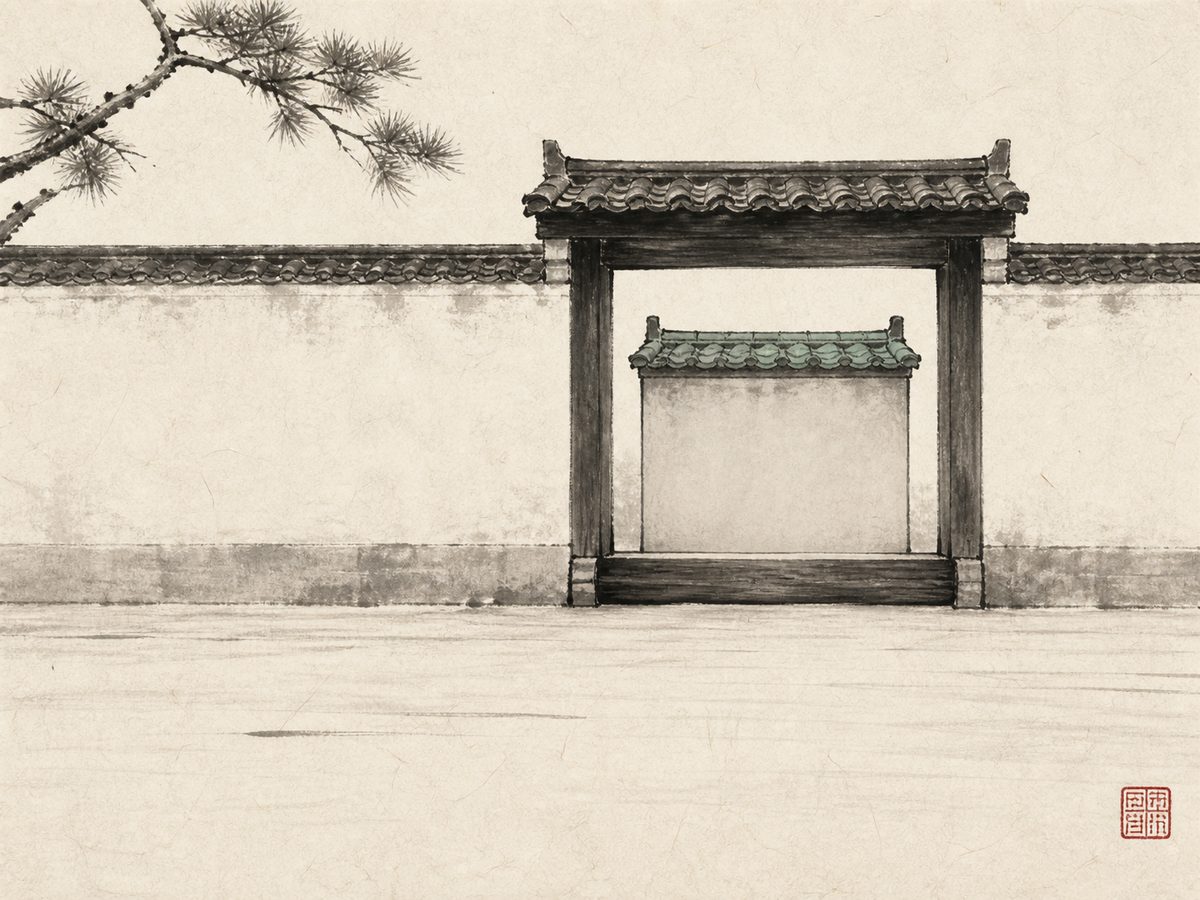
Entryway
Feng shui for the entryway and front door: the raised threshold, the screen that blocks the line through the house, and why the ground outside counts most.
Read the guide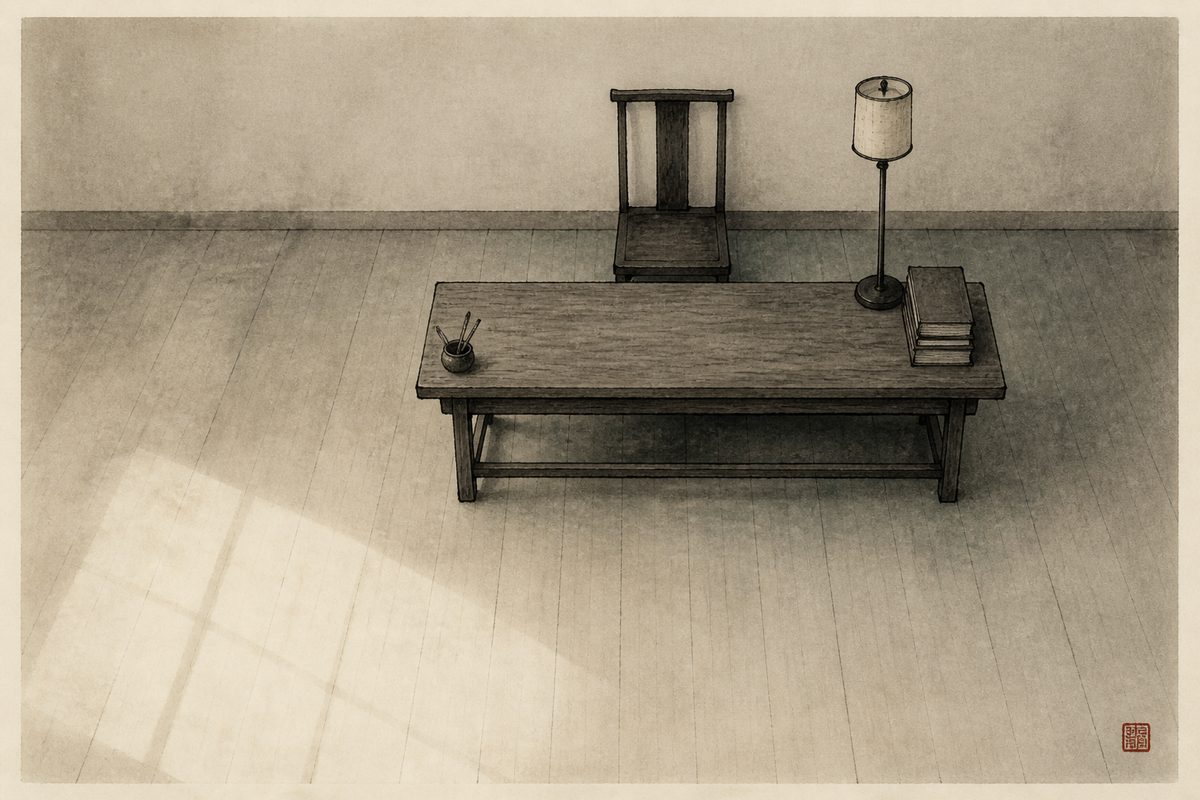
Office and desk
Chinese office feng shui is not about attracting money. It is about surviving other people. Where the desk goes, which side outranks, and what to ignore.
Read the guide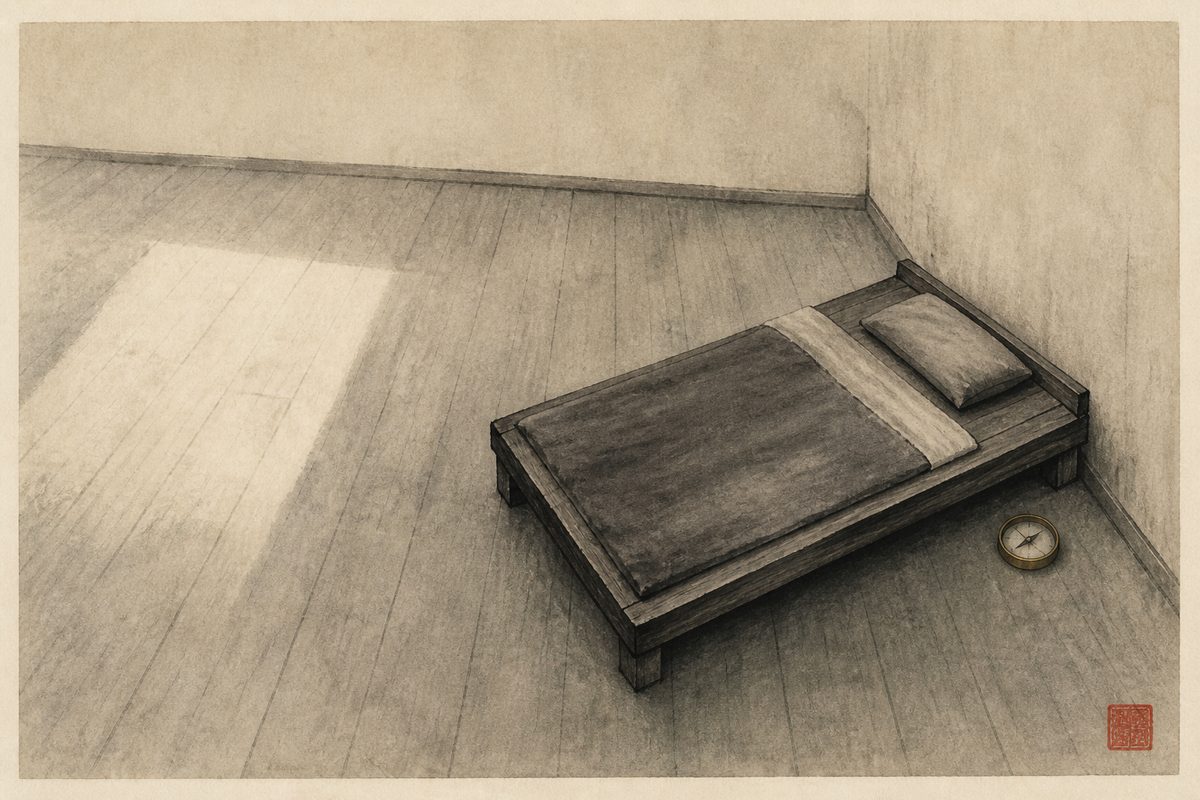
Bed direction
Bed direction means the direction your head points. Your four good directions from your kua number, the west taboo, and why north is the argument.
Read the guide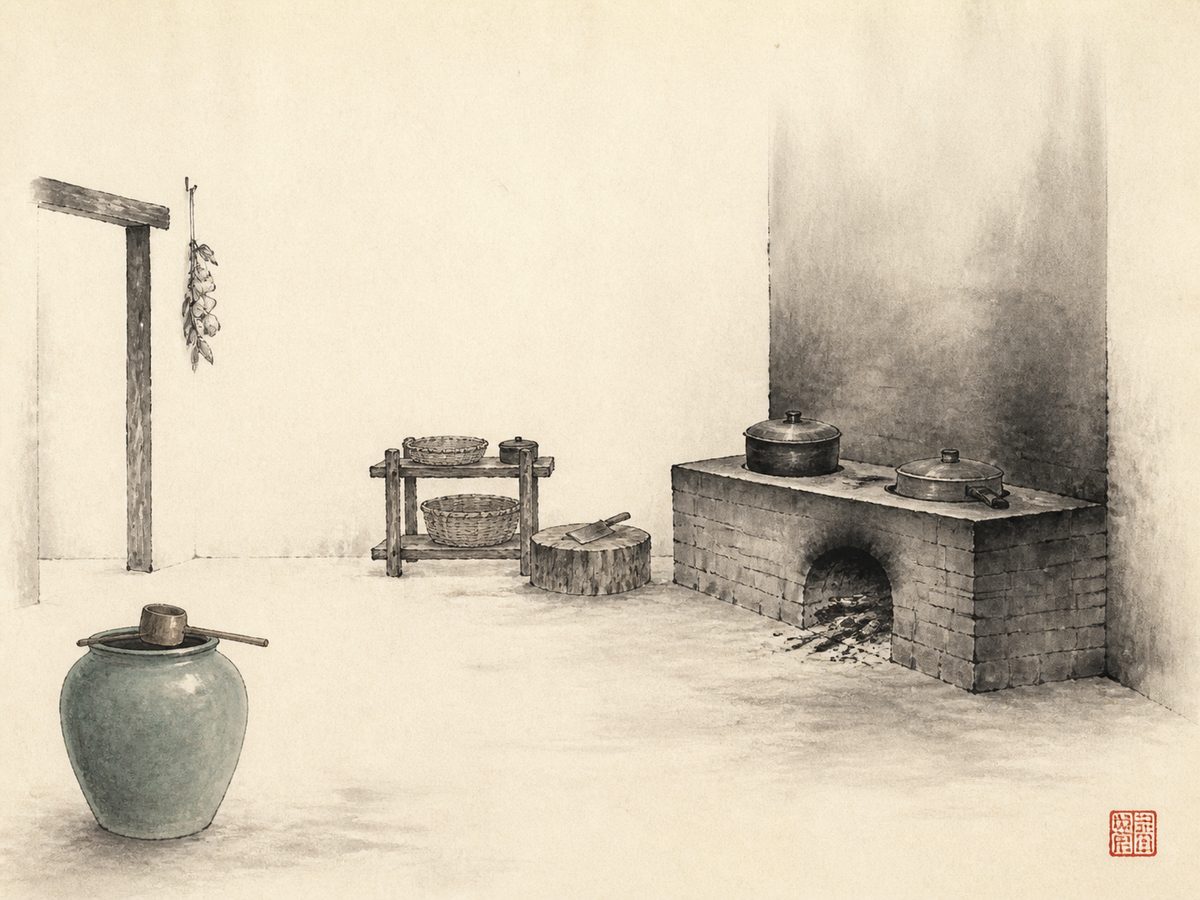
Kitchen
In Chinese practice the kitchen is one of the three things a house is judged on. Where the stove goes, why it faces backwards, and which rules are actually old.
Read the guide
Mirrors
Mirrors are not bad feng shui as a class. The three placements Chinese practice objects to, the eight-trigram mirror, and the etiquette nobody mentions.
Read the guide
Living room
Your living room is the home's bright hall. What that means, the through-draft that empties it, where the sofa goes, and which rules are actually Chinese.
Read the guide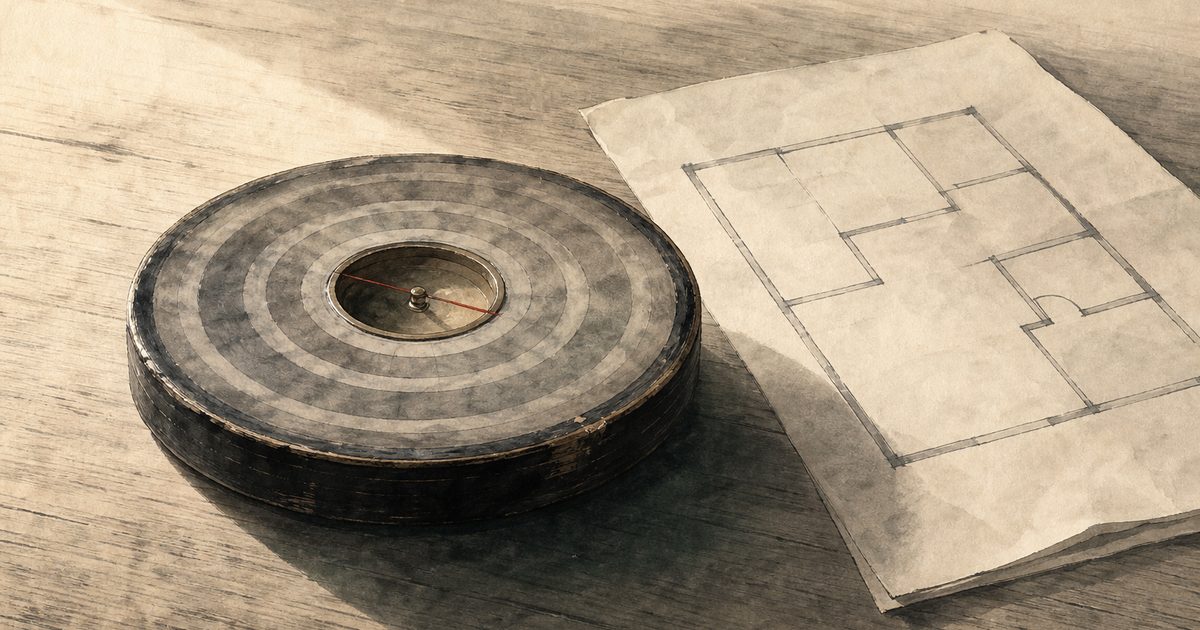
Bagua map
How to lay a bagua map over your floor plan: the classical compass bagua, the Western door grid, a chart for your door's direction, and one room at a time.
Read the guide
Wealth corners
Where the feng shui wealth corner actually is, in three competing schools, what belongs in it, and why the fountain everyone recommends is a mistake.
Read the guide
Colors
Which feng shui colors go where, by element and compass direction, plus your personal colors from your birth year and the two colors Westerners get wrong.
Read the guide
2026
The full 2026 flying star chart, sector by sector: Five Yellow and Tai Sui share the south, the north holds the rest, the east is clear.
Read the guide
Plants
Which plants bring luck, where they go by compass direction, and which rules are truly old. Feng shui plants, from the Wood element up.
Read the guide
Bedroom
Find your best bed direction from your birth year, the full Eight Mansions chart, and learn which bedroom layout rules are truly classical. The honest guide.
Read the guideYour kua number, from your birthday
Every direction-based recommendation on this site starts from your kua number, computed from your birth year with the traditional February boundary handled properly. Free, instant, and the same arithmetic behind your Chinese zodiac sign.
- Where the number comes from Chinese numerology: the Luoshu square behind the kua number, and why the "Lo Shu grid" calculators are not Chinese
- Moving house Where should I move: your good directions against the axis each year closes
Common questions
What are my feng shui lucky directions?
You have four, and they come from your birth year and sex, not from your house. The Eight Mansions method turns that birth year into a kua number from 1 to 9, each kua maps to one of the eight trigrams, and the trigram gives you four favorable compass directions and four unfavorable ones. Everyone falls into either the East group (kua 1, 3, 4, 9) or the West group (kua 2, 6, 7, 8). The kua calculator on this site computes yours and prints the full set.
What is the difference between the East group and the West group in feng shui?
They are the two halves the Eight Mansions system sorts people into. If you are East group, your four good directions are north, south, east and southeast, the sunrise half of the compass. If you are West group, they are west, northwest, southwest and northeast. One group's good directions are the other group's bad ones, which is why a house that suits one partner can feel wrong to the other, and why the tradition has a lot to say about compromise.
How do I use my lucky direction at home?
The two placements the tradition cares about most are where your bed points and where you sit to work. In both cases what matters is the direction your head or your face is turned toward, not the corner of the room the furniture sits in. Start with sleeping direction, since you spend the most uninterrupted hours there, and treat everything else as secondary.
What is feng shui in simple terms?
It is a Chinese method for arranging a place so that it works with you instead of against you. Two ideas do most of the work. First, form: what is solid behind you, what is open in front of you, and whether anything runs straight through the space without settling. That is why the tradition cares about beds with a wall behind them, doors that do not line up with windows, and nothing heavy hanging overhead. Second, direction: your birth year sorts you into a set of four favorable compass directions and four unfavorable ones, and the practice tries to point the things you use most, your bed and your desk, toward the good ones. Almost all of it is placement rather than purchase.
What does feng shui mean literally?
Wind and water. Feng is wind and shui is water, and the pairing comes from the passage in the Book of Burial that names the discipline: qi rides the wind and is scattered, and halts when it meets water. Wind is the thing that disperses a place's energy and water is the thing that gathers and holds it, so the name is a compressed statement of the whole problem the practice tries to solve. An older name for the same body of knowledge is kanyu, roughly the way of heaven and earth, and the traditional Chinese trade name for a practitioner translates closer to earth-pattern master than to feng shui consultant.
Is feng shui a religion?
No. It is a body of siting and orientation practice that grew up alongside Chinese cosmology, and it was used for centuries to place graves, temples, capitals and houses. You do not have to hold any belief to follow it, and no Chinese tradition asks you to. Treat it the way you would any inherited design convention: worth understanding, worth applying selectively, not worth anxiety.
Which feng shui rules are actually traditional?
The directional system on this site, Eight Mansions, is a classical compass-school method. A good deal of what circulates in English is not: the practice of laying a bagua grid over a floor plan by the front door, and the fixed color-per-corner advice that goes with it, comes from Black Sect (BTB) feng shui, a twentieth-century Western adaptation that is explicitly not based on the classical teachings. Neither is fraudulent, but they are different systems and mixing them produces contradictory advice.
What should you not do in feng shui?
Chinese practice is much more concerned with lines and placement than with objects, so the real list is shorter than the English one. Do not let the front door line up with a window or a back door across the room, which practitioners call the through-draft and check for first. Do not sleep or sit with your back to a door or a walkway instead of a solid wall. Do not put a bed, a sofa or a stove directly under a beam or a heavy overhead unit. Do not let the stove be visible from the front door. And do not fill the wealth corner with clutter, a mirror or a fish tank, since that spot is supposed to be still. Four of those five cost nothing to fix, which is a fair summary of the tradition.
What are the 5 principles of feng shui?
There is no canonical list of five, and any page presenting one as ancient has invented the packaging. What the tradition actually rests on is qi, the circulation the whole practice tries to manage; yin and yang, its two modes; the five phases of wood, fire, earth, metal and water, which feed and fight in fixed cycles; the eight trigrams and the eight compass directions they govern; and the split between the form school, which reads landscape and shape, and the compass school, which calculates from direction and birth date. Learn those five and every specific rule you meet afterward becomes a deduction rather than a commandment.
What is the unluckiest number in feng shui?
Four, and the reason is language rather than metaphysics. The Chinese word for four sounds almost identical to the word for death, which is why buildings across China, Hong Kong, Taiwan, Japan and Korea skip fourth floors, why hospital wards renumber them, and why apartment listings ending in four sell at a discount. Eight is the mirror image of the superstition, sounding close to the word for wealth. Note that this is a homophone taboo attached to the spoken language, not a rule from any feng shui manual, and that thirteen carries no Chinese superstition at all.