Guanyin fortune stick

94

Lower stick

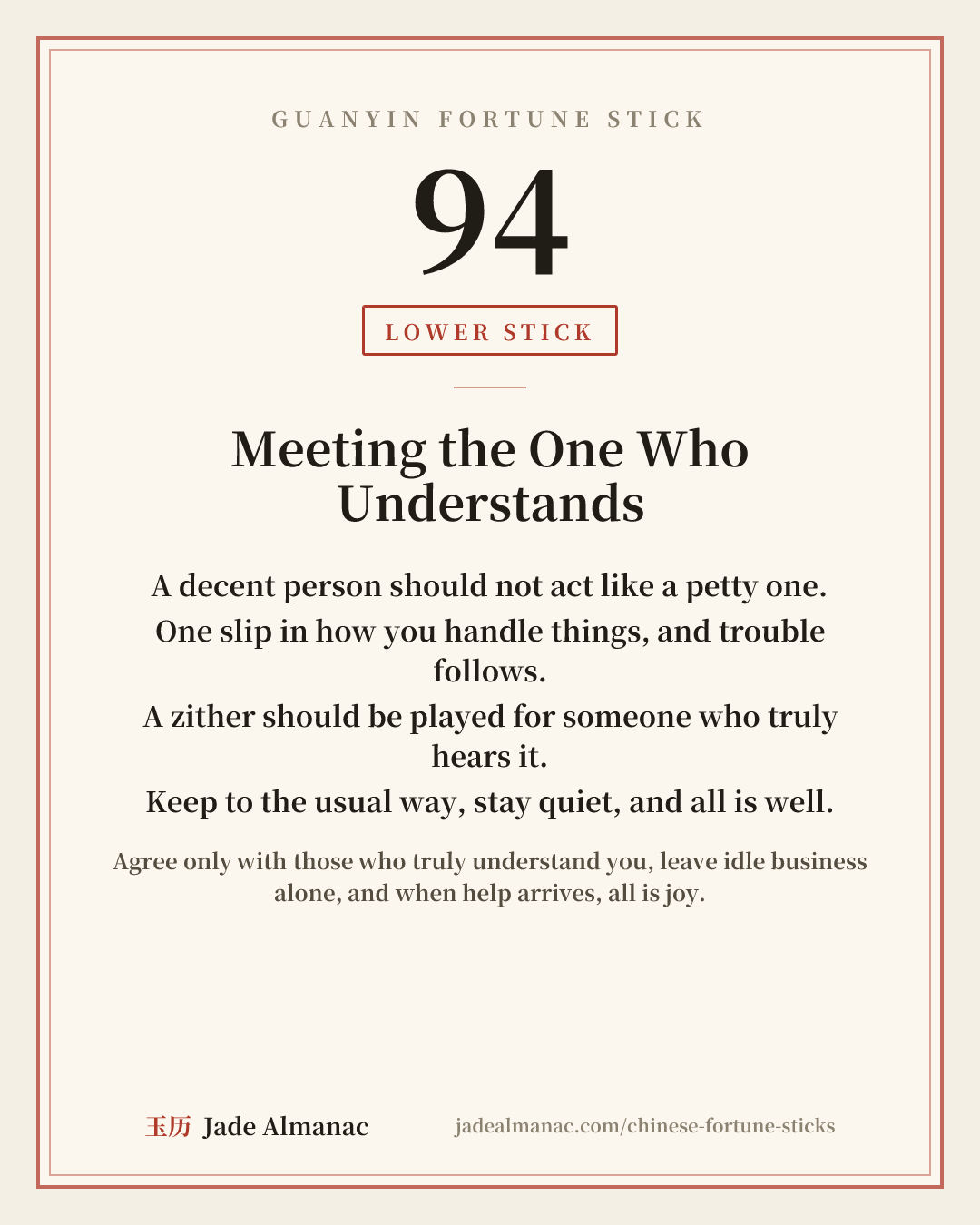
Guanyin fortune stick 94: Meeting the One Who Understands

A decent person should not act like a petty one.
One slip in how you handle things, and trouble follows.
A zither should be played for someone who truly hears it.
Keep to the usual way, stay quiet, and all is well.

jadealmanac.com

Save image

The verdict
Agree only with those who truly understand you, leave idle business alone, and when help arrives, all is joy.
What it says to you
The zither in this poem has a point: music played to the wrong audience is wasted, and sometimes resented. The stick is lower because right now small missteps turn into gossip and quarrels, and there may be petty people watching for them. So narrow your circle. Say yes only to people who truly understand what you are doing, and stay out of other people's business, however tempting. Keep your routine. The grade is a warning, not a sentence; the verdict ends with someone arriving to help, and real joy after. Until then, play quietly, and only for the right listener.

Matter by matter

Love
Better to postpone.
Money
Wait for the moment; go carefully in trade.
Work and study
Keep to the rules and wait for an opening.
Health
Find a good doctor, or things get stuck.
Home
Be careful when going out.
Travel
Still on the road.
Lost things
Search right away.

The story behind the stick

Boya Visits His Friend is the allusion in every edition, and one of the best-known friendship stories in China. Yu Boya was a master of the zither. One night by the river a woodcutter named Zhong Ziqi heard him play and said, of one piece, that he could see high mountains, and of the next, flowing water. No one had ever heard his music so exactly, and the two became sworn friends, agreeing to meet again the next year. When Boya returned, Ziqi had died. Boya broke his zither and never played again, since no one was left who truly heard him. The poem's third line points straight at this story, and it suits a lower stick that tells you to share yourself only with those who understand.
Line by line

  1. A decent person not acting like a petty one sets the moral line. The usual reading takes it as a warning not to answer pettiness in kind, however provoked you feel.

  2. One slip leading to trouble describes a period when small errors draw blame and gossip. Interpreters see it as advice to be careful with words, paperwork and other people's business.

  3. A zither played for the one who truly hears it recalls Boya and Ziqi. Most readings take it as advice to share plans and feelings only with people who already understand you.

  4. Keeping to the usual way and staying quiet is the stick's remedy. Readers understand it as a time for routine and discretion, with help expected to come later rather than be sought.

The original verse

君子莫体小人为
事若差池惹是非
琴鸣须用知音听
守常安静得相宜

Seven characters a line, as printed in the BW Monastery edition.

Sources for the story: zhouyi.cc Guanyin lot 94: https://www.zhouyi.cc/lingqian/guanyin/5477.html; ttlingqian.com Guanyin lot 94: https://www.ttlingqian.com/guanyin/94.html; masterseanchan.com Guanyin oracle lot 94.

Optional: the temple way

At a temple the stick is not yours until two moon blocks agree: one flat side up and one round side up, a holy cup.

About stick 94

Is Guanyin stick 94 good or bad?

Stick 94, "Meeting the One Who Understands", is a lower stick, a cautionary stick. Agree only with those who truly understand you, leave idle business alone, and when help arrives, all is joy.

What does Guanyin stick 94 say about love?

Better to postpone.

What does Guanyin stick 94 say about money?

Wait for the moment; go carefully in trade.

What does Guanyin stick 94 say about work?

Keep to the rules and wait for an opening.

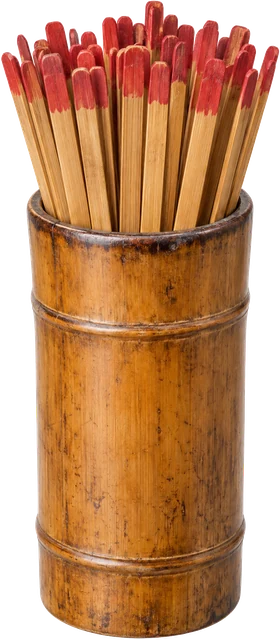
A bamboo fortune-stick cup

Draw another stick , or for a straight yes or no, throw the moon blocks

The verse follows the BW Monastery edition of the Guanyin set; the English rendering and reading are Jade Almanac's own. A drawn stick is a tradition and a prompt for reflection, not advice about health, money or the law.

Stay in the loop.

Chinese mythology, the zodiac, and the meaning behind names and symbols, rooted in the classics and read back to you. No spam. Unsubscribe anytime.