Guanyin fortune stick

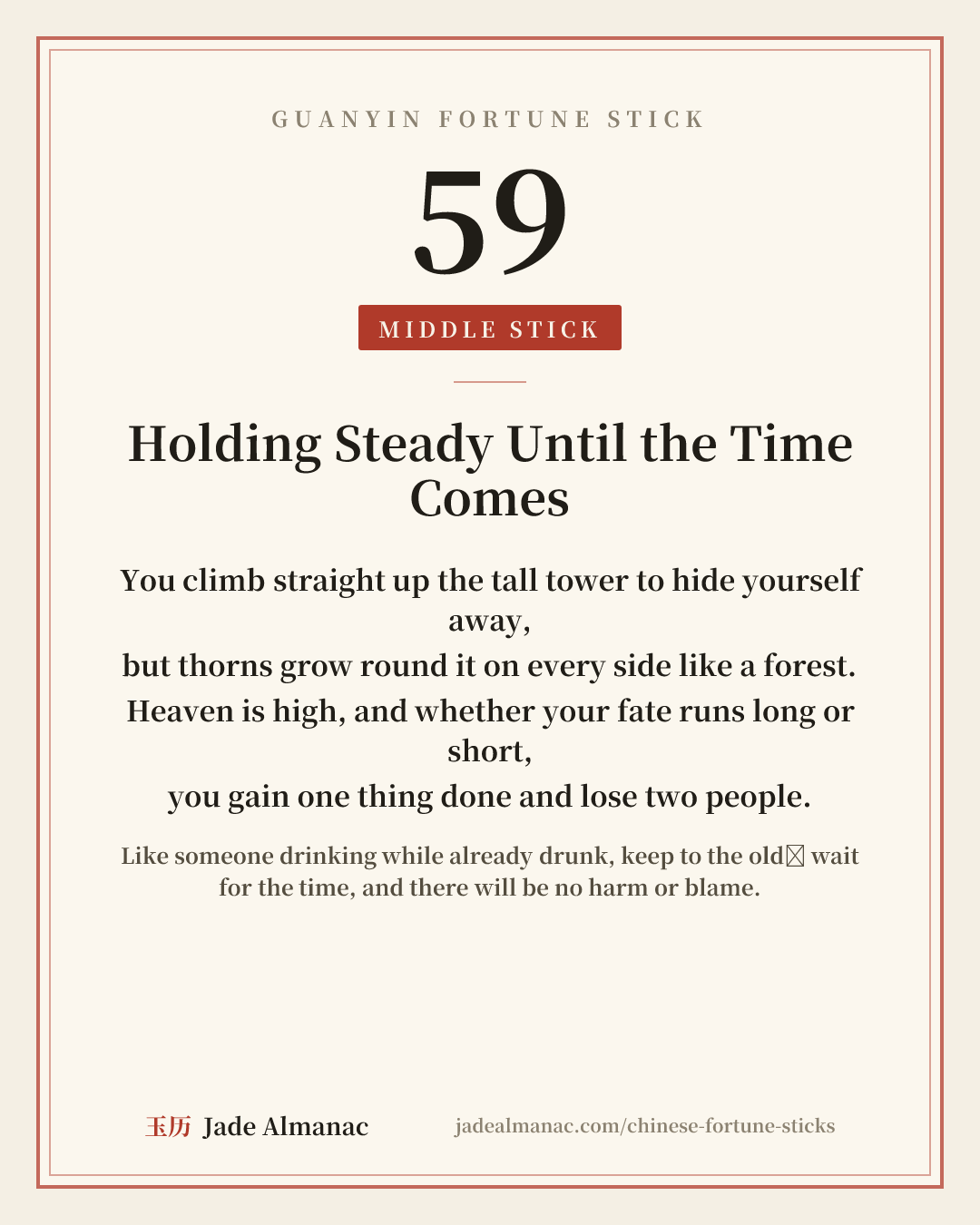
59

Middle stick

Guanyin fortune stick 59: Holding Steady Until the Time Comes

You climb straight up the tall tower to hide yourself away,
but thorns grow round it on every side like a forest.
Heaven is high, and whether your fate runs long or short,
you gain one thing done and lose two people.

jadealmanac.com

Save image

The verdict
Like someone drinking while already drunk, keep to the old; wait for the time, and there will be no harm or blame.
What it says to you
Running upstairs to hide won't solve it. The poem's figure climbs a tall tower to get away and finds thorns grown thick on every side. Escape is not on offer. The last line is a sober bit of arithmetic: you may get one thing done and lose two people doing it. So weigh what your goal costs in relationships. The verdict's odd picture, someone drinking while already drunk, describes playing a little foolish while things are unclear, keeping quiet and letting arguments pass. Hold steady at work and wait for the turn. Before you push your plan through, ask who it might cost you.

Matter by matter

Love
Not a match.
Money
Average returns; business succeeds.
Work and study
Best to hold what you have.
Health
Do good and pray for protection; keep up your care.
Home
Do good and pray for protection at home.
Travel
You will reach your destination.
Lost things
The search carries risk.

The story behind the stick

Temple editions tie this lot to Zhang Liang retiring to the mountains. Zhang Liang was the strategist who helped Liu Bang defeat Xiang Yu and found the Han dynasty. Once the throne was won, he understood that a ruler who calls his officers brothers in wartime often turns on them in peace; the great general Han Xin was later executed. So Zhang Liang refused further power, said he wished to wander with the immortal Master Red Pine, and withdrew to study the Daoist arts. He kept his life and his name. The image line speaks of holding to the old and moving with the times, and the poem's tower among thorns describes the court he left. His story fits a middle lot: safety came from stepping back at the right moment, not from climbing higher.
Line by line

  1. Climbing straight up a tall tower to hide is the first picture. Readers take it as a wish to retreat to a high, safe place, away from trouble below.

  2. Thorns grow round the tower like a forest. Traditionally this means hiding does not remove the danger, so the retreat must be real and well chosen, not just higher ground.

  3. Heaven is high, and a life may run long or short. Temple readers hear this as a reminder that the length of your fortune is not yours to set, so weigh risks soberly.

  4. Gain one thing and lose two people. Readers apply this to ambition that costs friendships or allies, and treat it as a reason to count the human price before pressing on.

The original verse

直上重楼去藏身
四围荆棘绕为林
天高君命长和短
得一番成失二人

Seven characters a line, as printed in the BW Monastery edition.

Sources for the story: masterseanchan.com/guanyin-oracle/lot-59 (edition A: Zhang Liang Retires to the Mountains); https://www.51chouqian.com/guanyinlingqian/59.html.

Optional: the temple way

At a temple the stick is not yours until two moon blocks agree: one flat side up and one round side up, a holy cup.

About stick 59

Is Guanyin stick 59 good or bad?

Stick 59, "Holding Steady Until the Time Comes", is a middle stick, a mixed stick, good with conditions. Like someone drinking while already drunk, keep to the old; wait for the time, and there will be no harm or blame.

What does Guanyin stick 59 say about love?

Not a match.

What does Guanyin stick 59 say about money?

Average returns; business succeeds.

What does Guanyin stick 59 say about work?

Best to hold what you have.

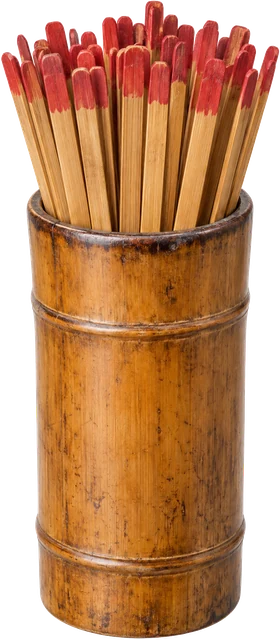
A bamboo fortune-stick cup

Draw another stick , or for a straight yes or no, throw the moon blocks

The verse follows the BW Monastery edition of the Guanyin set; the English rendering and reading are Jade Almanac's own. A drawn stick is a tradition and a prompt for reflection, not advice about health, money or the law.

Stay in the loop.

Chinese mythology, the zodiac, and the meaning behind names and symbols, rooted in the classics and read back to you. No spam. Unsubscribe anytime.