Guanyin fortune stick

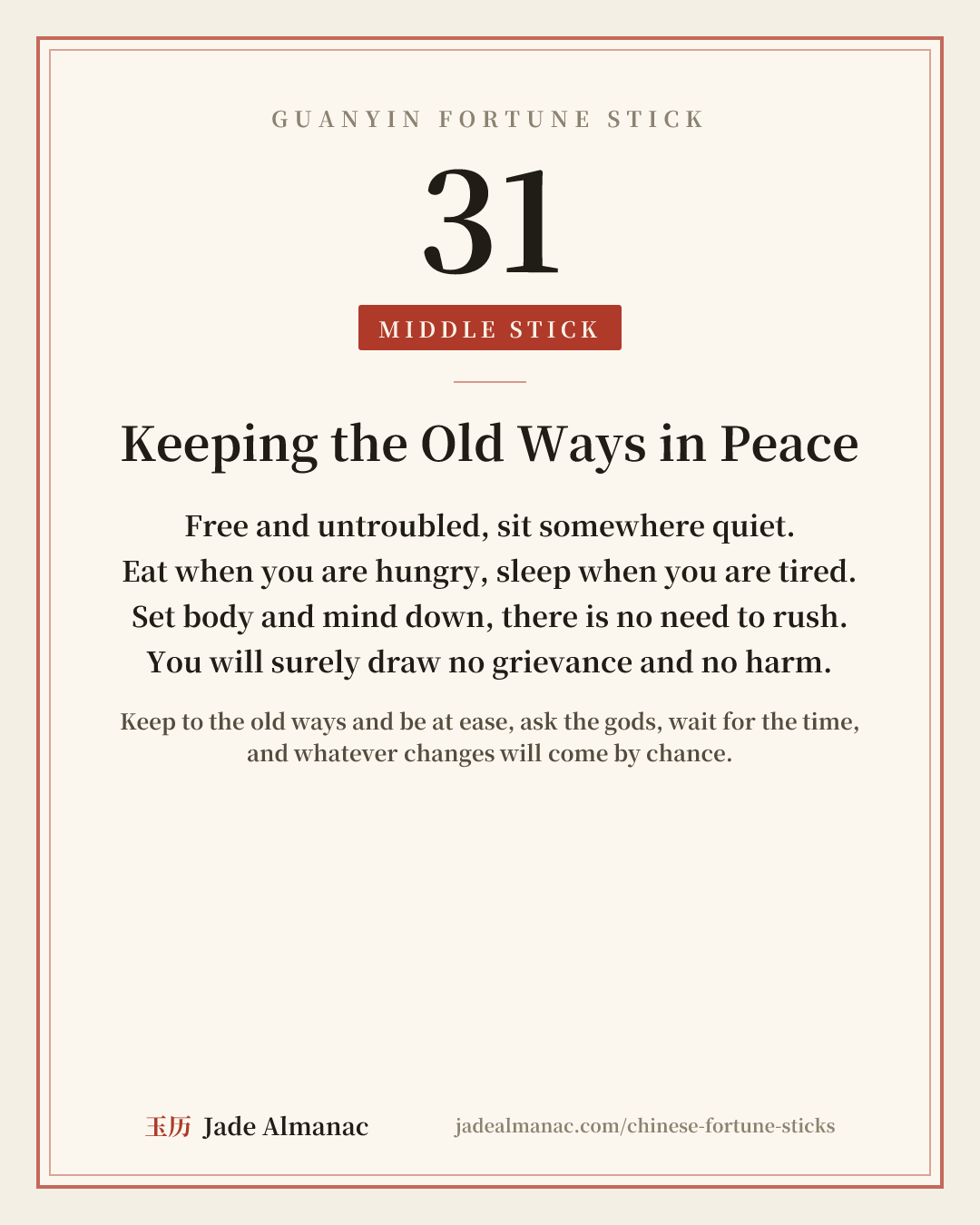
31

Middle stick

Guanyin fortune stick 31: Keeping the Old Ways in Peace

Free and untroubled, sit somewhere quiet.
Eat when you are hungry, sleep when you are tired.
Set body and mind down, there is no need to rush.
You will surely draw no grievance and no harm.

jadealmanac.com

Save image

The verdict
Keep to the old ways and be at ease, ask the gods, wait for the time, and whatever changes will come by chance.
What it says to you
Eat when hungry, sleep when tired. It is the least dramatic advice a fortune stick can give, and it is the whole of this one. Whatever you were hoping to force, the poem suggests putting it down for a while. Sitting quietly is not failure here; it is how you avoid the blame and trouble that come from pushing too hard. The verdict says change will come by chance when its time comes, so rushing buys you nothing. For the next stretch, keep your routine steady, look after sleep and meals, and let your plans wait in a drawer.

Matter by matter

Love
The two of you are a good match.
Money
Hold your position and wait; delay deals.
Work and study
Keep things as they are and wait for your time.
Health
Make offerings and prayers for blessing, says the stick.
Home
Do good and pray for peace and protection.
Travel
You have already arrived.
Lost things
It was never really lost.

The story behind the stick

Editions split on lot 31. One names Bodhidharma, the founder of Chan Buddhism, who by tradition sat facing a cave wall near the Shaolin monastery for nine years. The Hong Kong-style edition names Foyin, the Song monk who was the close friend and sparring partner of the poet Su Dongpo. In a Ming story collection, Su tries to tempt the monk back to lay life by sending a young singer to him while he is drunk; Foyin stays unmoved and keeps teaching Su the Buddhist way instead. Either figure suits a poem that sounds like a Chan saying, eat when hungry and sleep when tired. A steady mind sits through temptation and fuss alike. The grade is middle because nothing is gained here, but nothing is lost.
Line by line

  1. Sitting at ease in a quiet place, free of care, is the stick's whole posture. Readers take it as advice to withdraw from busy schemes for a while rather than add to them.

  2. Eat when hungry, sleep when tired is a well-known Chan Buddhist description of the ordinary mind. Temple readers hear it as living simply and attending to the day in front of you.

  3. Setting down body and mind means letting go of strain and hurry. Readers take it as a direct instruction to stop forcing outcomes you cannot yet control.

  4. The promise is that you will draw neither grievance nor disaster. Readers read it as protection by restraint: trouble here comes from needless action, so quietness keeps you safe.

The original verse

清闲无忧静处坐
饥时吃饭困时卧
放下身心不用忙
必定不招冤与祸

Seven characters a line, as printed in the BW Monastery edition.

Sources for the story: https://www.sheup.org/constellationmatch/guanyinlingqian/guanyin31.htm; https://www.masterseanchan.com/guanyin-oracle/lot-31/; BW Monastery Singapore, Guanyin lots (base text).

Optional: the temple way

At a temple the stick is not yours until two moon blocks agree: one flat side up and one round side up, a holy cup.

About stick 31

Is Guanyin stick 31 good or bad?

Stick 31, "Keeping the Old Ways in Peace", is a middle stick, a mixed stick, good with conditions. Keep to the old ways and be at ease, ask the gods, wait for the time, and whatever changes will come by chance.

What does Guanyin stick 31 say about love?

The two of you are a good match.

What does Guanyin stick 31 say about money?

Hold your position and wait; delay deals.

What does Guanyin stick 31 say about work?

Keep things as they are and wait for your time.

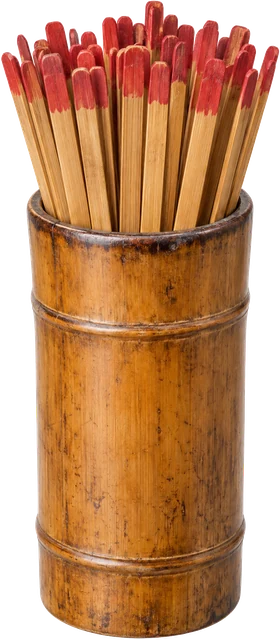
A bamboo fortune-stick cup

Draw another stick , or for a straight yes or no, throw the moon blocks

The verse follows the BW Monastery edition of the Guanyin set; the English rendering and reading are Jade Almanac's own. A drawn stick is a tradition and a prompt for reflection, not advice about health, money or the law.

Stay in the loop.

Chinese mythology, the zodiac, and the meaning behind names and symbols, rooted in the classics and read back to you. No spam. Unsubscribe anytime.