Guanyin fortune stick

18

Upper stick

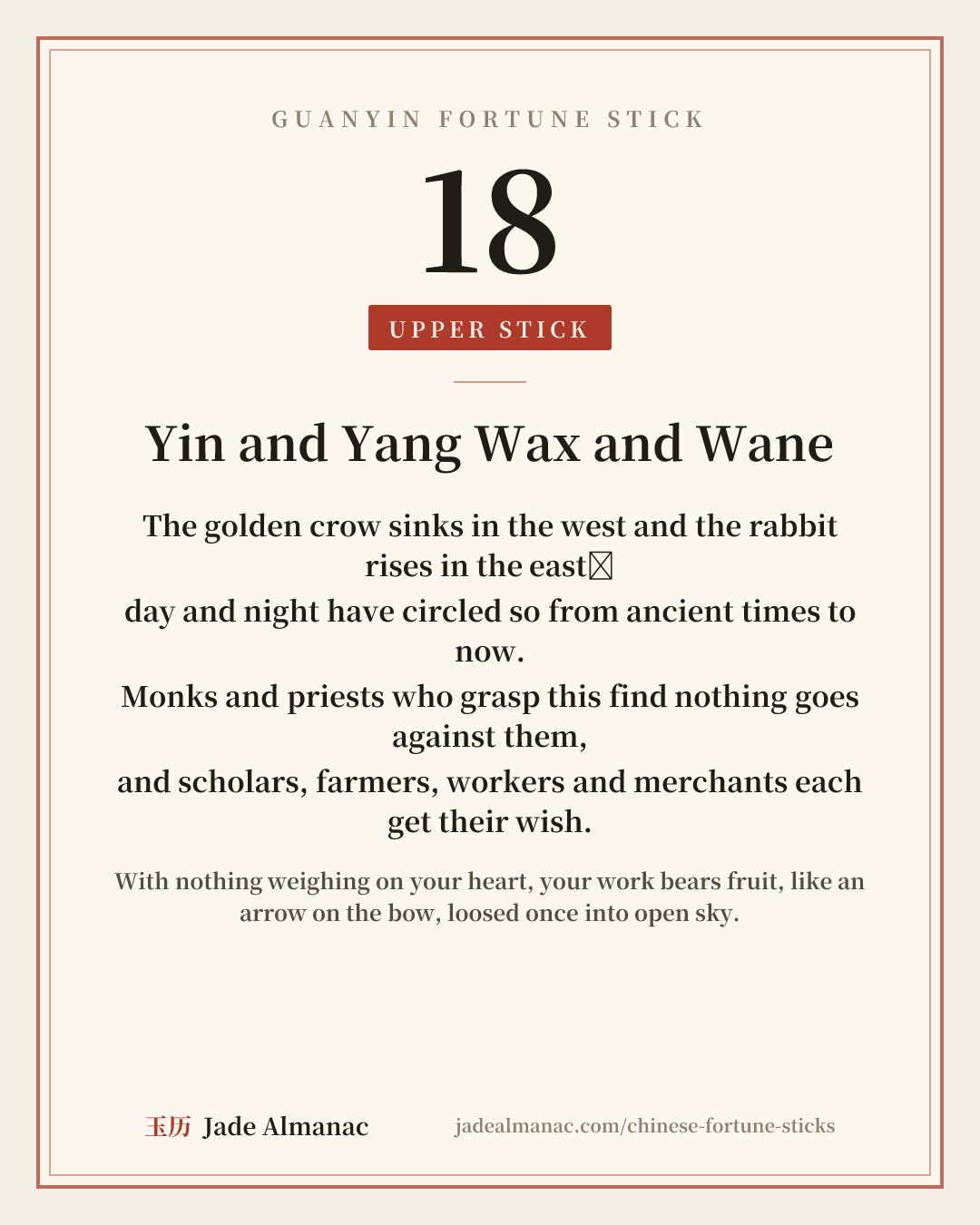
Guanyin fortune stick 18: Yin and Yang Wax and Wane

The golden crow sinks in the west and the rabbit rises in the east;
day and night have circled so from ancient times to now.
Monks and priests who grasp this find nothing goes against them,
and scholars, farmers, workers and merchants each get their wish.

jadealmanac.com
Save image

The verdict
With nothing weighing on your heart, your work bears fruit, like an arrow on the bow, loosed once into open sky.
What it says to you
In the old picture, the golden crow is the sun and the rabbit lives in the moon. The poem sets them going round, sunset and moonrise, the oldest rhythm there is. Whoever understands that rhythm, it says, can do well at anything. Your situation has its own turning, and right now it is turning your way. The verdict's arrow is the key. Once the bow is drawn and your mind is clear, you release once, cleanly, without fussing. Decide the thing you have been circling for weeks and send it off.

Matter by matter

Love
The two of you are in harmony.
Money
Smooth investments; business succeeds.
Work and study
Smooth going; study shows results.
Health
Traditionally, make a large prayer offering; keep up your care.
Home
Peaceful.
Travel
The traveler has arrived.
Lost things
Found after some days.

The story behind the stick

The Eight Immortals reappear behind this stick in the person of Cao Guojiu, the Imperial Uncle Cao. Brother of a Song empress, he was shamed by a younger brother who broke the law and killed with impunity. Cao gave his fortune away to the poor, left court for the mountains, and there met Zhongli Quan and Lü Dongbin, who guided him until he joined their company as an immortal. The poem's sun and moon trading places at dusk carry the same idea: an orderly turn from one state of life to another. Someone who knows when to set down rank and wealth, the story implies, meets nothing unfavorable, and so the stick ranks upper.

Line by line

  1. The golden crow is the three-legged bird of the sun, and the rabbit lives in the moon. One sets in the west as the other rises in the east, a single moment of handover.

  2. Day and night circling from antiquity to now is the oldest regular pattern there is. Temple readers take it as reassurance that the matter follows a natural order rather than chance.

  3. Monks and Daoist priests are named first because their lives are built around these cycles. Anyone who understands timing as they do, the reading goes, meets nothing unfavorable.

  4. Scholars, farmers, artisans and merchants were the four classes of traditional society, which is to say everyone. Each getting what they want makes this one of the broadest blessings in the set.

The original verse

金乌西坠兔东升
日夜循环至古今
僧道得知无不利
士农工商各从心

Seven characters a line, as printed in the BW Monastery edition.

Sources for the story: https://www.k366.com/guanyin/28876.htm; https://services.shen88.cn/chouqian/guanyin-18.html; https://www.masterseanchan.com/guanyin-oracle/lot-18/; https://www.fatekeep.com/blog/3640.

Optional: the temple way

At a temple the stick is not yours until two moon blocks agree: one flat side up and one round side up, a holy cup.

About stick 18

Is Guanyin stick 18 good or bad?

Stick 18, "Yin and Yang Wax and Wane", is a upper stick, a favorable stick. With nothing weighing on your heart, your work bears fruit, like an arrow on the bow, loosed once into open sky.

What does Guanyin stick 18 say about love?

The two of you are in harmony.

What does Guanyin stick 18 say about money?

Smooth investments; business succeeds.

What does Guanyin stick 18 say about work?

Smooth going; study shows results.

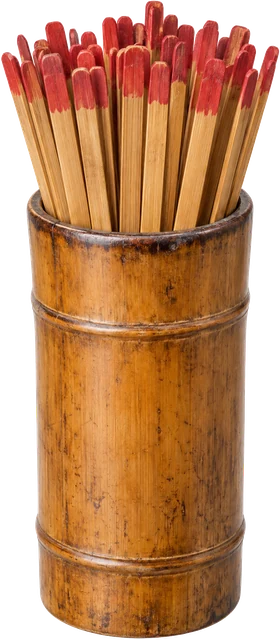
A bamboo fortune-stick cup

Draw another stick , or for a straight yes or no, throw the moon blocks

The verse follows the BW Monastery edition of the Guanyin set; the English rendering and reading are Jade Almanac's own. A drawn stick is a tradition and a prompt for reflection, not advice about health, money or the law.

Stay in the loop.

Chinese mythology, the zodiac, and the meaning behind names and symbols, rooted in the classics and read back to you. No spam. Unsubscribe anytime.