Guanyin fortune stick

52

Middle stick

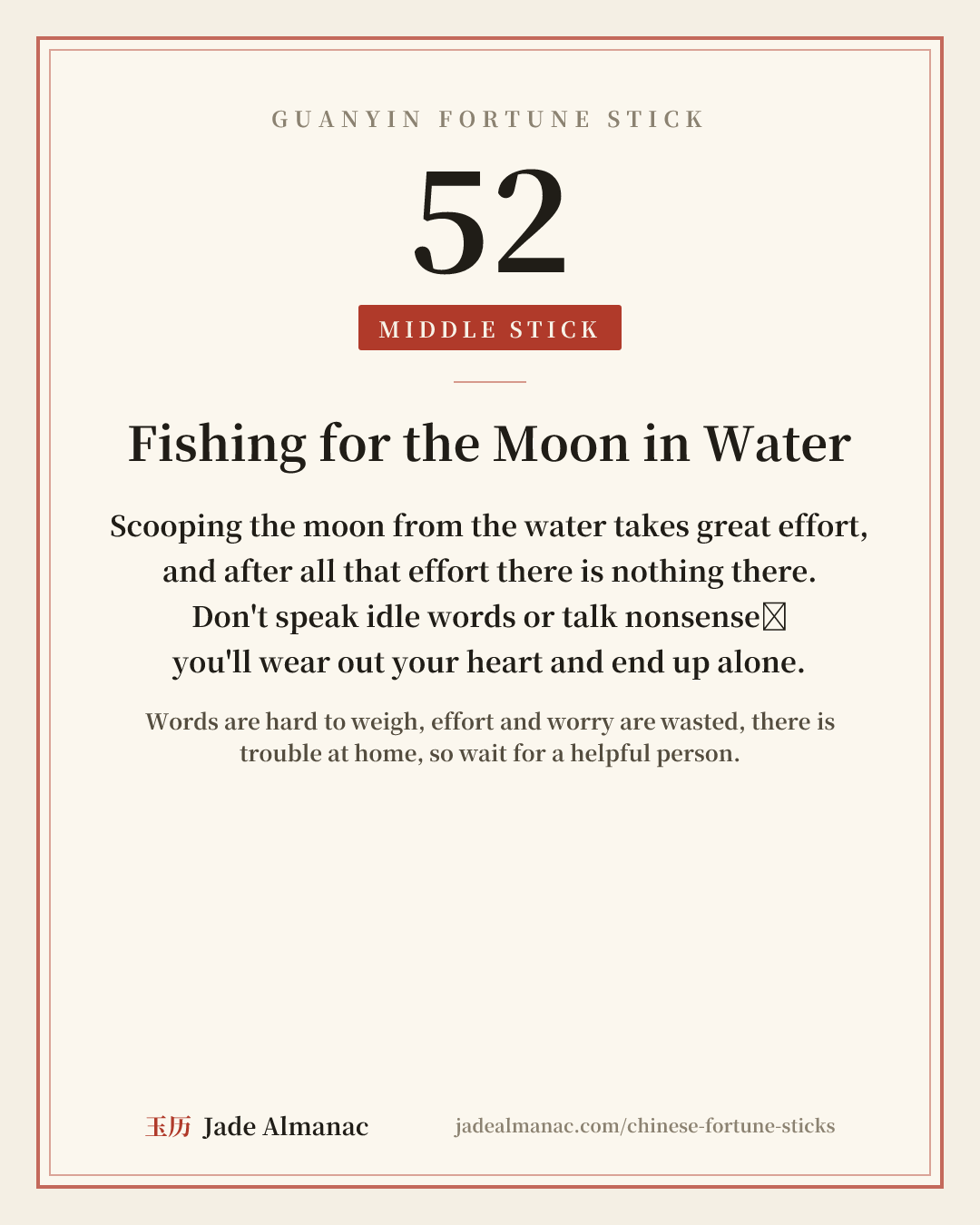
Guanyin fortune stick 52: Fishing for the Moon in Water

Scooping the moon from the water takes great effort,
and after all that effort there is nothing there.
Don't speak idle words or talk nonsense;
you'll wear out your heart and end up alone.

jadealmanac.com

Save image

The verdict
Words are hard to weigh, effort and worry are wasted, there is trouble at home, so wait for a helpful person.
What it says to you
Someone is reaching into a pond for the moon. It looks right there, bright and close, and every grab comes up with nothing but cold water. The poem pairs that with a warning about talk: idle words and loose gossip that cost effort and leave you isolated. Ask yourself which pursuit is a reflection rather than the real thing, and which conversations are making things worse. There is worry at home too, and the verdict says it gets solved with outside help. Stop scooping for a while. Watch, ask someone more experienced, and hold your tongue until you know what you're talking about.

Matter by matter

Love
Not going smoothly.
Money
Average returns; business is unlikely to succeed.
Work and study
Watch, think, ask for advice; don't act rashly.
Health
Do good and pray for protection; keep up your care.
Home
Not very peaceful at home.
Travel
Risk of mishap on the road.
Lost things
Hard to find in the end.

The story behind the stick

Grasping at a reflection is the image here: effort spent chasing what cannot be held. The story temple editions pair with it is the best-loved legend about the Tang poet Li Bai, a famous drinker who wrote again and again about the moon. According to the tale, he was out on the river one night, drunk, saw the moon floating on the water, and leaned out to take it in his arms. He fell in and drowned. Some versions add that a whale rose and carried him off to the moon palace. Historians think he more likely died of illness in 762, but the legend stuck because it fits him so well. Our edition grades the lot middle while another grades it lower; either way the warning is clear. The moon was never in the water, and the reaching was the whole mistake.
Line by line

  1. Scooping the moon from water is an old Chinese byword for a hopeless task. Readers take the first line as a judgment on the goal itself, not on how hard you are trying.

  2. The second line repeats the word for effort, so the waste is heard twice. Traditionally this means the result is empty however long the attempt goes on, so more effort changes nothing.

  3. The poem turns from the pond to the mouth. Idle and careless talk is the second way to waste yourself, and temple readers often link it to quarrels at home and rumors at work.

  4. The last line names the cost: a worn-out heart and a lonely position. Readers take isolation as the real danger of this lot, more than any single loss of money or time.

The original verse

水中捞月费工夫
费尽功夫却又无
莫说闲言并乱语
枉劳心力强身孤

Seven characters a line, as printed in the BW Monastery edition.

Sources for the story: masterseanchan.com/guanyin-oracle/lot-52 (edition A: Li Taibai Drunkenly Grabs the Moon, graded lower); https://www.51chouqian.com/guanyinlingqian/52.html.

Optional: the temple way

At a temple the stick is not yours until two moon blocks agree: one flat side up and one round side up, a holy cup.

About stick 52

Is Guanyin stick 52 good or bad?

Stick 52, "Fishing for the Moon in Water", is a middle stick, a mixed stick, good with conditions. Words are hard to weigh, effort and worry are wasted, there is trouble at home, so wait for a helpful person.

What does Guanyin stick 52 say about love?

Not going smoothly.

What does Guanyin stick 52 say about money?

Average returns; business is unlikely to succeed.

What does Guanyin stick 52 say about work?

Watch, think, ask for advice; don't act rashly.

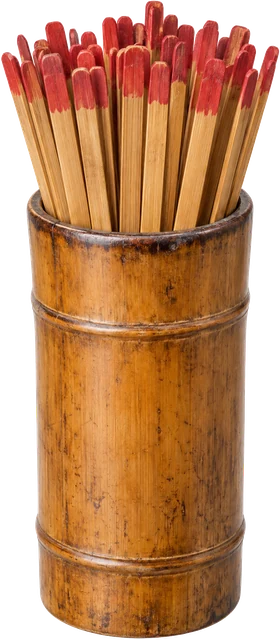
A bamboo fortune-stick cup

Draw another stick , or for a straight yes or no, throw the moon blocks

The verse follows the BW Monastery edition of the Guanyin set; the English rendering and reading are Jade Almanac's own. A drawn stick is a tradition and a prompt for reflection, not advice about health, money or the law.

Stay in the loop.

Chinese mythology, the zodiac, and the meaning behind names and symbols, rooted in the classics and read back to you. No spam. Unsubscribe anytime.