Guanyin fortune stick

70

Lower stick

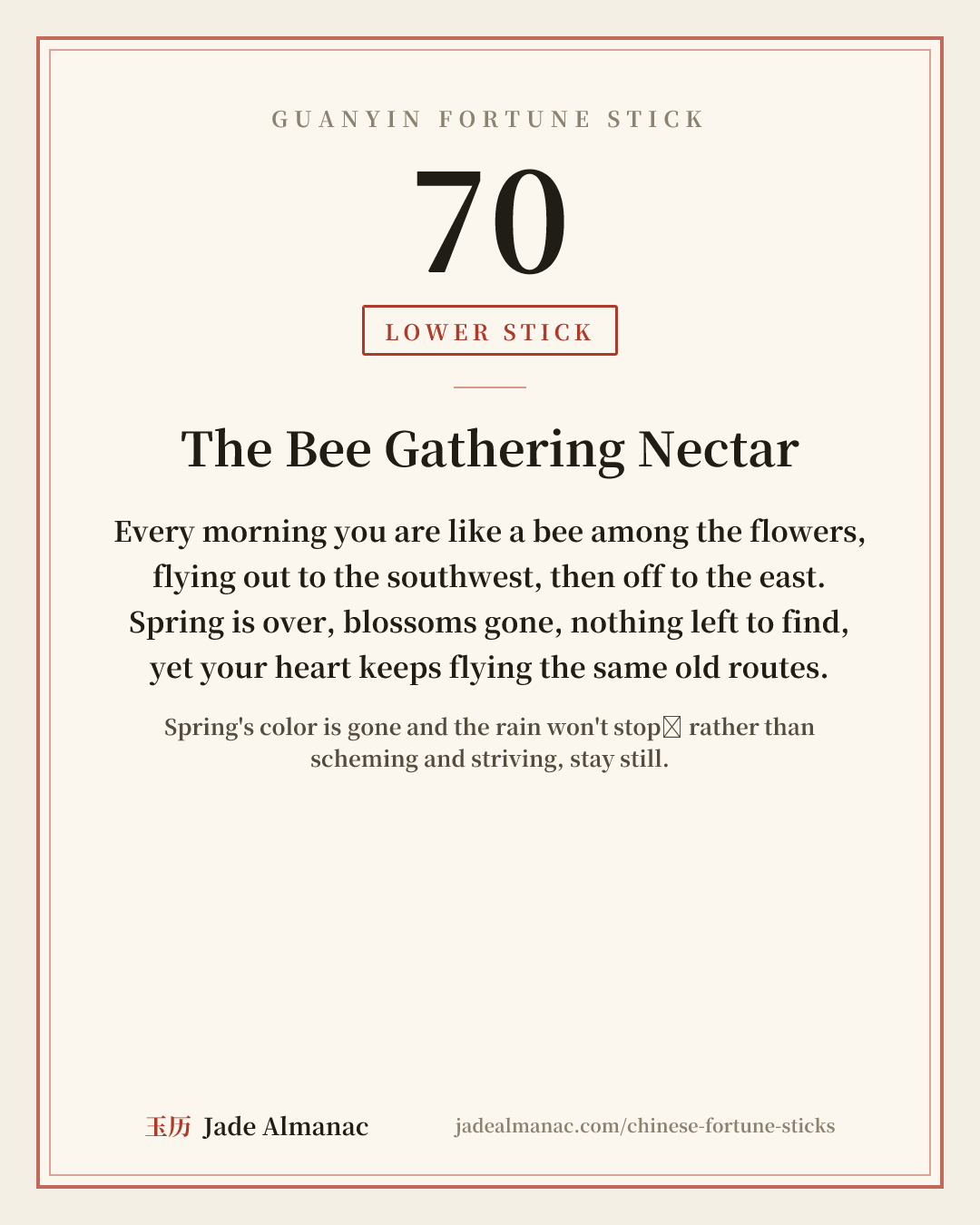
Guanyin fortune stick 70: The Bee Gathering Nectar

Every morning you are like a bee among the flowers,
flying out to the southwest, then off to the east.
Spring is over, blossoms gone, nothing left to find,
yet your heart keeps flying the same old routes.

jadealmanac.com

Save image

The verdict
Spring's color is gone and the rain won't stop; rather than scheming and striving, stay still.
What it says to you
The bee here is busy, loyal to its routes, and working a garden that has already finished blooming. That is the gentle but real warning of this lower stick: the effort is fine, the season is wrong. If you have been running the same rounds, sending the same pitches, chasing the same person, and coming back empty, the poem suggests the flowers are simply gone for now. More flying won't fix it. The verdict prefers rest to plotting. Stop one routine that keeps failing, just one, and spend that time resting or looking around. A new spring brings new flowers, and you will want energy left for them.

Matter by matter

Love
Unsteady.
Money
Losses likely; in trade, beware partners who go back on their word.
Work and study
Hard to get what you want; exams fall short.
Health
Obstacles; the stick calls for prayer. Keep up your care.
Home
Quarrels at home.
Travel
No news from the road.
Lost things
It cannot be found.

The story behind the stick

Li Mi rebelling against the Tang is the story editions attach here. At the end of the Sui dynasty, Li Mi led the great rebel army based at Wagang and took the title Duke of Wei. After a heavy defeat in 618 his best commanders drifted away, and he surrendered to Li Yuan, founder of the new Tang dynasty, who gave him a lady of the imperial clan as a wife and a modest post. Li Mi could not settle for it. Within months he broke away to raise an army again and was ambushed and killed in 619, aged thirty-seven. His spring was over, yet he kept flying the old routes in search of flowers that were gone, exactly like the bee in the poem. That is why this lot is lower: the effort is real, but the season for it has passed.
Line by line

  1. Every morning you are like a bee gathering nectar. Readers take this as tireless daily effort, admirable in itself, which is why the warning that follows stings.

  2. Flying out to the southwest, then off to the east. Traditionally the line describes scattered effort with no fixed target, and readers apply it to running between many schemes.

  3. Spring is over, the flowers fade, and there is nowhere left to search. Temple readers say the opportunity itself has ended, so more searching cannot bring it back.

  4. Yet the heart does not change and keeps to its old tracks. Readers treat this as the real fault the lot names: habit that outlasts its season.

The original verse

朝朝恰似采花蜂
飞出西南又走东
春尽花残无觅处
此心不变旧行踪

Seven characters a line, as printed in the BW Monastery edition.

Sources for the story: https://www.51chouqian.com/guanyinlingqian/70.html (Li Mi Rebels Against Tang); masterseanchan.com/guanyin-oracle/lot-70 (edition A: Li Mi Rebels Against Tang).

Optional: the temple way

At a temple the stick is not yours until two moon blocks agree: one flat side up and one round side up, a holy cup.

About stick 70

Is Guanyin stick 70 good or bad?

Stick 70, "The Bee Gathering Nectar", is a lower stick, a cautionary stick. Spring's color is gone and the rain won't stop; rather than scheming and striving, stay still.

What does Guanyin stick 70 say about love?

Unsteady.

What does Guanyin stick 70 say about money?

Losses likely; in trade, beware partners who go back on their word.

What does Guanyin stick 70 say about work?

Hard to get what you want; exams fall short.

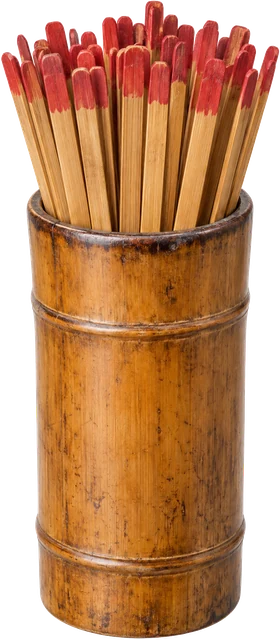
A bamboo fortune-stick cup

Draw another stick , or for a straight yes or no, throw the moon blocks

The verse follows the BW Monastery edition of the Guanyin set; the English rendering and reading are Jade Almanac's own. A drawn stick is a tradition and a prompt for reflection, not advice about health, money or the law.

Stay in the loop.

Chinese mythology, the zodiac, and the meaning behind names and symbols, rooted in the classics and read back to you. No spam. Unsubscribe anytime.