Guanyin fortune stick

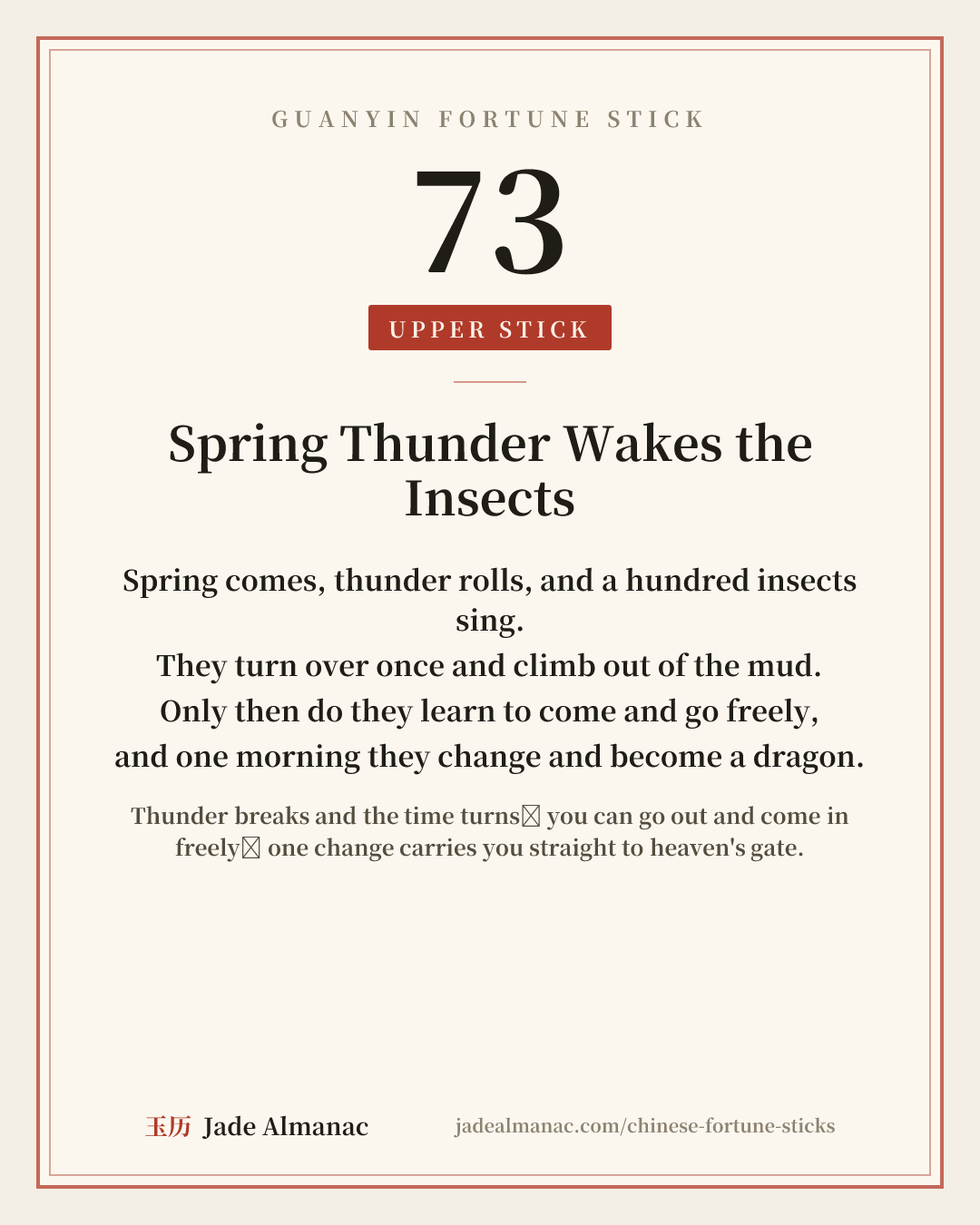
73

Upper stick

Guanyin fortune stick 73: Spring Thunder Wakes the Insects

Spring comes, thunder rolls, and a hundred insects sing.
They turn over once and climb out of the mud.
Only then do they learn to come and go freely,
and one morning they change and become a dragon.

jadealmanac.com

Save image

The verdict
Thunder breaks and the time turns; you can go out and come in freely; one change carries you straight to heaven's gate.
What it says to you
Spring thunder is what wakes buried things, and the poem follows a small creature from the mud into open air and, eventually, into a dragon. This upper stick says the season has turned for you. The work now is the first rollover: get out of the place where you've been hibernating, whether that's a stalled plan, a quiet job search or a project in a drawer. The stick's image adds a person of standing who helps, so show your work to people who can lift it. Move early, while the thunder is fresh. Change looks sudden from outside, but it starts with one turn out of the mud.

Matter by matter

Love
A good match, and it succeeds.
Money
Profit in spring; a patron helps in trade.
Work and study
A patron may promote you; study hard and ask questions.
Health
Recovery is slow; rest and look after yourself.
Home
Do good deeds and pray for protection.
Travel
You have arrived.
Lost things
Likely found.

The story behind the stick

Spring thunder waking the hundred insects is the image, and editions pair it with the mutiny at Chenqiao in 960, one also offering Xiao He chasing the general Han Xin by moonlight. Zhao Kuangyin commanded the palace army of the Later Zhou dynasty. When the emperor died, his heir was a boy of about seven. Sent north with the army to meet an invasion, Zhao camped at the Chenqiao post station, where his officers, worried by a child on the throne, draped a yellow imperial robe over him and hailed him as emperor. He marched back to the capital, accepted the boy's abdication and founded the Song dynasty, which lasted three centuries. A general became a ruler in a single morning, the image of a creature leaving the mud and turning into a dragon. That makes this an upper lot.
Line by line

  1. Spring arrives, thunder rolls, and a hundred insects sing. In the Chinese calendar the first spring thunder wakes creatures sleeping in the ground, and readers take it as the signal that a dormant time has ended.

  2. With one turn they leave the mud. Traditionally this marks a quick break from a low or hidden position, a single decisive move rather than a long climb.

  3. Only then do they learn to come and go freely. Temple readers apply this to travel, trade and new freedom of movement after a confined season.

  4. One morning they change and become a dragon. The carp or creature turning dragon is the classic picture of sudden success, and readers take it as rank or recognition arriving all at once.

The original verse

春来雷震百虫鸣
翻身一转离泥中
始知出入还来往
一朝变化便成龙

Seven characters a line, as printed in the BW Monastery edition.

Sources for the story: https://www.51chouqian.com/guanyinlingqian/73.html (The Chenqiao Mutiny); masterseanchan.com/guanyin-oracle/lot-73 (edition A: also Xiao He Chases Han Xin).

Optional: the temple way

At a temple the stick is not yours until two moon blocks agree: one flat side up and one round side up, a holy cup.

About stick 73

Is Guanyin stick 73 good or bad?

Stick 73, "Spring Thunder Wakes the Insects", is a upper stick, a favorable stick. Thunder breaks and the time turns; you can go out and come in freely; one change carries you straight to heaven's gate.

What does Guanyin stick 73 say about love?

A good match, and it succeeds.

What does Guanyin stick 73 say about money?

Profit in spring; a patron helps in trade.

What does Guanyin stick 73 say about work?

A patron may promote you; study hard and ask questions.

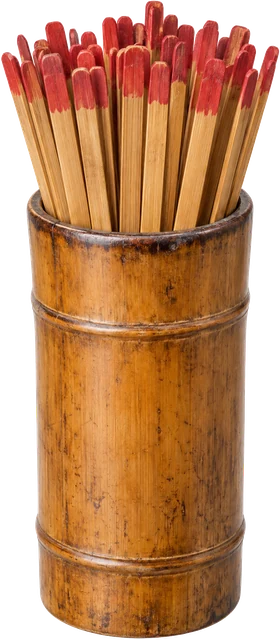
A bamboo fortune-stick cup

Draw another stick , or for a straight yes or no, throw the moon blocks

The verse follows the BW Monastery edition of the Guanyin set; the English rendering and reading are Jade Almanac's own. A drawn stick is a tradition and a prompt for reflection, not advice about health, money or the law.

Stay in the loop.

Chinese mythology, the zodiac, and the meaning behind names and symbols, rooted in the classics and read back to you. No spam. Unsubscribe anytime.