Guanyin fortune stick

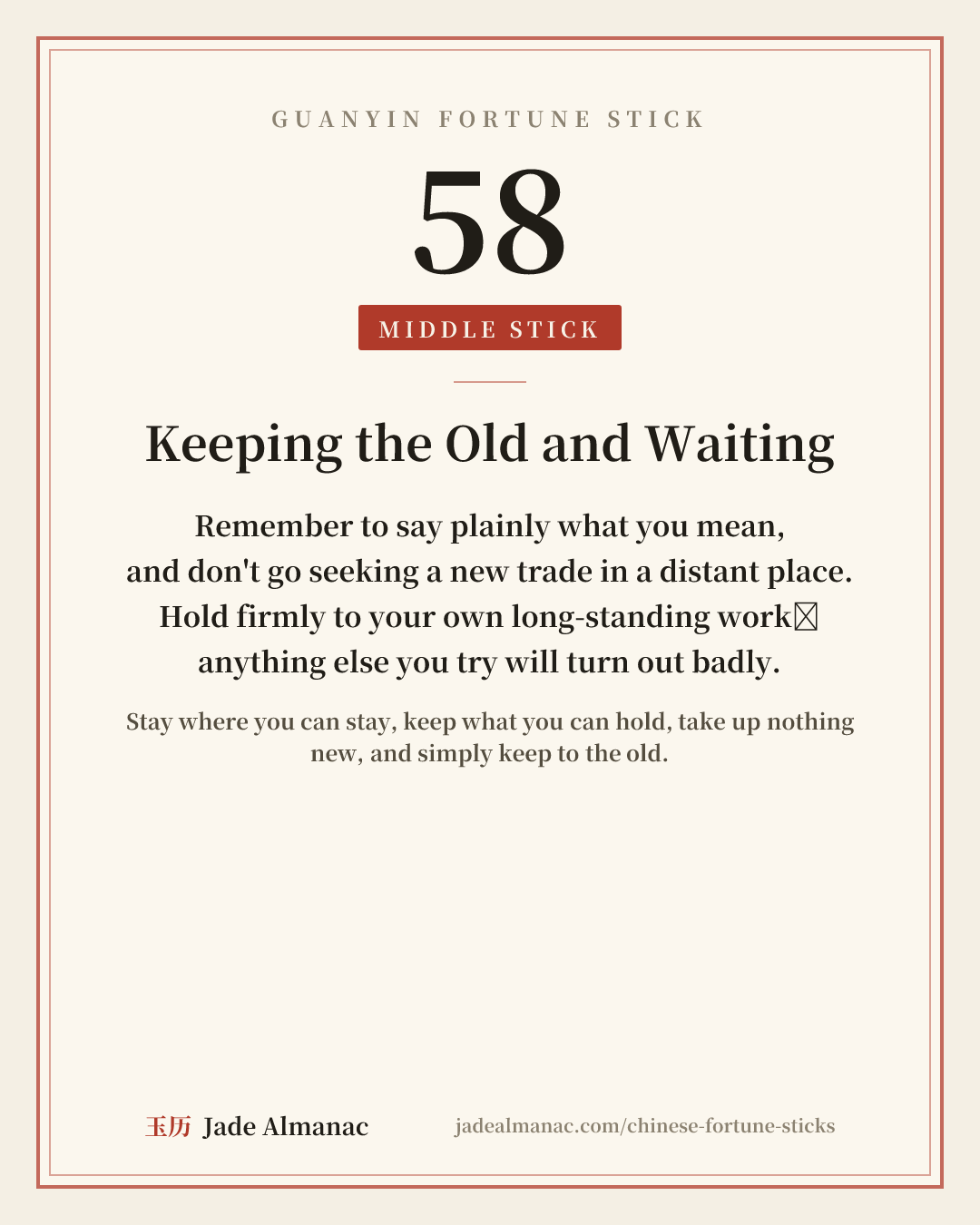
58

Middle stick

Guanyin fortune stick 58: Keeping the Old and Waiting

Remember to say plainly what you mean,
and don't go seeking a new trade in a distant place.
Hold firmly to your own long-standing work;
anything else you try will turn out badly.

jadealmanac.com

Save image

The verdict
Stay where you can stay, keep what you can hold, take up nothing new, and simply keep to the old.
What it says to you
Stay where you are. The poem could hardly be blunter: speak plainly, don't go off to another place to learn a different trade, keep to the work you know, because everything else turns out badly. If you've been daydreaming about a dramatic switch, this stick asks you to sit with that urge before you act on it. What you already have is the asset. Where you can stay, stay. Where you can keep something, keep it. Lean on older, more experienced people for advice. Spend this season deepening the craft you have, and have one honest conversation about it, said plainly, instead of taking a leap.

Matter by matter

Love
There will be obstacles.
Money
Investments go well; business succeeds.
Work and study
Listen to the advice of older people.
Health
Not quite well; look after your body.
Home
Ordinary at home.
Travel
Arrival will be late.
Lost things
The search carries risk.

The story behind the stick

King Wen consulting the oracle is the story this lot carries. In the temple telling, King Wen, a master of divination, was summoned to court by the last Shang king. His own reading warned of seven years of trouble, so before leaving he ordered his eldest son to govern their homeland by the old ways and stay put. King Wen was held captive at Youli. The son went to the capital to plead for him and was killed, a detail drawn from the Ming novel Investiture of the Gods. King Wen, meanwhile, kept to his own craft in confinement and, by tradition, worked out the arrangement of the hexagrams of the Book of Changes. The one who kept to his work came through; the one who left home did not. That is the lot's message of holding to the familiar path, graded middle because it asks for patience.
Line by line

  1. Speak plainly and remember it. Readers take this as advice to be direct and honest in what you say, since roundabout words cause the trouble in this lot.

  2. Don't go to another place seeking a different trade. Traditionally the line warns against leaving home or switching careers on the hope that somewhere else holds an easier living.

  3. Hold to your own long-standing work. Temple readers treat this as the lot's center: the skill and position you already have are the safe ground, and deepening them is the way forward.

  4. Everything apart from this goes badly. Readers note how absolute the line is; the lot allows almost no exceptions, so new ventures are best delayed until another reading.

The original verse

直言说话君须记
莫在他乡求别艺
切须守己旧生涯
除此其余都不利

Seven characters a line, as printed in the BW Monastery edition.

Sources for the story: masterseanchan.com/guanyin-oracle/lot-58 (edition A: King Wen Divines); https://www.51chouqian.com/guanyinlingqian/58.html.

Optional: the temple way

At a temple the stick is not yours until two moon blocks agree: one flat side up and one round side up, a holy cup.

About stick 58

Is Guanyin stick 58 good or bad?

Stick 58, "Keeping the Old and Waiting", is a middle stick, a mixed stick, good with conditions. Stay where you can stay, keep what you can hold, take up nothing new, and simply keep to the old.

What does Guanyin stick 58 say about love?

There will be obstacles.

What does Guanyin stick 58 say about money?

Investments go well; business succeeds.

What does Guanyin stick 58 say about work?

Listen to the advice of older people.

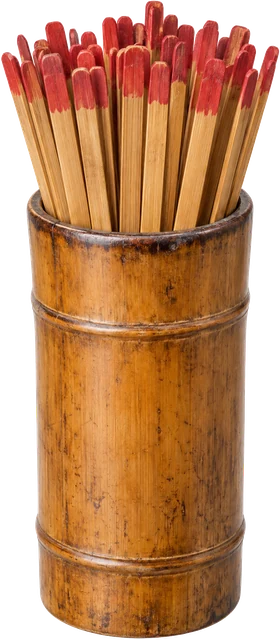
A bamboo fortune-stick cup

Draw another stick , or for a straight yes or no, throw the moon blocks

The verse follows the BW Monastery edition of the Guanyin set; the English rendering and reading are Jade Almanac's own. A drawn stick is a tradition and a prompt for reflection, not advice about health, money or the law.

Stay in the loop.

Chinese mythology, the zodiac, and the meaning behind names and symbols, rooted in the classics and read back to you. No spam. Unsubscribe anytime.