Guanyin fortune stick

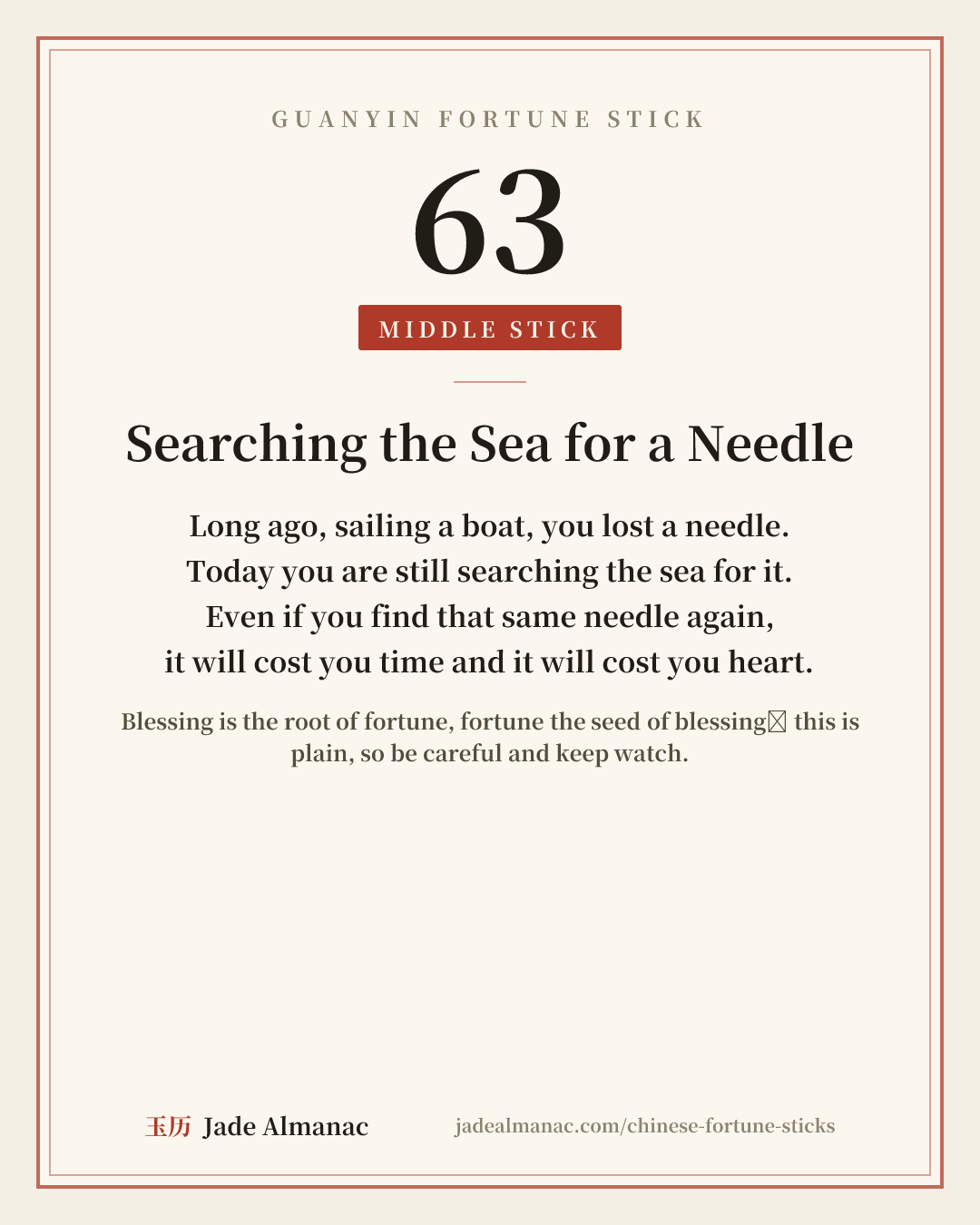
63

Middle stick

Guanyin fortune stick 63: Searching the Sea for a Needle

Long ago, sailing a boat, you lost a needle.
Today you are still searching the sea for it.
Even if you find that same needle again,
it will cost you time and it will cost you heart.

jadealmanac.com

Save image

The verdict
Blessing is the root of fortune, fortune the seed of blessing; this is plain, so be careful and keep watch.
What it says to you
A needle dropped overboard years ago, and you are still out on the water looking for it. The stick is gentle about this but clear: even success here costs more than it returns. Ask yourself what old loss you keep circling, a grudge, a chance that passed, a relationship that ended, and whether finding it would actually change anything now. The verdict points somewhere more useful. Blessing and fortune feed each other, so tend what you already have and handle it with care. Set a limit on the search, a date or one final attempt, and then turn the boat toward shore.

Matter by matter

Love
The two of you are not well matched.
Money
Some gains; trade can succeed.
Work and study
Hard work and worry; exams call for prayer and effort.
Health
Recovery is slow; keep up your care.
Home
Not entirely settled.
Travel
Delays on the way.
Lost things
Searching carries risk and may cost more than it's worth.

The story behind the stick

Editions offer two stories of exhausting labor here. Two name Nuwa mending the sky; one names Huang Daopo at her loom, with Nuwa as the alternate. In the myth recorded in the Han text Huainanzi, the pillars holding up heaven broke and the earth split. Nuwa melted stones of five colors to patch the sky, cut the legs from a giant turtle to prop up the four corners, killed the black dragon that menaced the people, and piled up reed ash to stop the flood. Huang Daopo was a Yuan dynasty woman credited with bringing cotton spinning and weaving methods from Hainan to her home near Shanghai. Both stories end in success, but only after enormous effort, which matches the image of searching the sea for a needle. The lot is middle: the thing can be found, at a heavy price in time and care.
Line by line

  1. A needle was lost from a boat long ago. Readers take the needle as something small but valued, often an old opportunity, a debt or a relationship let slip in the past.

  2. Today you are still searching the sea for it. Searching the sea for a needle is a common Chinese saying for a near-impossible hunt, and the line stresses how long it has gone on.

  3. Even supposing you find that very needle again. Temple readers point out the poem allows success; the lot does not say the search is hopeless, only that it is costly.

  4. It takes your time and it takes your heart. Traditionally the line asks you to weigh whether the prize is worth that cost before you continue looking.

The original verse

昔然行船失了针
今朝依旧海中寻
若然寻得原针在
也费工夫也费心

Seven characters a line, as printed in the BW Monastery edition.

Sources for the story: https://www.51chouqian.com/guanyinlingqian/63.html (Nuwa Mends the Sky); https://www.nongli.com/item5/guanyin/63.html; masterseanchan.com/guanyin-oracle/lot-63 (edition A: Huang Daopo Weaves, also Nuwa).

Optional: the temple way

At a temple the stick is not yours until two moon blocks agree: one flat side up and one round side up, a holy cup.

About stick 63

Is Guanyin stick 63 good or bad?

Stick 63, "Searching the Sea for a Needle", is a middle stick, a mixed stick, good with conditions. Blessing is the root of fortune, fortune the seed of blessing; this is plain, so be careful and keep watch.

What does Guanyin stick 63 say about love?

The two of you are not well matched.

What does Guanyin stick 63 say about money?

Some gains; trade can succeed.

What does Guanyin stick 63 say about work?

Hard work and worry; exams call for prayer and effort.

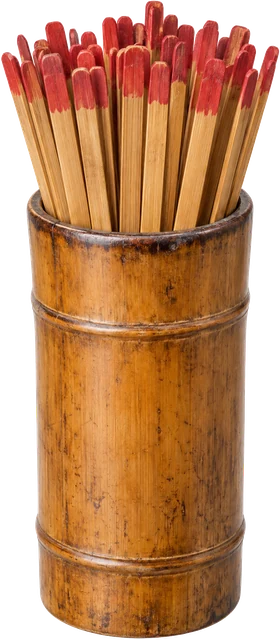
A bamboo fortune-stick cup

Draw another stick , or for a straight yes or no, throw the moon blocks

The verse follows the BW Monastery edition of the Guanyin set; the English rendering and reading are Jade Almanac's own. A drawn stick is a tradition and a prompt for reflection, not advice about health, money or the law.

Stay in the loop.

Chinese mythology, the zodiac, and the meaning behind names and symbols, rooted in the classics and read back to you. No spam. Unsubscribe anytime.