When is the Mid-Autumn Festival in 2027?
Wednesday, September 15, 2027. The festival always falls on the fifteenth day of the eighth month of the Chinese lunisolar calendar (the 15th day of the 8th lunar month), which is the night of that month's full moon, so the Gregorian date moves every year. Across a normal run of years it lands somewhere between early September and the first week of October. In the sixteen years listed on this page it ranges from September 8 in 2033 to October 6 in 2025.
When was the Mid-Autumn Festival in past years?
It fell on October 6 in 2025, September 17 in 2024, September 29 in 2023, September 10 in 2022, September 21 in 2021, and October 1 in 2020. Those are on the table above, alongside the coming years, because a date this far from fixed gets looked up backward as often as forward: for dating a photograph, a receipt, or a trip. All of them are computed from the lunar calendar rather than transcribed, so they agree with our calendar converter to the day.
What is the Mid-Autumn Festival?
It is the harvest and reunion festival of the Chinese calendar, held on the night of the eighth month's full moon. Families gather, eat a meal together, go outside to look at the moon, and share mooncakes. The organizing idea is roundness: the full moon, the round table, the round cake, and the Chinese word for a family reunion, which carries the sense of a circle being completed. It is one of the most important holidays in the Chinese year, and a public holiday in mainland China and Taiwan.
What is the Moon Festival, and where is it celebrated?
Moon Festival is the same holiday under a plainer name. In English it is often the name you meet first, on Chinatown posters and restaurant menus, while Mid-Autumn Festival is the closer translation of the Chinese. Both mean the fifteenth night of the eighth lunar month, which is Wednesday, September 15, 2027. As for where: it is a public holiday in mainland China and Taiwan, and in Hong Kong and Macau, where the day off is the day after the festival rather than the night itself. Beyond that it is a major festival for Chinese communities in Singapore, Malaysia and across the diaspora, so most cities with an established Chinatown hold something in the same week; San Francisco's Autumn Moon Festival is among the largest outside Asia. Korea and Vietnam keep their own festivals on that same full moon, related but not the same holiday.
Why does the date of the Mid-Autumn Festival change every year?
Because it is set by the moon and read on a solar calendar. The Chinese calendar counts months from new moon to new moon, so a lunar month is about 29.5 days and twelve of them fall roughly eleven days short of a solar year. The calendar makes that up by inserting a leap month every two or three years. The festival stays fixed at the fifteenth day of the eighth lunar month, which is why it always lands on a full moon, and drifts against the Gregorian calendar, which is why it can be September 8 in one year and October 6 in another.
Is the Mid-Autumn Festival a solar term?
No, and this is the most common mix-up about it. The 24 solar terms are fixed points on the sun's path and therefore land on almost the same Gregorian date every year, which is why the Autumn Equinox is always around September 23. The Mid-Autumn Festival is set by the moon instead, so it moves by up to a month. Both systems run inside the same Chinese calendar and are read together, but the festival is a lunar date and not one of the 24.
What is inside a mooncake?
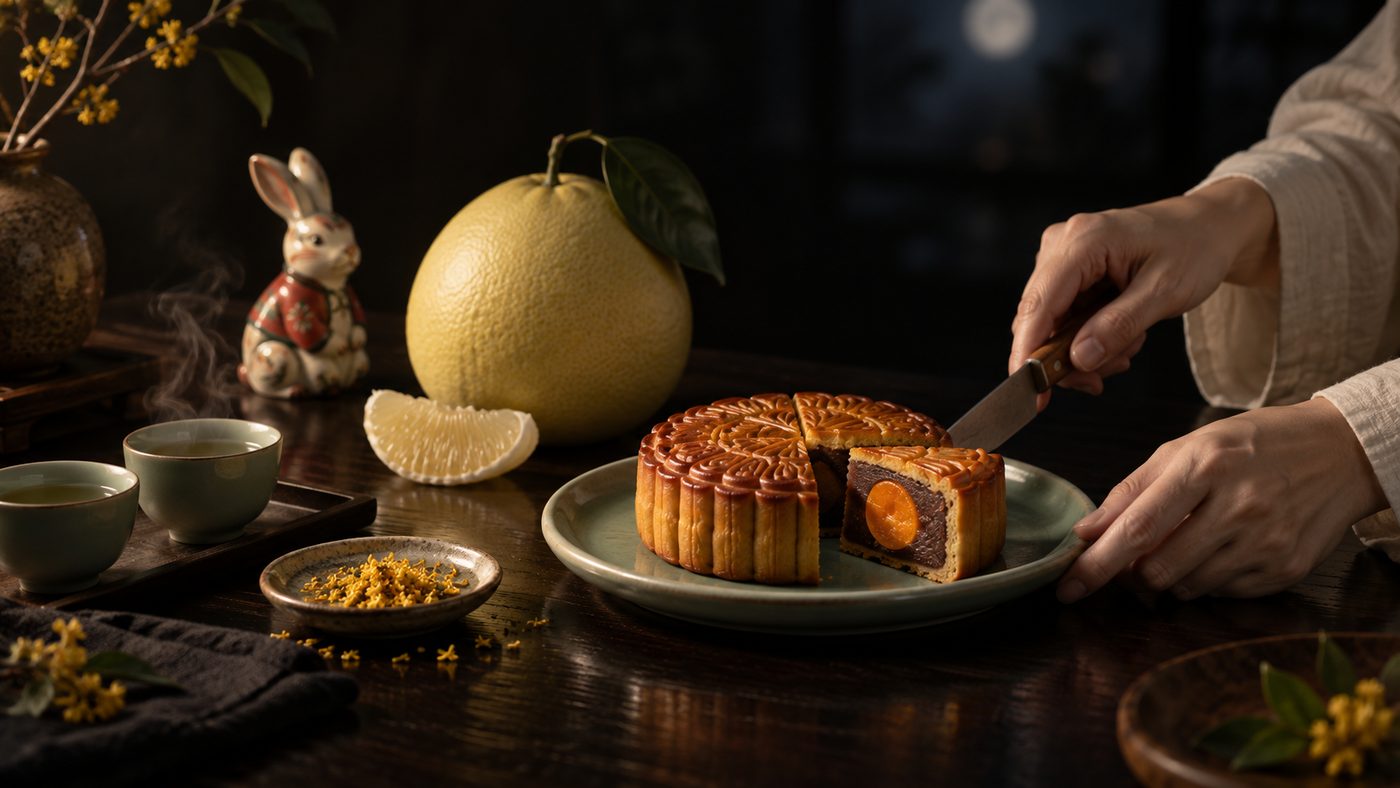
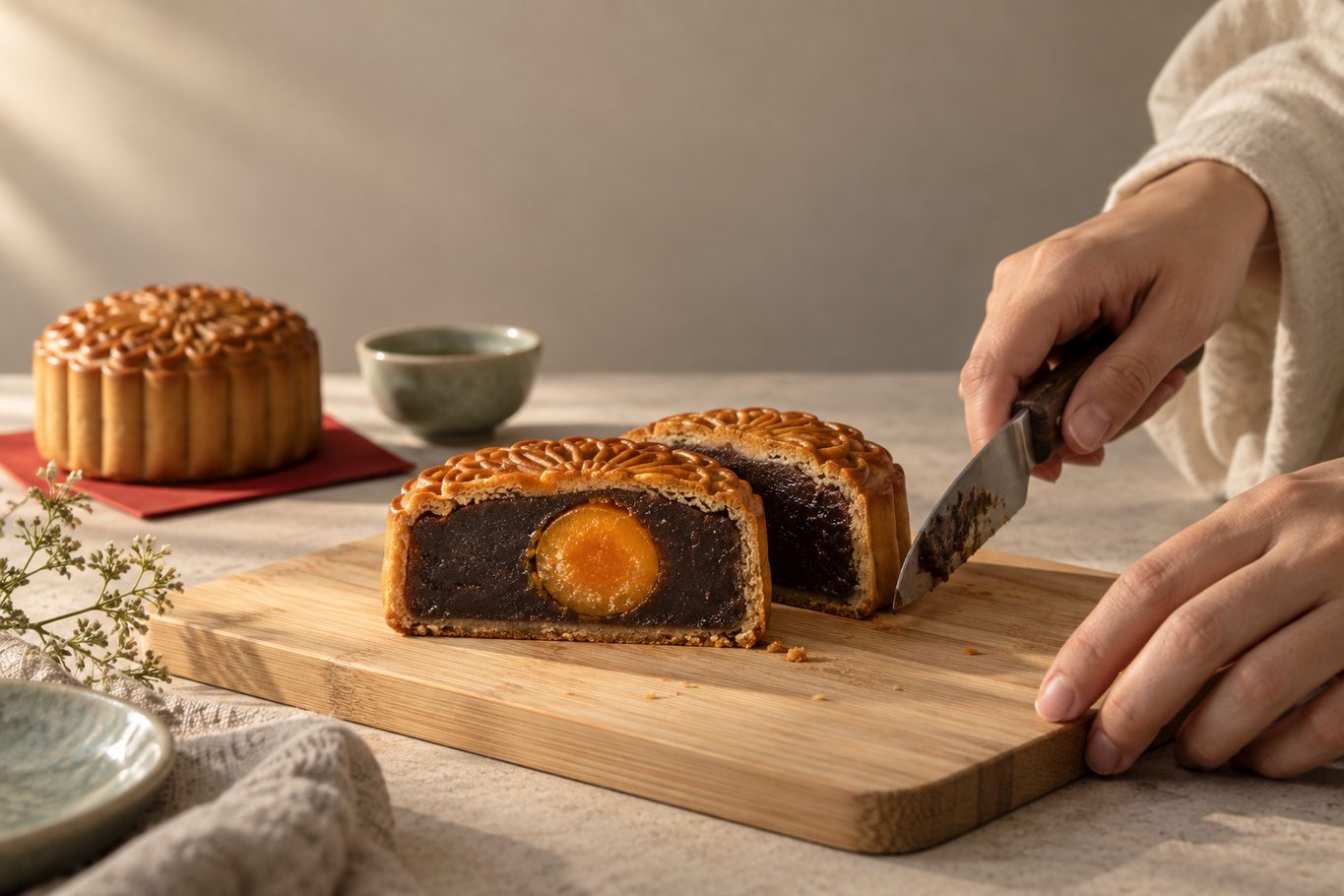
The classic Cantonese version is a dense pastry about 10 cm across and 3 to 4 cm thick, with a crust only 2 to 3 mm thin wrapped around lotus seed paste, red bean paste, or a mixed-nut filling. The prized ones hold one or two salted duck egg yolks in the middle, whose color and roundness stand for the full moon inside the cake. Modern versions run to chilled snow-skin mooncakes with a glutinous rice wrapper and, in Hong Kong, ice-cream ones. They are rich enough that they are eaten in thin wedges rather than by the cake.
How many days off do people get for the Mid-Autumn Festival in China?
One statutory day, in practice stretched to three. Mainland China grants a single public holiday for the festival itself and then does what it does with most of its holidays, shifting an adjacent weekend so the break runs three days end to end, sometimes at the price of working a Saturday on either side. The State Council publishes the exact arrangement for the coming year each December, which is why the answer is never quite the same twice and why any figure you read in advance is a forecast. The other thing worth knowing is the collision with National Day, the seven-day break beginning October 1. In years when the two fall close together they are merged into a single long holiday of about eight days, which is what happened in 2025. In 2027 they stay separate, because the festival lands on September 15. Hong Kong, Macau and Taiwan set their own days off and do not follow the mainland arrangement.
When do you eat mooncakes, and when can you start giving them?
You eat them on the night itself, after the meal and usually outdoors with the moon up, cut into thin wedges and passed around rather than eaten whole. Giving them starts far earlier. Boxes appear in shops roughly a month ahead and the gifting window opens with them, so companies send theirs to staff and clients two to four weeks out, and families exchange them across the fortnight before the date. Arriving with a box on the day is fine but late: the point of the gift is to reach the person before they sit down for the festival, not during it. For 2027 that puts the sensible window in the two or three weeks running up to September 15.
What does it mean to give someone a mooncake?
It means you are including them in the reunion, which is the whole idea of the night. The cake is round like the full moon and like the table the family sits at, and the Chinese word for that reunion carries the sense of a circle closing, so handing someone a mooncake says they belong inside your circle even if the two of you cannot be in the same room. The custom runs on two tracks that feel quite different. Between friends and relatives it is warm and small, a box brought when you visit. Between companies it is an obligation at industrial scale: employers give to staff, firms give to clients, and the boxes climb in price and lacquer until the gift is plainly about the relationship rather than the cake, which is why a great many of them are passed along unopened. Give a sealed box, and expect the person receiving it to cut it for everyone present rather than keep it for themselves.
Did mooncakes really start a rebellion?
It is a good story and it is folklore, not documented history. The tale says that Chinese rebels planning to overthrow the Mongol Yuan dynasty hid the message "kill the rulers on the fifteenth day of the eighth month" inside mooncakes, or printed it across a four-piece set that only made sense when the pieces were reassembled. It circulates widely, including on packaging, and no contemporary record supports it. Enjoy it as the founding legend it is rather than as an account of how the Ming dynasty began.
How do you say happy Mid-Autumn Festival in Chinese?
Zhōng qiū kuài lè, four syllables, roughly "jong chyo kwai luh." It is the standard greeting for the day and works for anyone, family or not. In Cantonese the same four characters are jung1 cau1 faai3 lok6. If you want the warmer version, the phrase people use when they are apart is a wish that everyone stays well and shares the same moon, which comes from a poem Su Shi wrote on this night in 1076 and which almost every Chinese speaker can finish for you.
Is the Mid-Autumn Festival the same as Korean Chuseok?
Same night, different festival. Chuseok falls on the fifteenth day of the eighth lunar month too, so the two share a date, but the Korean holiday is built around ancestral rites and a visit to family graves, and its signature food is songpyeon, a stuffed half-moon rice cake, not a mooncake. Vietnam's version, Tết Trung Thu, has moved in a third direction again and is now largely a children's festival, with lantern processions and mask parades.
What do people do on the Mid-Autumn Festival?
Eat with family, then go outside. Moon-viewing is the actual activity, and the food is arranged around it: mooncakes, pomelo, taro, osmanthus wine when it is in flower. Children carry paper lanterns. In Hong Kong the Tai Hang district runs a fire dragon through the streets for the three nights around the festival. Offices and factories give mooncakes as gifts, at a scale that makes the weeks beforehand a small national industry in itself.