Chinese Zodiac · The year, not the animal

Chinese zodiac 2026: the Fire Horse year, and where all twelve stand

The question people bring to a Chinese zodiac year is which sign gets the good one, and the honest answer is that the tradition does not work that way. What it actually holds is a table. Your sign is one of twelve earthly branches, the year is one of the same twelve, and the classical texts record a small, fixed set of named relations that can hold between any two branches. That is a rule with an answer, not a forecast.

For 2026, the year branch is the Horse. Below is every one of the twelve read against it, straight off the relation tables, with the traditional reading of each and nothing added. Four signs are named by those tables this year. The other 6 are not, and the tables treat that as unremarkable rather than as bad news.

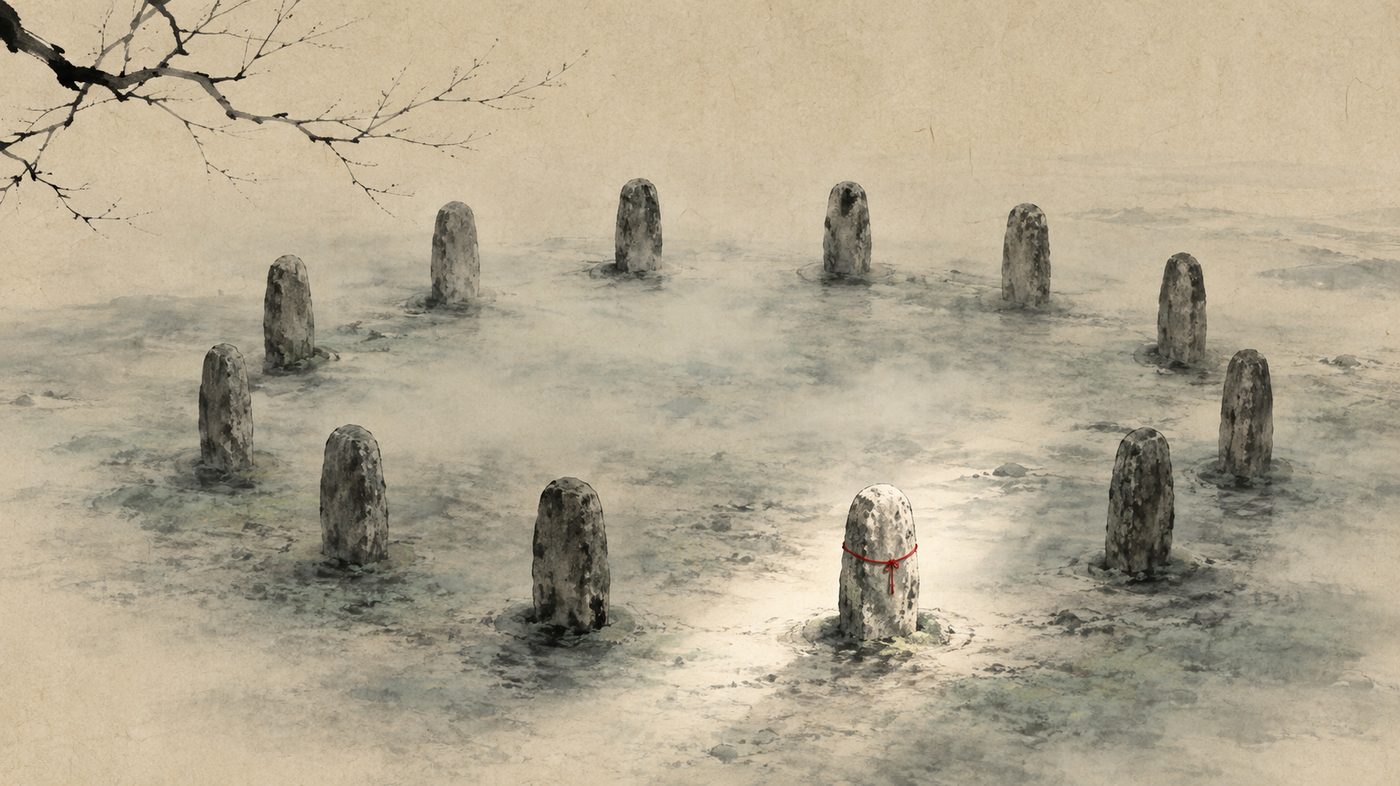
An ink-wash painting of twelve plain stone markers standing in a ring on misty open ground, with a thin red cord tied around the one stone that catches the light.
Twelve positions on one ring, and in any given year the red cord is on exactly one of them. That is the whole of what the system says about a year. Illustration, not a depiction of a real site.

When 2026 actually starts

Two dates, both defensible, and knowing which one is being used matters more than anything else on this page if your birthday falls in February.

Chinese New Year 2026 is February 17, 2026. That is the popular rule and the lunar one. On that reckoning the Horse year runs to February 5, 2027, and it is the boundary meant by almost every English sentence that begins "people born in the year of the".

Li chun 2026 is February 4, 2026. Li chun is the solar term that opens spring, it lands within a day or so of the same date every year, and it is the boundary Chinese astrology itself uses when it builds a chart. The year pillar of a bazi chart flips there, not at the new moon.

So a birthday between the two belongs to one animal under the popular rule and the previous one under the astrological rule, which is the single most common way people end up holding two different answers about their own sign. Our page on the two new years works the whole thing through, and the boundary table gives both dates for every year from 1900 to 2100 if you would rather just look yours up.

What kind of year it is

2026 is bǐng wǔ, 丙午, and it sits at position 43 of the sixty-year cycle. Chinese years are named by pairing one of ten heavenly stems with one of twelve earthly branches and walking both lists together, which takes sixty years to come back around, so this exact year name last appeared sixty years ago and will not appear again for another sixty.

The stem carries the element, which this year is Fire. The branch carries the animal, which is the Horse. What makes this particular pairing loud is that they agree: the Horse's branch is itself a Fire branch, so the year is Fire sitting on Fire rather than one element balanced against another. A doubled year is read as a strong one, not a comfortable one.

A Fire Horse year also carries a specific piece of folklore about the people born in it, which is genuinely famous and belongs to the animal rather than to the calendar. The Horse page tells that story properly, along with every Horse year back to 1930. And the same year read as space rather than as time, meaning the annual flying star chart and which corners of a house it marks, is on the feng shui side.

Tai Sui, and what offending it actually means

Tai Sui 太岁 is the deity of the year. The idea grew out of Jupiter, whose orbit takes a little under twelve years, close enough to the twelve-branch cycle that Chinese astronomers built a counter-orbiting shadow planet to keep the count tidy, and that shadow became a god. Later practice gave the office sixty holders, one for each year of the cycle, each with a name and a face, and temples across the Chinese world still keep all sixty.

The phrase usually translated as offending the Tai Sui covers three relations, not one, and they are the same relations printed in the table below. Being in your own zodiac year is the commonest. Standing directly opposite the year branch is the strongest. The harm relation is the mildest. All three are positions on a wheel, and the position is a fact you can check rather than an opinion anybody can sell you.

It is worth being precise about what the tradition prescribes for them, because the English internet tends to overstate it. The standard advice is caution about the irreversible: do not sign the thing you cannot unsign, do not start the lawsuit, postpone the move if it can wait. The folk practice is to wear red, ideally given to you by someone else. Nothing in the classical literature promises a bad year, and nothing in it requires you to buy anything. Where the god came from, how a Han astronomer's shadow planet became a court of sixty generals, and what the temple rite and its paper talisman actually are, is on the Tai Sui page.

All twelve signs, read against 2026

Every row is derived from the same branch-relation tables our calculator uses, so this page cannot say something the compatibility pages contradict. Where a row reads nothing recorded, that is the literal state of the tables: no relation holds between that branch and this year's, which is the ordinary case for most of the wheel in most years.

Sign Branch Relation to 2026 What the tables say
Rat Direct clashliu chong Sits directly opposite the Horse on the wheel. This is the relation the almanacs mean by offending the year.
Ox chǒu Harmliu hai The slow-friction pairing rather than the head-on one. Named in the tables, milder than a clash.
Tiger yín Same trinesan he Four places from the Horse on the wheel, in the Fire trine, the strongest of the supportive relations.
Rabbit mǎo No named relation Nothing recorded.
Dragon chén No named relation Nothing recorded.
Snake No named relation Nothing recorded.
Horse Your own yearben ming nian The year of your own sign, which the tradition treats as an exposed position rather than a lucky one. The Horse's branch is also one of the four that the punishment tables read against itself.
Goat wèi Six harmonyliu he One of the six quiet alliances. The Goat and the Horse are the branch system's paired signs.
Monkey shēn No named relation Nothing recorded.
Rooster yǒu No named relation Nothing recorded.
Dog Same trinesan he Four places from the Horse on the wheel, in the Fire trine, the strongest of the supportive relations.
Pig hài No named relation Nothing recorded.

The four signs the year names

The Horse is in its own year. This is the relation everybody has heard of and almost everybody misreads. Your own zodiac year is not a lucky year in the tradition; it is an exposed one, on the reasoning that the year deity is standing where you are standing. In Horse years the position is doubled, because the Horse's branch is one of the four the punishment tables read against itself. The prescription is the red thread, the red socks, and a light touch on big decisions.

The Rat is in direct clash. A clash, liu chong, is the cleanest relation in the whole system: the two branches sit at opposite points of the wheel, six places apart, and there are exactly six such pairs. The classical reading is disruption and motion rather than misfortune. Practitioners associate a clash year with house moves, job changes, travel, and things generally being unsettled, and they treat it as a year to avoid locking anything in.

The Ox stands in the harm relation. Liu hai is the quietest of the flagged relations and the one with the least written about it. The old texts describe friction that accumulates rather than a collision: small obstructions, people at cross purposes, plans that take longer than they should. It is a footnote in the tables, and it deserves to be read as one.

The Goat is the year's paired sign. Liu he, the six harmonies, are the branch system's one-on-one alliances, and this is the only relation on the list the tradition reads as straightforwardly supportive. The Goat and the Horse are one of the six pairs.

Two more signs are worth naming even though the year does not flag them. The Tiger and the Dog sit four places from the Horse on the wheel, which puts all three in the Fire trine, san he. A trine is the strongest supportive relation in the system, stronger than the six harmonies, and it is the one thing on this page that comes closest to the answer people are actually looking for when they ask which sign has the good year.
So which sign is luckiest in 2026?

If a page answers that with a name and a paragraph of encouragement, it made the paragraph up. There is no classical text that ranks the twelve signs by fortune for a given year, because the twelve-branch system does not produce a ranking. It produces relations, and the relations above are the whole of what it produces.

The closest defensible answer is structural rather than predictive: the Tiger and the Dog stand in the trine, the Goat stands in the six harmonies, and those are the three positions the tradition reads as supported. The Horse, the Rat and the Ox stand in the three flagged positions. The other 6 have no relation to this year at all.

And then the caveat that matters more than any of it. Your year branch is one character out of the eight in a birth chart, and classical practice weights the month branch and the day stem far above it. A practitioner asked whether 2026 is a good year for you would not answer from your animal; they would read the chart and give the year a score against it. The zodiac year is the coarsest instrument in the toolbox, which is exactly why it is the one everybody has heard of.

Questions people ask

What Chinese zodiac is luckiest in 2026?

Nobody, in the sense the question means, and any page that names one is inventing it. What the tradition actually records is a set of named relations between your sign's branch and the year's branch, and for 2026 those are: the Horse is in its own year, the Rat is in direct clash with it, the Ox stands in the harm relation, and the Goat is its paired sign under the six harmonies. The Tiger and the Dog share the Fire trine with it, which is the most favorable relation on the list. The remaining 6 signs have no relation to this year at all, which the tables treat as unremarkable rather than as bad news.

When does the 2026 Chinese zodiac year start?

There are two defensible dates and they are 13 days apart. Chinese New Year 2026 falls on February 17, 2026, and that is the popular rule, the one the lanterns and the red envelopes follow; on that reckoning the year runs to February 5, 2027. Li chun, the solar term that opens spring, falls on February 4, 2026, and that is the rule Chinese astrology itself uses for the year pillar. A birthday in the gap belongs to a different animal under each. Our page on the two new years works the whole tangle through.

What does it mean to offend the Tai Sui?

Tai Sui (太岁) is the year deity, tied to the position of Jupiter, and the phrase covers a small family of relations rather than one. Being in your own zodiac year is the commonest, and in 2026 that is the Horse. Standing directly opposite the year branch is the strongest, and in 2026 that is the Rat. The harm relation is the mildest of the three, and this year it falls on the Ox. What the tradition prescribes for all of them is caution rather than catastrophe: postpone the irreversible decision, do not start the lawsuit, and in the folk practice wear red. It is a caution flag on a calendar, not a prophecy.

Is 2026 a bad year for the Rat?

The Rat is the sign in direct clash with 2026, which is the relation the almanacs weight most heavily, so the honest answer is that the tradition flags it and does not say more than that. A clash (liu chong) means the two branches sit at opposite points of the twelve-branch wheel, and the classical reading is disruption and movement rather than misfortune: house moves, job changes, travel, things being unsettled. Practitioners treat a clash year as a year to avoid locking anything in, not a year to hide from. A full birth chart also outranks the year sign by a wide margin, because your year branch is one character out of eight.

Why is 2026 called a Fire Horse year?

Because its sexagenary name is bǐng wǔ, 丙午, position 43 of the sixty-year cycle. The first character is the heavenly stem, and its element is Fire; the second is the earthly branch, which carries the Horse. The combination returns once every sixty years. What makes this one loud is that the Horse's branch is itself a Fire branch, so the stem and the branch agree, and a year whose two halves reinforce each other is read as a strong one rather than a balanced one.

Sources

  • • Hong Kong Observatory, Gregorian-Lunar Calendar conversion table for 2026, for the Chinese New Year and li chun dates: source
  • • 《渊海子平》 (Yuanhai Ziping, Song-dynasty compilation), the founding manual of the day-master method, for the six clashes and six harmonies as applied to a birth branch: source
  • • 《三命通会》 (Sanming Tonghui, Wan Minying, Ming dynasty), for the harm and punishment tables and their traditional readings: source
  • • Wikipedia, Tai Sui: the Jupiter cycle, the sixty year generals, and the pacifying rituals attached to them: source
  • • Wikipedia, Earthly Branches: the twelve-branch cycle and the standard relation tables it generates: source

The animal, not the year

Year of the Horse

Every Horse year back to 1930, the five-element branches, and the folklore about the people born in them.

The year after this one

Chinese zodiac 2027

The Fire Goat year, read the same way: when it opens, and where all twelve signs stand against its branch.

The same year, in space

Feng shui 2026

The annual flying star chart: which sectors of a house the year marks, and what the tradition asks you to do about them.

The February problem

Li chun and the two new years

Why a birthday in early February can belong to two different animals, and which rule answers which question.

The instrument that is not coarse

Cast your bazi chart

All eight characters of your birth moment, scored against the year, instead of the one everybody quotes at parties.

Stay in the loop.

Chinese mythology, the zodiac, and the meaning behind names and symbols, rooted in the classics and read back to you. No spam. Unsubscribe anytime.