Chinese Mythology
The dragons, gods, and creatures of the Chinese imagination, retold in plain English and traced back to the classics that first recorded them, from the Classic of Mountains and Seas to the Book of Changes, with the original passages cited.
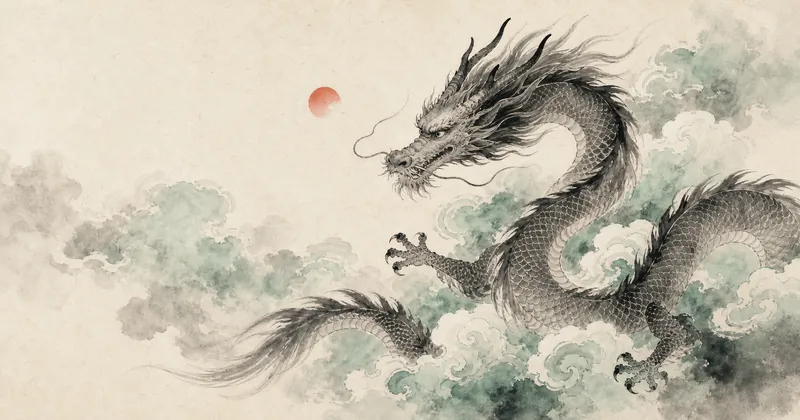
Dragon
龙The Chinese dragon, 龙 (lóng), is almost the exact opposite of the fire-breathing monster the English word "dragon" brings to mind. It is a benevolent, wingless, serpentine water-god: bringer of rain and rivers, chief of all scaled creatures, emblem of the emperor, and the auspicious ancestor a billion people invoke when they call themselves "descendants of the dragon." Less a beast to be slain than a weather system with a personality.
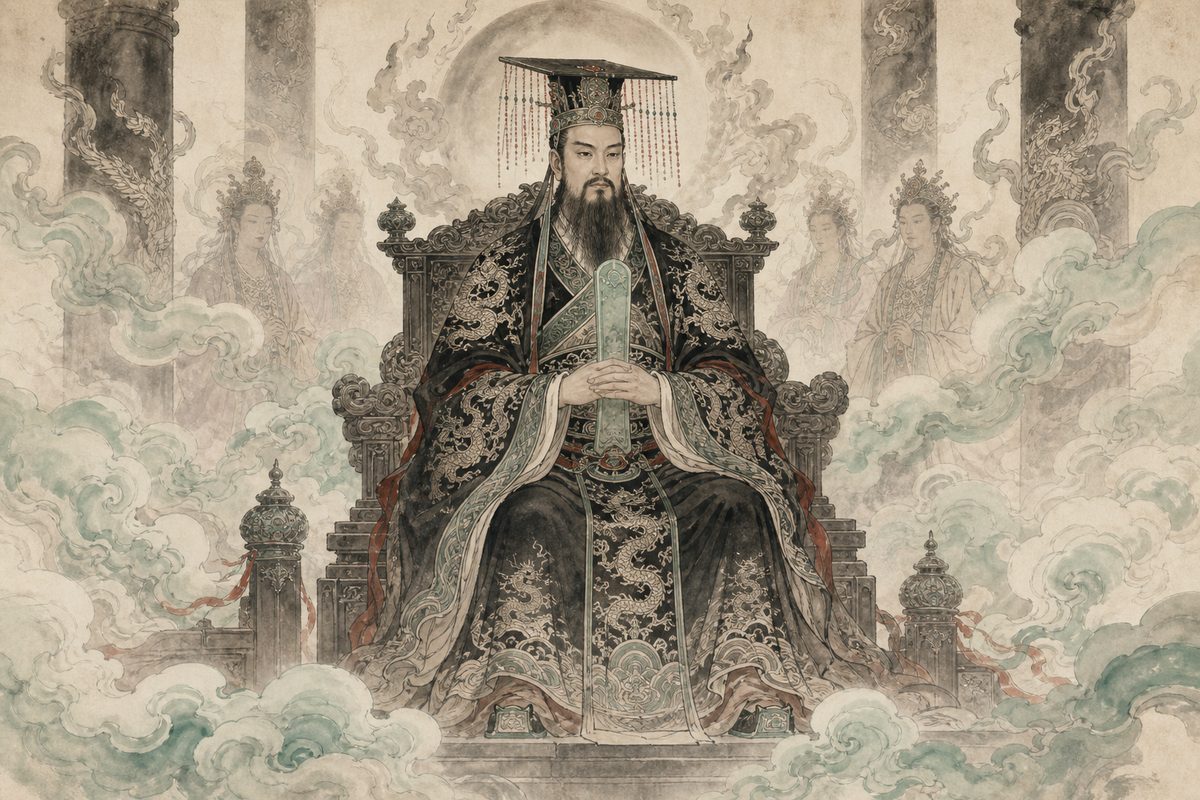
Jade Emperor
玉皇大帝The Jade Emperor, 玉皇大帝 (Yù Huáng Dàdì), is the supreme sovereign of the Chinese heavens, the august ruler most people picture when they picture Heaven: robed, crowned, and presiding over a vast celestial bureaucracy of gods and record-keepers. Yet he is famously not the highest power in Daoist theology, he was not born a god, and he was formally promoted to his cosmic office by the decree of an earthly Chinese emperor. He is the ruler of Heaven, and the one Sun Wukong could not defeat.
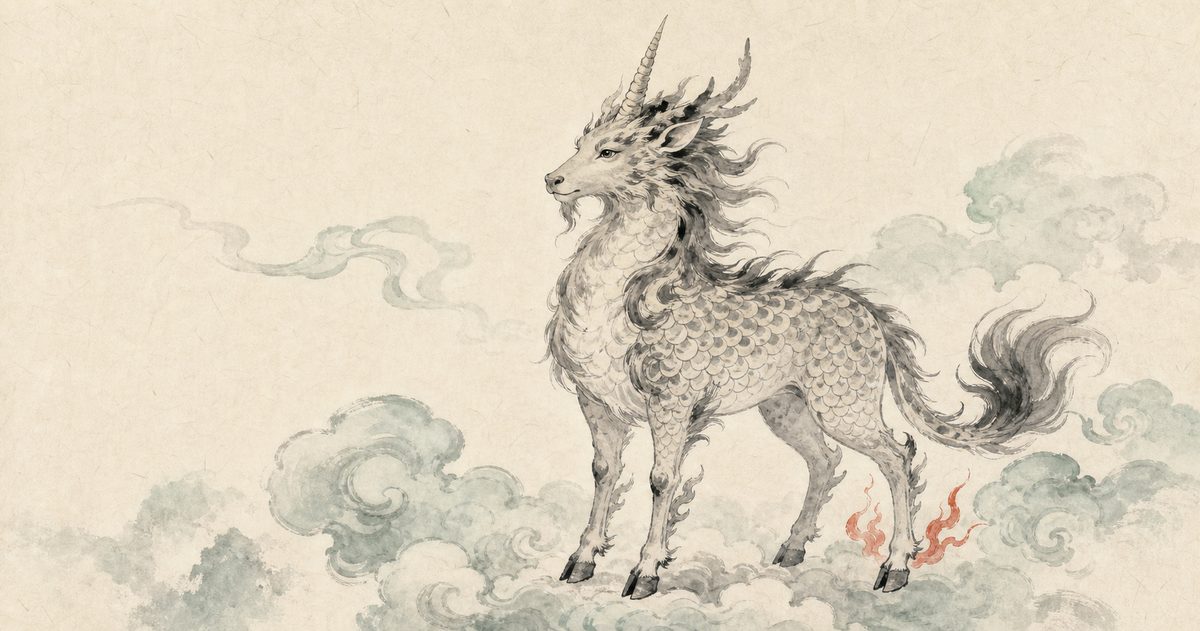
Qilin
麒麟The qilin, 麒麟 (qílín), is the gentlest creature in Chinese myth: a benevolent, scaled, hoofed animal with a deer's body, an ox's tail, and a soft horn, so kind it will not tread on a blade of grass. The West calls it the "Chinese unicorn." One of the four great auspicious animals, it appears when a sage is born or a golden age is coming, and it is the reason a real giraffe once caused a sensation at the Ming court.
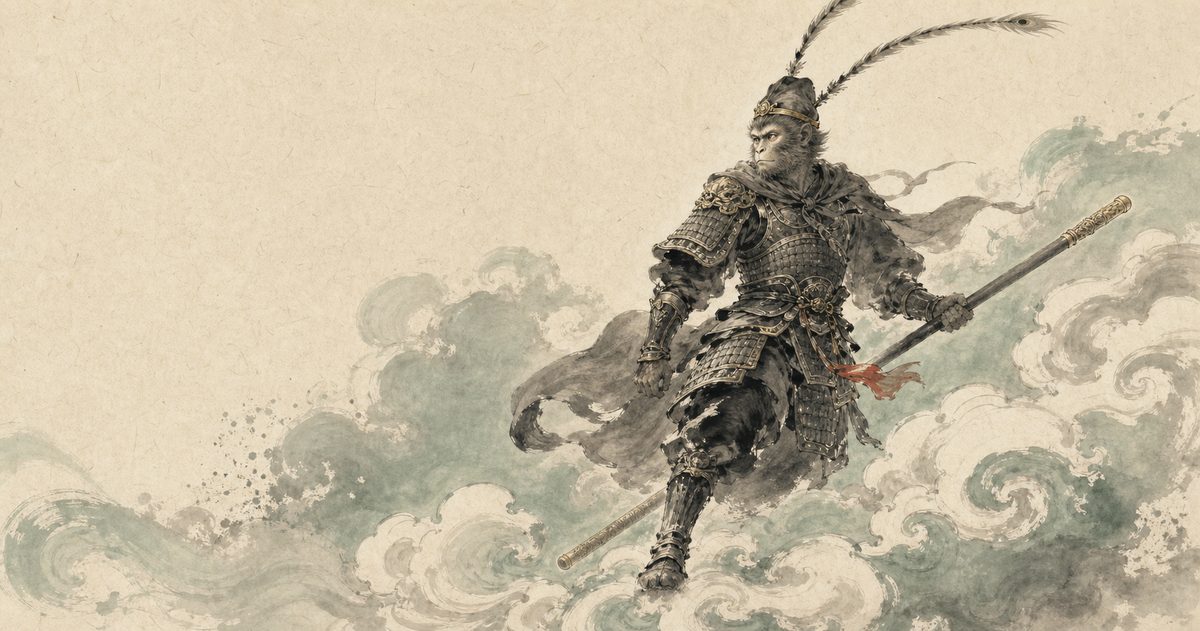
Sun Wukong
孙悟空Sun Wukong, 孙悟空 (Sūn Wùkōng), the Monkey King, is the breakout hero of the sixteenth-century novel Journey to the West and the most retold character in Chinese fiction. Born from a stone, armed with a shape-shifting staff taken from the Dragon King, he rebels against Heaven itself, is tamed on a pilgrimage to India, and ends as a Buddha. Rebel, trickster, and unlikely saint, he is now a global game and anime star.
Chinese gods & immortals 神仙
From the Jade Emperor and Guanyin to Nezha, the Eight Immortals, and the gods of wealth, love, and the kitchen stove.
Chinese mythical creatures 神兽
From the phoenix and the nine-tailed fox to the Four Symbols of the sky and the monstrous Four Perils.