Chinese Gender Predictor
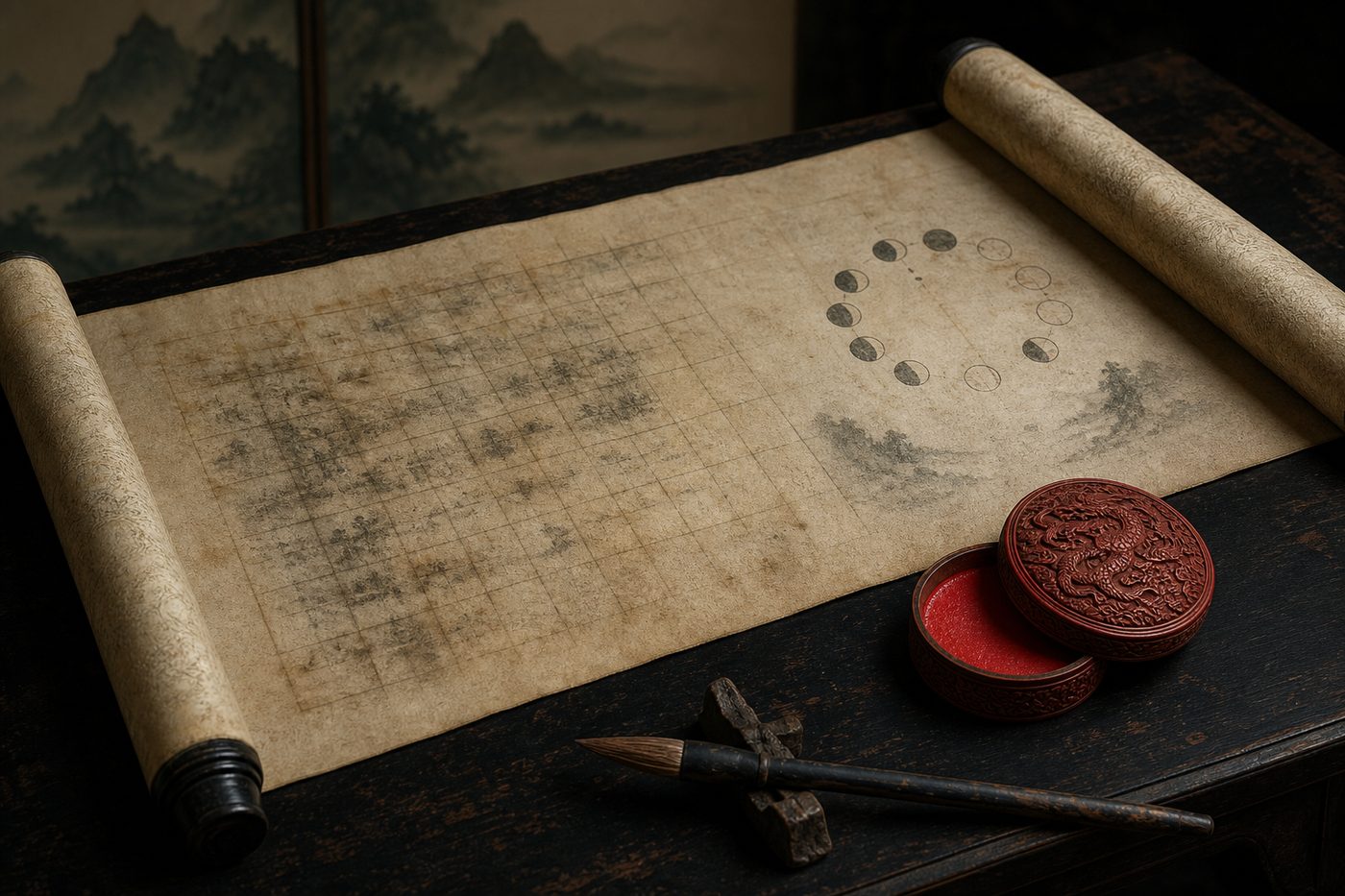
For three hundred years, the story goes, this chart lived under guard in the Qing palace, where emperors used it to time the arrival of princes. Today it answers the one question no expectant parent can wait twenty weeks for: boy, or girl? Two dates, ten seconds, and the chart speaks. Millions of mothers consult it every year, your aunt very much included. Ours reads it the way the palace astrologers would have, by the true lunar calendar, worked out for you in the open, and it sends you off with something no other version offers: your baby's zodiac sign and element, painted in ink.
Get your reading
For fun and tradition, not medical advice. We show every step of the math.
You'll get boy or girl, the exact cell we landed on, your lunar age and month worked out in the open, plus your baby's zodiac reading.
What is the Chinese gender predictor?
The Chinese gender predictor, also known as the Chinese gender chart, birth chart, or Chinese gender calendar, is a lookup table: 28 rows for the mother's age, twelve columns for the month the baby was conceived, and a boy or girl verdict waiting in every one of its 336 cells. So far, so simple. The catch, and honestly half the fun, is that both numbers are counted the Chinese way. The age is your nominal age, 虚岁 (xūsuì, roughly "shoo-sway"), by which you were already one year old on the day you were born. The month is a lunar month, which drifts against the Western calendar and every few years quietly doubles itself. Read the chart with your Western age and a wall-calendar month and you are, quite confidently, reading somebody else's cell. Most people online are.
Its Chinese name, 清宫图, means "Qing palace chart," a nod to the legend that it once picked princes for emperors. Whether it really did is a story we take up below, and it is worth the scroll.

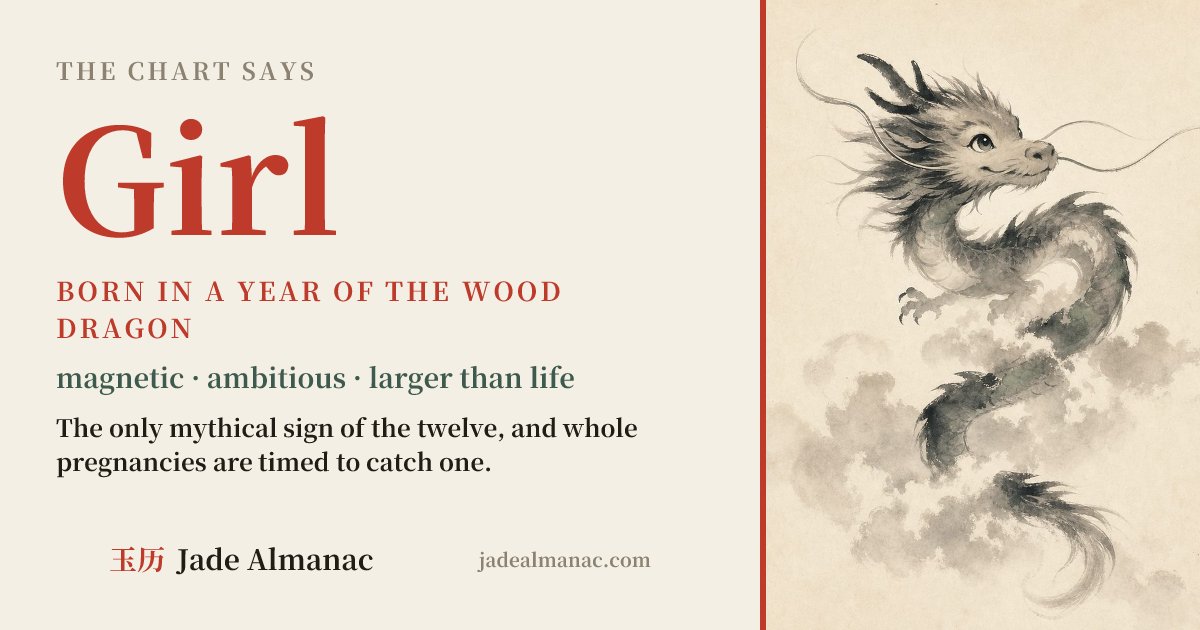
Two real readings from the calculator above. Tap either to see its full result page.
The chart itself
Here is the full traditional grid, transcribed from the version most widely reproduced in Chinese-language sources and cross-checked against independent copies. Run a finger down your row and you'll notice the pattern refuses to be a pattern: age 21 is eleven girls and a single boy, age 45 flips nearly every month. And we'll let you in on something no other site will show you: the little dots mark cells where circulating copies of the chart disagree with each other. There are 43 of them, about one cell in eight, mostly in the older rows. Somewhere along the photocopy trail, the chart started quarreling with itself, and we think you deserve to see where.
| Lunar age | M1 | M2 | M3 | M4 | M5 | M6 | M7 | M8 | M9 | M10 | M11 | M12 |
|---|---|---|---|---|---|---|---|---|---|---|---|---|
| 18 | G | B | G | B | B | B | B | B | B | B | B | B |
| 19 | B | G | B | G | G | B | B | B | B | B• | G• | G |
| 20 | G | B | G | B | B | B | B | B | B | G | B | B |
| 21 | B | G | G | G | G | G | G | G | G | G | G | G |
| 22 | G | B | B | G | B | G | G | B | G | G | G | G |
| 23 | B | B | G | B | B | G | B | G | B | B | B | G |
| 24 | B | G | B | B | G | B | B | G | G | G | G | G |
| 25 | G | B | B | G | G | B | G | B | B | B | B | B |
| 26 | B | G | B | G | G | B | G | B | G | G | G | G |
| 27 | G | B | G | B | G | G | B | B• | B | B | G | B |
| 28 | B | G | B | G | G | G | B | B• | B | B | G | G |
| 29 | G | B | G | G | B | B | B• | B | B | G• | G• | G• |
| 30 | B | G | G | G | G | G | G | G | G | G• | B | B |
| 31 | B | G | B | G | G | G | G | G | G | G• | G• | B |
| 32 | B | G | B | G | G | G | G | G | G | G• | G• | B |
| 33 | G | B | G | B | G | G | G | B | G | G• | G• | B |
| 34 | B | G• | B• | G | G | G | G | G | G | G• | B• | B |
| 35 | B | B | G | B | G | G | G• | B• | G | G• | B | B |
| 36 | G | B | B | G | B | G | G | G• | B | B• | B | B |
| 37 | B | G | B | B | G | B | G | B• | G• | B• | G• | B• |
| 38 | G | B | G | B | B | G | B | G | B | G• | B• | G• |
| 39 | B | G | B | B | B | G | G | B | G | B• | G• | G |
| 40 | G | B | G | B | G | B | B | G | B | G | B | G |
| 41 | B | G | B | G | B | G | B | B | G | B | G | B |
| 42 | G | B | G | B | G | B | G | B | B | G | B | G |
| 43 | B | G | B | G | B | G | B | G | B | B | B• | B |
| 44 | B• | B | G | B | B• | B | G | B | G | B | G• | G |
| 45 | G• | B• | B | G | G• | G | B | G | B | G | B• | B• |
B boy · girl · • = versions of the chart disagree on this cell. Ages are lunar ages, months are lunar months.
How to read it: lunar age and lunar month
Your row is your nominal age at conception. In the traditional count, a baby arrives in the world already one year old, and everyone's age ticks over together at Chinese New Year rather than on birthdays. Which means the chart may well consider you a year or two older than your driver's license does. Take it as a compliment to your accumulated wisdom. The formula: lunar year of conception, minus lunar year of your birth, plus one. The trap is the New Year itself: someone born on February 1, 1983 was born before that year's Spring Festival, so their lunar birth year is 1982, and every row on the chart shifts with it. This one detail is why two sites will happily hand the same mother two different answers. (Curious what the traditional count makes of your own age? Our Chinese age calculator works it out for any birthday.)
Your column is the lunar month of conception. If you know the conception date, we convert it. If you know your due date, conception is roughly 266 days earlier. From the first day of your last period, add about 14 days. Every conversion we make is shown with your result, so you can check our work, which is not a courtesy the original eunuchs extended.
Leap months and knife-edge dates. Every few years the lunar calendar inserts a thirteenth month, and the chart has no column for it. Tradition has a rule: the first half of a leap month reads as the month it repeats, the second half as the next month. And when a conception date sits within a day of a lunar boundary or of Chinese New Year, a single day would flip the answer. Other calculators silently pick a side. Ours tells you the result could go either way, because on a knife edge that is the only honest answer.
The legend of the palace chart, and what we found when we checked

The story goes like this. Seven centuries ago, court astrologers devised a chart for the imperial household, tuned to the lunar calendar and the mother's years, so that an empress might time the conception of a prince. It was kept in the inner palace, guarded by eunuchs, its use forbidden to commoners. When the Qing dynasty fell, the chart vanished in the looting and resurfaced abroad: carried to England, some say. To Austria, say others. Locked in a Taiwanese university vault, says a third telling. It depends entirely on who is telling it, which is your first clue.
We went looking for the palace original, because that is the kind of thing we do here. Arithmetic objects first: the Qing dynasty ran 276 years, 1644 to 1912, which makes a 700-year-old Qing heirloom quite a trick. The tellings cannot agree on the dynasty, the thief, or the destination. No palace archive lists it, no museum holds it, and no historian has ever produced it. What the record actually shows is more modest and, we would argue, more charming: the earliest copies anyone can point to surfaced in Taiwanese and Hong Kong newspapers in the 1970s, and the chart spread from there as a photocopy classic, passed from clinic waiting rooms to kitchen tables to, eventually, the entire internet. A beloved piece of modern folklore in an antique costume. We think that is the better story anyway, and it has the advantage of being true.
So, how accurate is it really?
You had to ask. The largest test ever run leaves little wiggle room: epidemiologist Eduardo Villamor and colleagues applied the chart to 2.8 million Swedish births and found it right about 50 percent of the time, at every maternal age and in every conception month (Villamor et al., Paediatric and Perinatal Epidemiology, 2010; the University of Michigan's press release was titled, wonderfully, "Don't paint the nursery just yet"). A coin does the same job and fits in your pocket.
You will see sites claim 70, 90, even 93 percent accuracy. None of them cite a study, because there is none. Some quietly run a little formula instead of the actual chart and hope nobody checks; we checked, and the two disagree on dozens of cells. Add the 43 cells on which published copies of the chart contradict each other, and "93% accurate" dissolves into marketing.
Does that make the chart worthless? Not remotely. Nobody consults it the way they consult a lab report. It is a tradition, a conversation starter, a fifty-fifty thrill for the group chat, and one of the few pieces of imperial theater you can play with on your phone. Enjoy it exactly that way.
And here is the part that is not a coin flip: the lunar math behind your reading is real, and so is what it says about the baby. The zodiac animal and element of the birth year are the genuine article, the same reading a grandmother in Chengdu would give, and they anchor a tradition with actual substance: a Chinese name chosen to fit the child's year and element. The chart is the game. Those are the keepsakes.
If you actually need to know
Medicine has this one covered. Cell-free DNA screening (NIPT) can report fetal sex from a maternal blood draw at about 10 weeks (ACOG, MedlinePlus/NIH). The routine anatomy ultrasound at 18 to 22 weeks is the standard look (ACOG on ultrasound exams). Talk to your midwife or doctor about which is right for you; nothing on this page is medical advice.
One boundary we hold: this page is for curiosity and celebration, whatever the answer. It is not a tool for choosing, and the chart could not help you choose anyway.
Questions people actually ask
How accurate is the Chinese gender predictor?
About 50 percent, the same as a coin flip. A University of Michigan team checked the chart against 2.8 million Swedish birth records and found no predictive value at any age or conception month. Sites claiming 90 percent accuracy never cite a source. Treat it as a tradition and a bit of fun, not information.
What is lunar age, and why is my chart age older than my real age?
Chinese tradition counts you as one year old at birth, so your nominal age (虚岁) runs at least one year ahead of your Western age, and it must be computed from lunar years. If you were born in January or February before Chinese New Year, your lunar birth year is the previous year, which shifts your row again. Our calculator handles both automatically.
What happens if conception falls in a leap month?
The lunar calendar inserts a leap month every few years, and the chart has no column for it. The traditional rule: the first half of a leap month counts as the month it repeats, the second half counts as the following month. Our calculator applies this rule and tells you when it did.
Do I need a new chart for 2026?
No. The chart is a fixed 28-row table; it does not change from year to year. Sites advertising a "2026 Chinese gender chart" are republishing the same grid with a new headline. What changes each year is the date of Chinese New Year, which affects how your lunar age is computed, and our calculator accounts for that.
Does the chart work for twins or IVF pregnancies?
The traditional chart predates both concepts and gives one answer per conception month, so it has nothing to say about twins carrying different sexes. For IVF, the honest answer is that since the chart runs at coin-flip accuracy anyway, the transfer date changes nothing. Your clinic, on the other hand, may genuinely know.
How do I actually find out my baby’s sex?
Ask your midwife or doctor. Cell-free DNA screening (NIPT) can report fetal sex from about 10 weeks, and the routine anatomy ultrasound at 18 to 22 weeks is the standard check. Both are medicine; the chart is folklore.
Choosing a Chinese name for your baby →
Meaning-first names, properly sourced.
Chinese symbols and their real meanings →
Love, peace, family, strength, and how to write them.