Dragon and Goat Compatibility: The Palace and the Garden
No formal bond, and both carry the fixed element Earth — kinship without guarantees.
Dragon and Goat sit three seats apart on the wheel, and the branch system draws no formal line between them: no trine, no secret friend, no clash, no harm. The verdict comes from the five-element layer, and it is friendly, because both signs carry the fixed element Earth, kinship the tradition reads as sympathy without guarantees and grades good. The honest gloss is that these two build the same material into opposite shapes. One raises Earth into monuments, walls, and a name that carries down the road; the other works it into a garden, rooms with weather, comfort with intention behind it. The palace needs the garden more than it knows, and the question is whether it ever says so at a volume the gardener can survive.
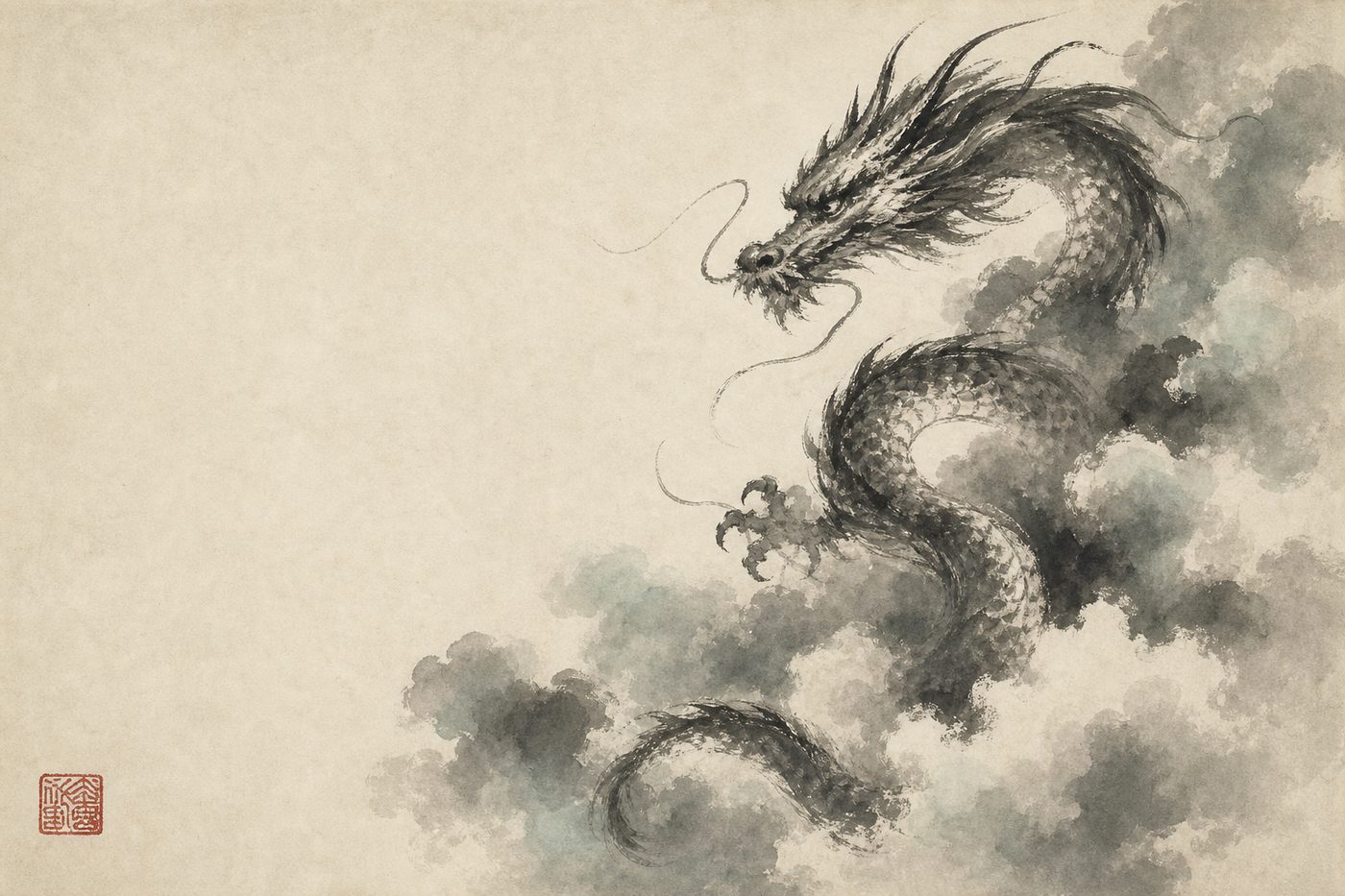
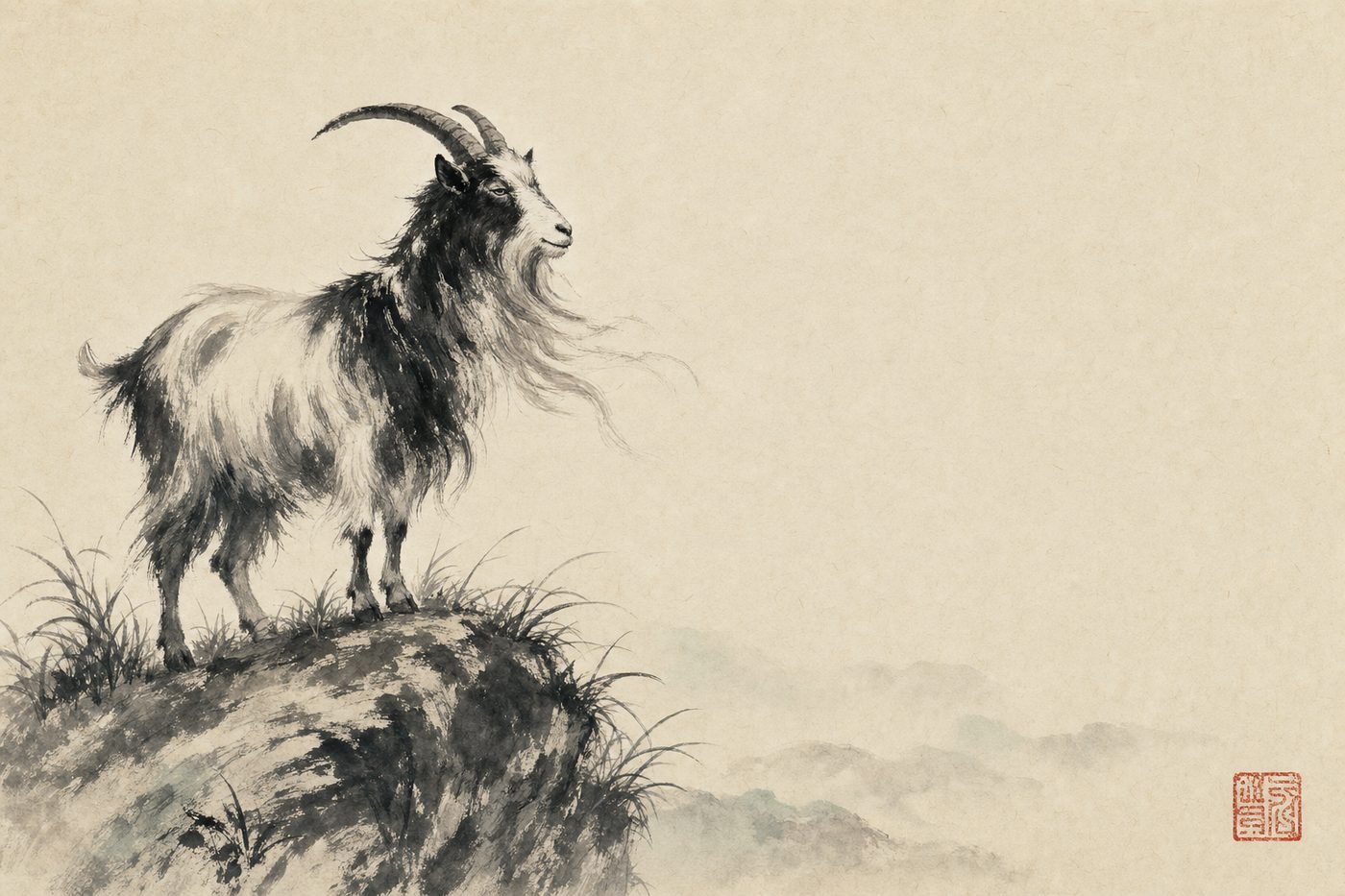
How the wheel reads this pair
Chinese zodiac verdicts are positions, not vibes. The Dragon holds position 5 on the twelve-branch wheel (branch chén) and the Goat position 8 (branch wèi); their verdict follows from that geometry alone.
- Verdict
- Good match
- Bond
- No formal bond
- Branches
- chén 辰 + wèi 未
- Fixed elements
- Earth + Earth
The Dragon and the Goat, side by side
Love and romance
The attraction runs both ways along the same axis, scale meeting sanctuary. The Dragon has bought everything its magnitude can buy and walks into the Goat's made world, the light arranged, the table unhurried, the hour somehow softer than the hour outside, and finds the one luxury that was never for sale to it: ease. The Goat, who runs on security the way other signs run on ambition, meets confidence at imperial scale, walls that do not wobble, a partner whose certainty covers two. Each offers the exact thing the other cannot manufacture, and the early months have the quality of two exiles discovering the other holds the missing passport.
The friction is volume. The Dragon lives at parade pitch, announcements, arrivals, enthusiasms the size of provinces, and does not distinguish celebratory noise from the other kind; the Goat reads every decibel as weather and quietly builds windbreaks. Meanwhile the Goat's language of hints, atmospheres, and adjusted temperatures broadcasts on a frequency the Dragon's receiver was never fitted for. One partner is too loud to be lived with comfortably and the other too quiet to be heard at all, and both are being entirely themselves.
Trust
Neither sign betrays; the erosion here is the reassurance economy. The Goat needs warmth said, regularly, in words, and the Dragon assumes the palace itself is the love letter, the walls, the security, the scale, all of it built partly for her, so saying it aloud strikes the Dragon as reading the deed to someone already living in the house. Meanwhile the Goat manages its discontents the way it manages a room, invisibly, absorbing what it cannot rearrange, and a Dragon receives no signal it did not receive at proclamation volume. Years can pass with one partner performing devotion at scale and the other quietly starving inside it.
The treaty is an audience and a sentence. The audience is a standing hour with no court, no guests, no announcements, where the Dragon asks and then, hardest of all, waits, because the Goat discloses at the pace of trust and not of interrogation. The sentence is the Dragon's, one warm thing said plainly and often, monuments being many things but never sentences. In return the Goat names one real request a week in words, unhinted, because the Dragon will grant almost anything it can actually hear.
Communication
A proclamation dialect and a weather dialect, in daily translation.
| The Dragon | The Goat | |
|---|---|---|
| A feeling | Announced | Implied |
| A request | Issued | Hinted |
| A room | A stage | A shelter |
| Trouble | Thunder, soon over | A long change in the weather |
In fair weather the mismatch barely shows, because the Dragon loves an appreciative audience and the Goat genuinely appreciates. In conflict it is the whole conflict. The Dragon's thunder, brief and mostly harmless by its own accounting, is a hurricane by the Goat's, and the Goat's response, softer voices, rearranged evenings, a certain new formality, is invisible to a sign that only reads announcements. The working rules are two. The Dragon caps the volume indoors, storms rated and the big ones taken outside, because the garden cannot be shouted at and remain a garden. And the couple keeps a standing fair-weather conversation, fifteen minutes, weekly, before anything is wrong, since the Goat will never convene one during the storm and the Dragon will never notice one is needed.
Marriage and family
Run well, the household is the rarest kind, grand and warm at once. The Dragon supplies the walls, the means, the occasions, the family's public confidence; the Goat makes the interior worth defending, the home the Dragon actually wants to return to, the one room in the empire where nothing has to be performed. Guests notice such houses immediately. Children raised in them get scale from one parent and softness from the other and are luckier than they will know for decades.
Two clauses keep it standing. The first is the budget, settled by name: the Goat's comfort spending is not decoration but the infrastructure of the household's actual life, and it gets a named line beside the Dragon's spectacle line, neither moralized. The second is the calendar: the Dragon's court could fill every evening, and the Goat attends the occasions that matter, hosts the small ones it curates beautifully, and declines the rest without the declining being read as disloyalty. A Dragon that honors the garden's hours gets a home no palace ever had.
Work and money
Professionally the casting is the empire and its design department. The Dragon ships at scale, opens the markets, raises the buildings; the Goat gives the shipped thing its taste, its human texture, the quality that makes strangers trust it. Both carry Earth, and it shows in the shared instinct for permanence, nothing disposable, nothing cynical, work meant to outlast the quarter. Firms that pair Dragon scale with Goat finish produce the rare product that is both large and loved.
The frictions are studio frictions. Deadline thunder flattens the exact process that makes the Goat valuable, so schedules get set with the Goat's real pace priced in, not discovered. Critique from the throne kills the work faster than any competitor, so the Dragon learns patron manners, the brief clear at the start, the praise specific, the correction private and delivered once. And the Goat must never become the office's unpaid weather system, absorbing every mood the empire generates; the role gets named, the hours get protected, and the absorbing stops being free.
Where it breaks
The failure is the garden dying politely. The Goat, shouted at once too often or thanked once too rarely, does not fight; it withdraws by degrees, the table simpler, the evenings quieter, the warmth redirected to children, friends, the studio, everywhere the weather is survivable. The Dragon, finding home gone formal, performs elsewhere more and returns less, and reads its own absence as the empire's demands rather than the marriage's temperature. Nothing is announced, which guarantees the one sign that only hears announcements misses all of it.
The endings are true to type. The Dragon's is public and staged, the narrative commissioned before the door closes; the Goat's has usually been complete for a year before it is visible, a departure so gently arranged the Dragon initially mistakes it for redecorating. None of it is fate. The kinship is real, two Earth natures wanting the same permanence, and the repairs are almost embarrassingly cheap: the volume capped, the warm sentence said, the garden funded and scheduled like the infrastructure it is, and the one hour a week with no court in the room.
How to fix it
- 1
Hold the private audience. One standing hour a week, no guests, no announcements, where the Dragon asks and waits. The Goat discloses at the pace of trust, and the marriage lives on what surfaces there.
- 2
Say the warm sentence. Monuments are not sentences. One plain, spoken kindness a day costs the Dragon nothing and is the entire currency the Goat runs on.
- 3
Fund the garden by name. The Goat's comfort line is household infrastructure, not decoration, and it sits in the budget beside the Dragon's spectacle line, neither one moralized.
- 4
Cap the thunder indoors. Storms get rated, the big ones happen outside the house, and corrections happen in private, once. A garden cannot be shouted at and remain a garden.
Share this pairing
The card carries both portraits and the verdict.
Questions people ask
Are Dragon and Goat compatible in the Chinese zodiac?
A good match, honestly graded. The branch system draws no formal line between them, no trine, no secret friend, no clash, and both signs carry the fixed element Earth, which tradition reads as kinship without guarantees. Real sympathy between two builders of permanence, with the volume and reassurance gaps left for the couple to engineer.
Why is there no formal bond between Dragon and Goat?
Position, as always. The Dragon holds seat 5 on the wheel and the Goat seat 8. Three seats apart is not a trine (those sit four apart), not an opposition, and not one of the six harmony or six harm listings, so the pairing is read through fixed elements instead, where shared Earth favors it.
What problems do Dragon and Goat couples have?
Volume and visibility. One lives at parade pitch and only hears announcements; the other speaks in hints and absorbs its discontents invisibly, so real trouble goes unheard in both directions. The standard fixes are a weekly private hour, warmth said plainly in words, the comfort budget funded by name, and the thunder capped indoors.
Year of the Dragon 龙
Personality, years, matches, and where the sign comes from.
Year of the Goat 羊
Personality, years, matches, and where the sign comes from.
← All 66 zodiac pairings, with verdicts
Signs turn over at Chinese New Year, not January 1 — a January or February birthday can belong to the previous animal. Check a birthday on the lunar calendar →
Sources & further reading
By Julian 祝君瑜 · verdict derived from the twelve-branch system, not assigned by hand · updated 2026-07-17