Rabbit and Goat Compatibility: The Zodiac's Gentlest Best Match
San he — both belong to the Wood trine, signs four apart that pull in the same direction.
Rabbit and Goat is the gentlest best match in the Chinese zodiac. Both signs belong to the Wood trine, the san he alliance they share with the Pig, and tradition rates the pairing among the warmest on the wheel: two temperaments that measure success in comfort given, tables filled, and quiet kept. The endorsement is real and so is the one hazard, which is that a household this allergic to conflict can go years without saying a necessary thing. Both halves are covered below.
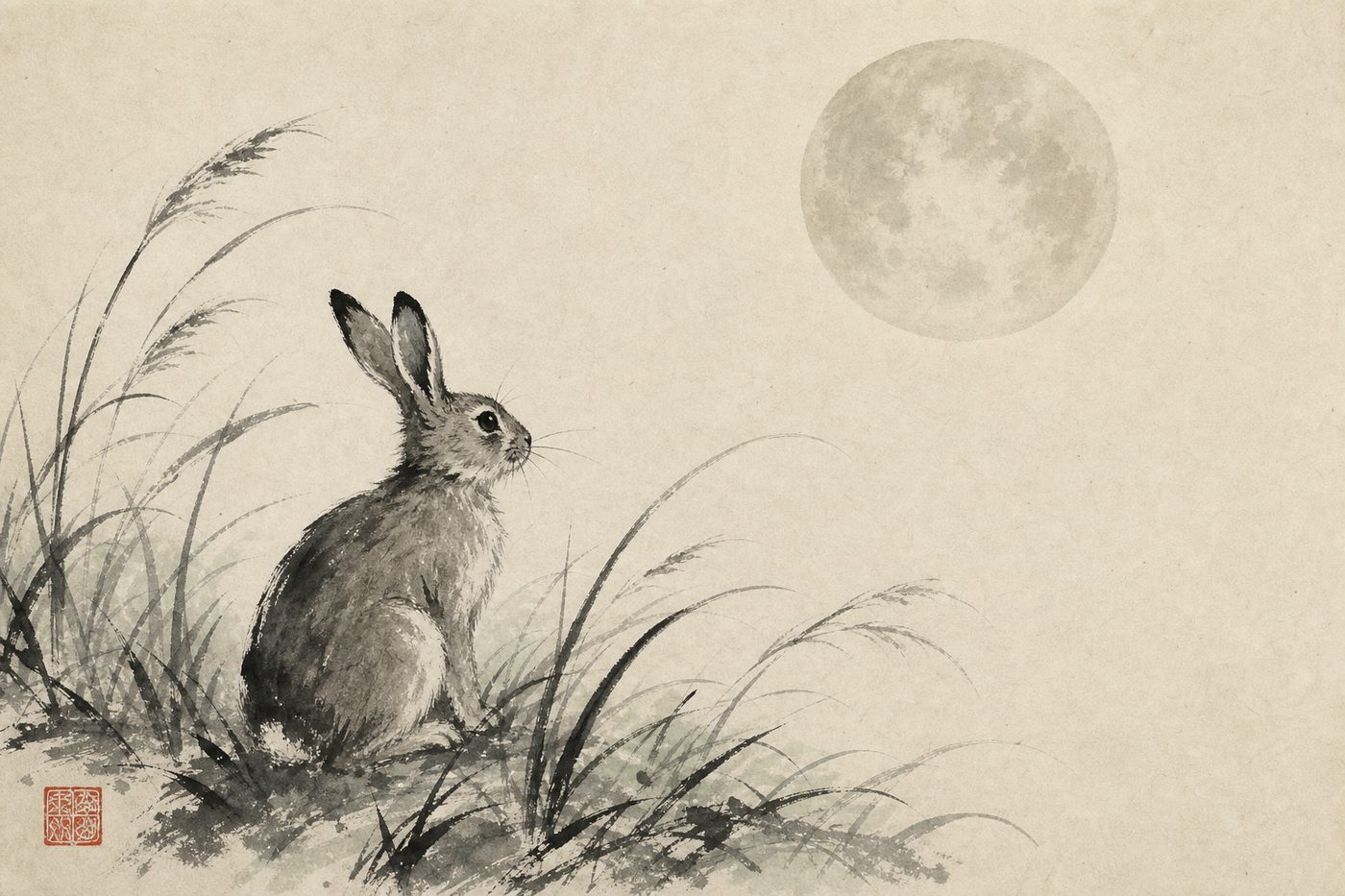
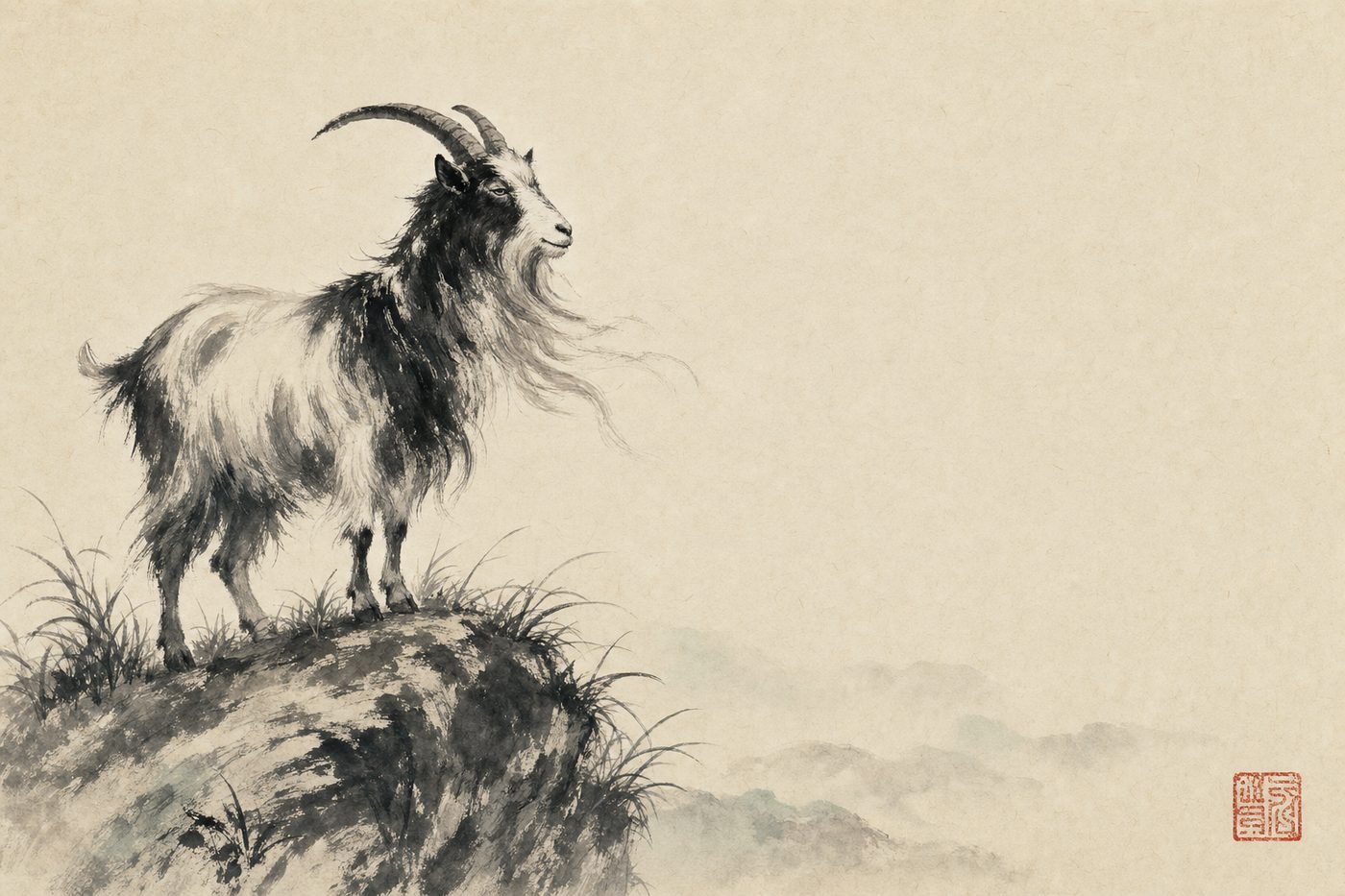
How the wheel reads this pair
Chinese zodiac verdicts are positions, not vibes. The Rabbit holds position 4 on the twelve-branch wheel (branch mǎo) and the Goat position 8 (branch wèi); their verdict follows from that geometry alone.
- Verdict
- Best match
- Bond
- San he · trine allies
- Branches
- mǎo 卯 + wèi 未
- Fixed elements
- Wood + Earth
The Rabbit and the Goat, side by side
Love and romance
Most couples spend their first year negotiating how much peace a home should contain. These two arrive pre-agreed: as much as possible, at all times, ideally with good lighting. The Rabbit, the cycle's diplomat, spends its life managing other people's sharp edges; the Goat, the cycle's artist in residence, spends its life upholstering them. Each recognizes the other on sight, the way expatriates recognize a countryman abroad, and the relief is half the romance.
What outsiders miss about this pairing is that the gentleness is not blandness. Both signs feel deeply and notice everything; they simply refuse to convert feeling into noise. Courtship between them runs on a thousand calibrated kindnesses, the tea appearing before it was asked for, the guest list quietly edited, the difficult relative rerouted with such grace that nobody registers the maneuver. It is a love affair conducted in logistics, and to the two people fluent in that language, it is the most articulate courtship on the wheel.
Trust
Trust comes easily and runs deep, because neither sign has predator instincts. The Rabbit does not interrogate; the Goat does not audit; both extend good faith as a default setting and are, in this pairing, finally correct to. Infidelity and betrayal sit far down the list of this couple's actuarial risks, and both partners know it, which produces a baseline calm that harder pairings spend decades trying to manufacture.
The soft spot is honesty of a different kind: the unsaid. Both signs manage discomfort by absorbing it, and each is skilled enough at surface-reading to know when the other is absorbing, which creates the pairing's signature loop: two people, each aware the other is quietly unhappy about something, each declining to raise it first, each grateful the other didn't. The trust problem here is never "what are you hiding from me." It is "what are we both politely hiding from the room," and the answer compounds.
Communication
Between themselves, in fair weather, they are effortless: two readers of atmosphere who rarely need the second sentence. The Rabbit's advice arrives as a question, the Goat's need arrives as an aesthetic, and both messages get through, which in most pairings would take a translator. Company manners never drop because for these two they are not manners; they are the native gait.
The system fails exactly where both signs fail alone, at the confrontation neither will start. A grievance in this household is handled like a stain on good upholstery: covered with a cushion, angled away from the light, agreed by unspoken treaty not to exist. The Rabbit postpones hard conversations past their expiry date; the Goat rearranges the furniture around them. Nothing is ever said and, unlike louder pairings, nothing explodes either; the unsaid simply accrues, at compound interest, in the walls. The fix is unromantic and non-negotiable: a standing hour with an agenda, because spontaneity will never once choose the difficult topic.
Marriage and family
The household is the pairing's masterpiece and everyone who visits says so. Wood-trine houses are the ones other signs go to in order to remember what calm feels like: the guest room actually comfortable, the meals actual occasions, the children raised in a home where voices are never raised and taste is absorbed like a second language. Hospitality is not a performance here; it is the family's shared art form, and the marriage is its longest-running exhibition.
The practical weakness is executive function. Neither partner naturally owns the hard, ugly decisions, the insurance claim, the confrontation with the contractor, the no that must be said to a relative, and each would honestly rather the other did. In the classic failure, decisions get outsourced to whoever is nearest and sturdiest outside the marriage, a parent, a sibling, an accountant, which works until it doesn't. The successful version splits the unpleasant portfolio explicitly, by name, and treats the split as lovingly as the linens: you fight the airline, I fight the landlord, and neither of us waits for the other to volunteer.
Work and money
Professionally the pairing shines anywhere the product is care: design, hospitality, teaching, medicine's gentler wings, any field where the work is making an experience humane and the details invisible. A Rabbit-Goat team runs the most harmonious studio on the street, staff retention like a family, clients who never leave, and taste, which cannot be hired, in double supply.
Its commercial weakness is armor. Neither partner is built for the brawl: the collection call, the hardball negotiation, the competitor who does not observe the decencies. Wood-trine ventures classically underprice their work, over-accommodate their worst clients, and avoid the confrontation that would fix both. The traditional prescription is to borrow a spine on retainer, a blunt accountant, a lawyer, a Rooster-shaped friend, and let the borrowed armor do the ugly conversations while the partners do what no one else on the wheel can.
Where it breaks
Nothing dramatic ever breaks here, which is precisely the danger. The failure mode is sediment: years of unsaid grievances and unmade decisions settling silently into the foundations, while the surface stays photogenic. One partner absorbs a resentment rather than voice it; the other, expert in atmospheres, senses the absorption and absorbs its own response; and the household's celebrated peace becomes, by imperceptible degrees, a museum of things not said. Visitors still call it the calmest house they know. Both residents know the calm has begun to cost more than it pays.
The late stage has a signature: the parallel retreat. Rabbit and Goat do not fight; they fade, each withdrawing into a private garden of unstated disappointment, still courteous, still hosting beautifully, no longer quite home to each other. It is entirely preventable, and the prevention is one habit, kept before it is needed: say the small true thing this week, while it is still small, and let the house be five percent less peaceful and fully lived in.
How to fix it
- 1
Keep a standing hour with an agenda. Neither of you will ever spontaneously raise the hard topic, so the calendar has to. Fifteen minutes weekly, in fair weather, one true thing each.
- 2
Split the ugly portfolio by name. You fight the airline, I fight the landlord. Unassigned confrontations get outsourced or postponed, and both options bill the marriage later.
- 3
Buy armor, don't grow it. A blunt accountant, a lawyer, one frank friend consulted on price and conflict. Borrowed spine preserves the pairing's actual genius, which is care.
- 4
Let the peace crack, slightly, on purpose. A five percent less serene house, where small grievances get said the week they happen, outlasts a perfect one where nothing is ever said at all.
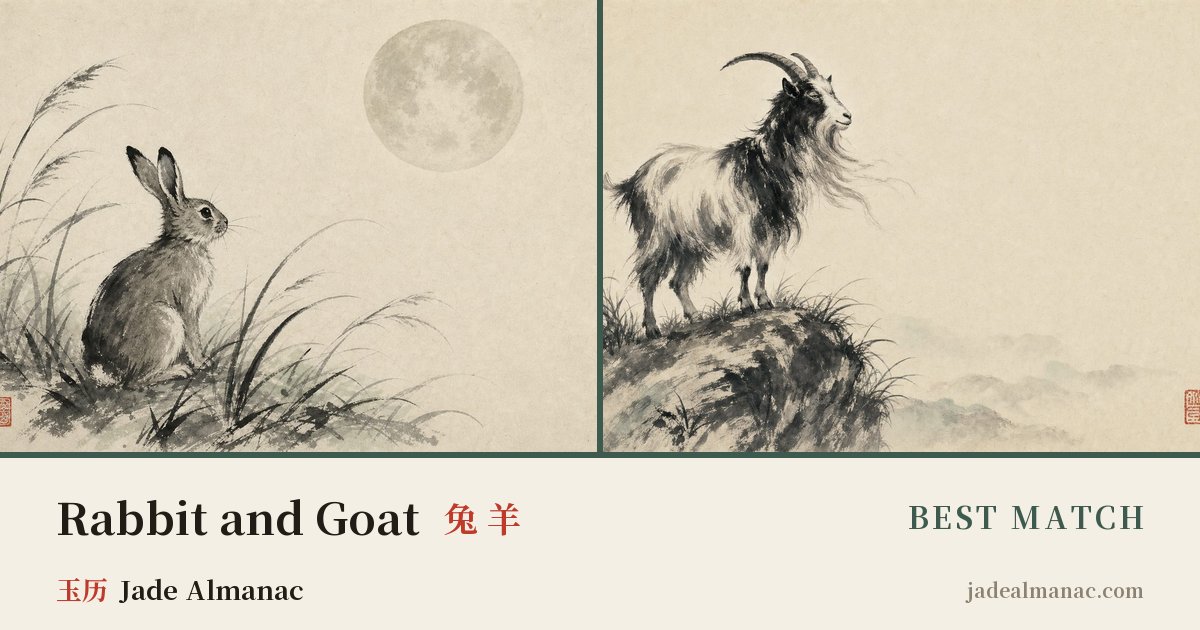
Share this pairing
The card carries both portraits and the verdict.
Questions people ask
Are Rabbit and Goat compatible in the Chinese zodiac?
Yes, this is one of the system's best matches. Rabbit and Goat sit four positions apart on the wheel, which places them in the same san he trine, the Wood trio they share with the Pig. Tradition reads the Wood trine as the cycle's gentle circle, and rates its pairings among the warmest available.
Why are Rabbit and Goat considered a best match?
The verdict is positional. Signs four apart form trines with a shared character, and both of these belong to the Wood trio. Temperamentally the match is two conflict-averse, comfort-building signs that want the same home, which is why the traditional endorsement holds up in practice.
What problems do Rabbit and Goat couples have?
One, chiefly. Neither partner will start a necessary confrontation, so grievances and hard decisions get absorbed instead of aired and quietly compound. The standard advice is structural, a regular scheduled talk and an explicit split of the unpleasant decisions, because spontaneity will never choose the difficult topic in this house.
Who completes the Wood trine with Rabbit and Goat?
The Pig, the trio's most generous heart, paired here as Rabbit and Pig and Goat and Pig. The Rabbit's other designated ally is the Dog, its secret friend; the Goat's secret friend is the Horse. The Goat's clash is the Ox, and the Rabbit's is the Rooster.
Year of the Rabbit 兔
Personality, years, matches, and where the sign comes from.
Year of the Goat 羊
Personality, years, matches, and where the sign comes from.
← All 66 zodiac pairings, with verdicts
Signs turn over at Chinese New Year, not January 1 — a January or February birthday can belong to the previous animal. Check a birthday on the lunar calendar →
Sources & further reading
By Julian 祝君瑜 · verdict derived from the twelve-branch system, not assigned by hand · updated 2026-07-12