Ox and Dragon Compatibility: The Furrow and the Parade
No formal bond, and both carry the fixed element Earth — kinship without guarantees.
Ox and Dragon sit three seats apart on the wheel, and the branch system draws no formal line between them: no trine, no secret friend, no clash, no harm. The verdict comes from the five-element layer, and it is friendly, because both signs carry the fixed element Earth, which tradition reads as kinship without guarantees and grades good. The honest gloss is architectural. These are the wheel's two most serious builders, one of whom builds by furrow, season over season, in silence, and one of whom builds by proclamation, at scale, in front of an audience, and the question between them is never whether the estate gets built. It is whose version of building counts.
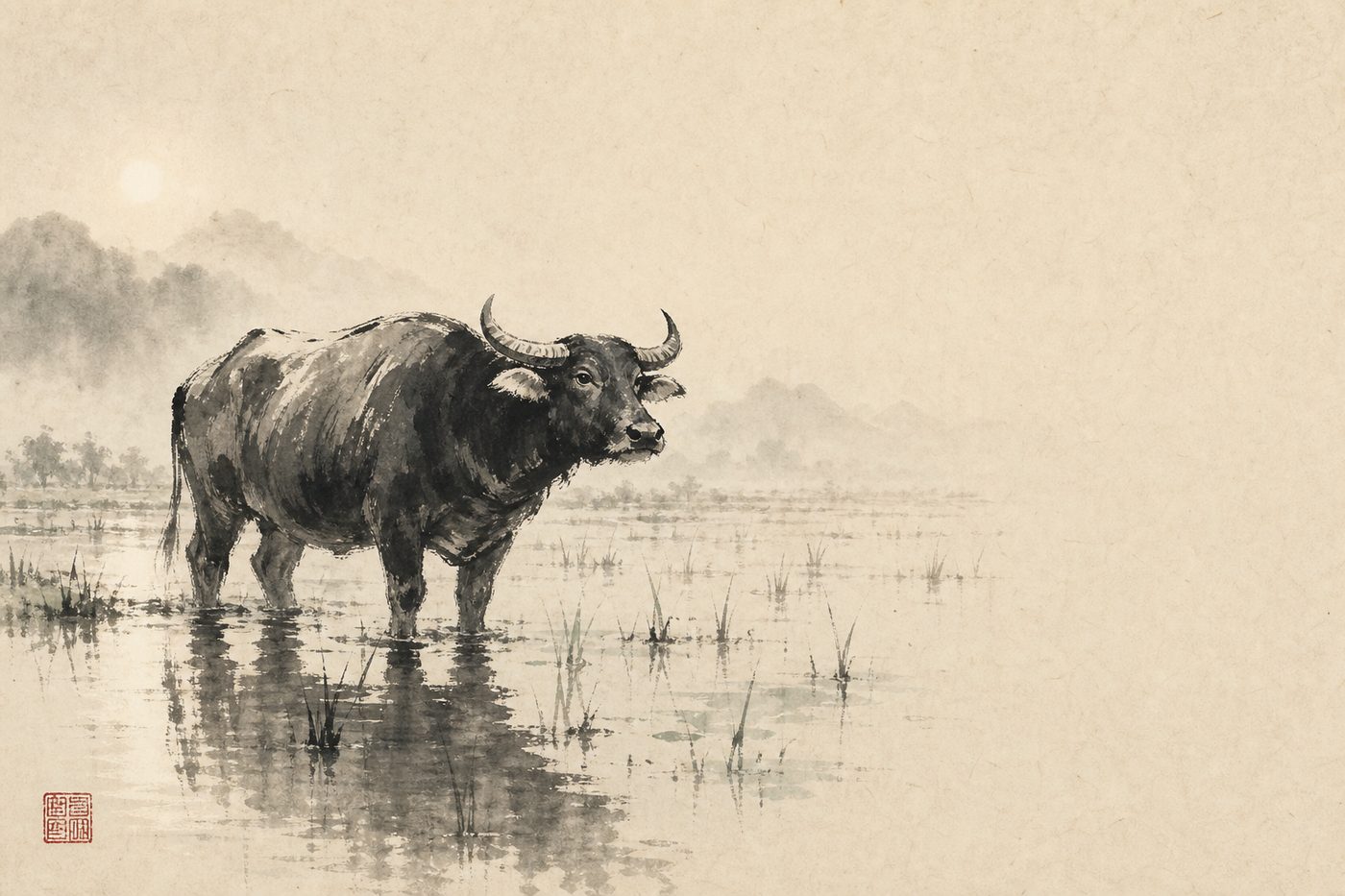
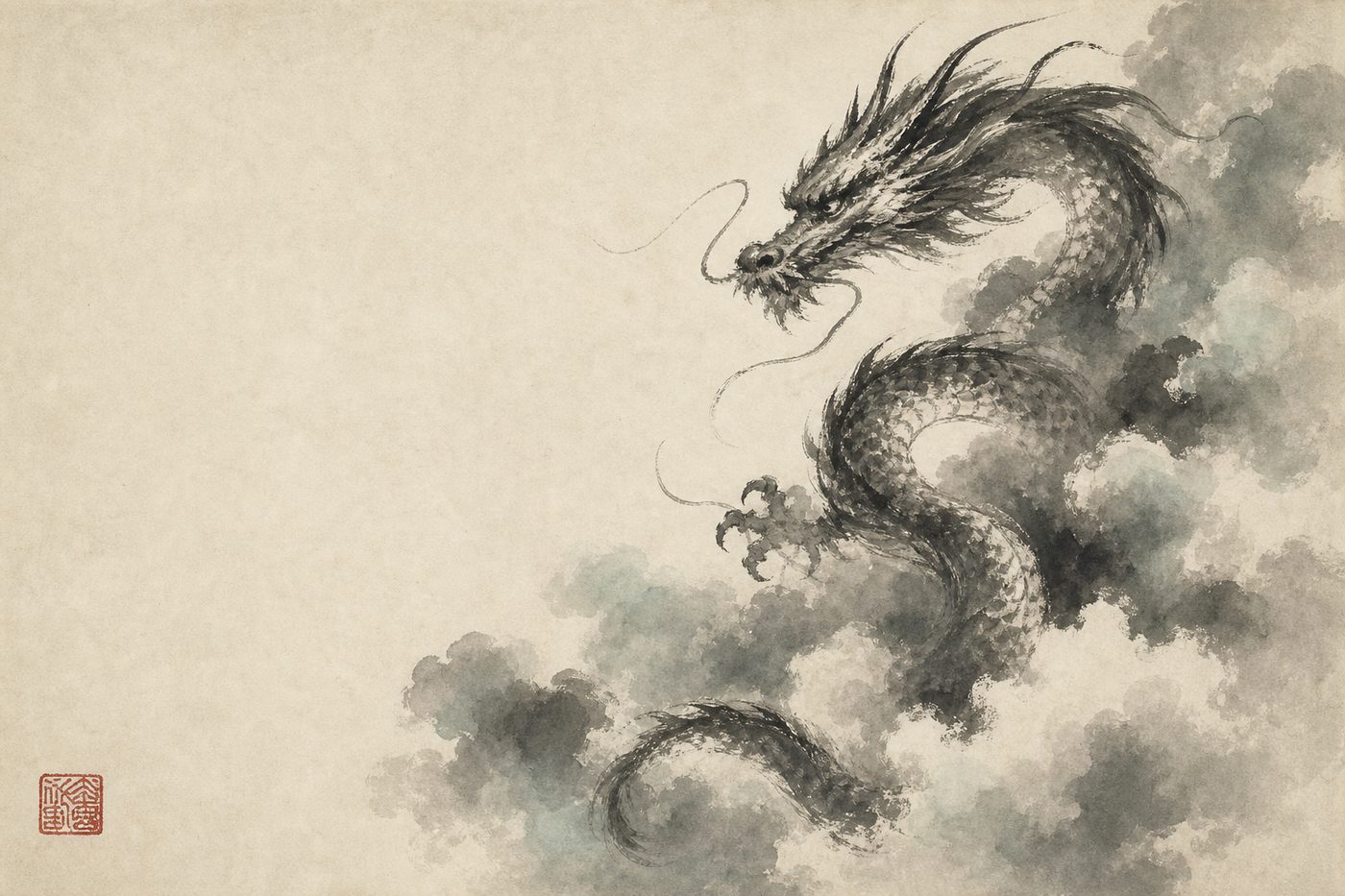
How the wheel reads this pair
Chinese zodiac verdicts are positions, not vibes. The Ox holds position 2 on the twelve-branch wheel (branch chǒu) and the Dragon position 5 (branch chén); their verdict follows from that geometry alone.
- Verdict
- Good match
- Bond
- No formal bond
- Branches
- chǒu 丑 + chén 辰
- Fixed elements
- Earth + Earth
The Ox and the Dragon, side by side
Love and romance
The attraction is mutual relief, though neither would use the word. The Dragon spends its life between the dazzled and the doubtful, applause it cannot bank, skepticism it cannot silence, and the Ox is neither: a witness that watches what actually gets built and believes ground. For a sign performing at legend volume, a partner who counts deeds is oxygen of a rarer grade. The Ox, meanwhile, has plowed for years among people who thanked everything but the labor, and the Dragon recognizes work at scale because scale is its native unit; it walks the Ox's fields once and calls them an empire, which is the first time anyone said aloud what the Ox had privately concluded.
The friction is tempo and theater. The Dragon announces the barn at a banquet before the ground is cleared; the Ox clears the ground, raises the barn across two years, and mentions it never. Each reads the other's habit as malpractice, the announcement as harvest spent before it exists, the silence as a treasury refusing to mint, and neither is wrong about the other's risk. The pairing's future turns on whether those two audits become a division of labor or a war.
Trust
Fidelity is not the issue; both signs keep faith as a matter of identity. The trust war is bookkeeping. The Dragon speaks at aspiration volume, plans announced as accomplished, drafts issued as decrees, because for a Dragon announcement is a construction technique, scaffolding the future in public so that it has to be built. The Ox files every announcement word for word in the permanent ledger and audits it against delivery, because for an Ox the spoken word is a foundation, and foundations that shift condemn the house. The Dragon experiences the audit as doubt inside its own palace, the one place doubt is unbearable; the Ox experiences the shortfall as a crack it is obligated to record.
The treaty that works is labeling. The Dragon marks, out loud, which proclamations are load-bearing, and delivers those with the Ox's own exactness; everything else is declared weather, legend under construction, and the Ox agrees to keep weather out of the ledger. In return the Dragon submits the load-bearing list to the audit without offense, because a Dragon that exempts itself from all counting eventually teaches the one witness it valued to stop believing ground.
Communication
The dialects are proclamation and verdict, and the marriage runs on the exchange rate.
| The Ox | The Dragon | |
|---|---|---|
| A plan | Committed once, finished | Announced, then improvised |
| Progress | Counted privately, in furrows | Celebrated publicly, in milestones |
| Praise | Pleasant, faintly suspect | Structurally necessary |
| A setback | Continue, slower | Relaunch, bigger |
In fair weather the mismatch is a working machine, the Dragon narrating and the Ox delivering. In dispute it decides everything: the Dragon escalates at volume, positions publicized, allies summoned, and the Ox does not escalate at all, it concludes, and a concluded Ox is not arguing, it has finished. Two rules keep the channel alive. The Dragon brings real grievances to a private table while they are still drafts, because the Ox can absorb any complaint that was not staged for an audience. And the Ox says its verdicts out loud while they are still opinions, because the Dragon can answer anything except a silence that turns out, years later, to have been a sentence.
Marriage and family
Run properly, the household is an estate in the old sense. The Dragon supplies the scale, the ambition, the social gravity, the family's flag; the Ox supplies the ground, the income that arrives, the roof that does not leak, the reserve that makes the flag more than fabric. Such houses feel impressive and solid at once, which is rare, and is exactly the two work products laid side by side. Children raised in them inherit a useful double instinct, that things should be dreamed at scale and finished to the stud.
The budget fight is classic and dies by naming. To the Ox, the Dragon's spectacle line, the hosting, the launches, the stage, is decoration; to the Dragon it is infrastructure, the visible confidence that makes the family's credit real. Fund both lines by name, after the reserve, and the moral argument ends. The second clause is the relaunch rule: nothing new gets proclaimed until the last proclamation has a roof on it. Dragons ship openings and Oxen ship completions, and the estate needs one of each, in that order, one build in flight at a time.
Work and money
Professionally the casting is among the wheel's cleanest: the Dragon raises the capital, the vision, and the room's temperature, and the Ox builds the thing the room was promised. Both carry Earth, and it shows in what they respect, results with weight, assets that outlive their founders, nothing clever that evaporates. Ventures that sequence them, Dragon opening and Ox completing, deliver what most partnerships only pitch.
Two clauses keep the office honest. Credit first: an Ox will build uncredited for years and invoice the resentment all at once, so the unglamorous half gets named from the stage, in the Dragon's own voice, telling the court exactly which furrows the palace stands on. Scope second: a Dragon improves plans mid-build, at volume, and every improvement costs the Ox a poured foundation, so changes freeze at ground-break and collect for the next build, where they are welcome at any size.
Where it breaks
The slow failure is the ledger against the legend. The Dragon, feeling audited in its own palace, begins ruling around the Ox, announcements unchecked, spending unexplained, precisely because explanation feels like submission; the Ox absorbs each unkept proclamation into the permanent record and keeps working, which the Dragon reads as peace. It is not peace, it is accrual. Oxen do not warn. They conclude, and the conclusion arrives with the archive attached, years of exact quotations the Dragon does not remember saying, delivered in the flat tone of a foreclosure.
The endings match the natures, the Dragon's staged and public, the Ox's final and irreversible, and it is the second one to fear, because a concluded Ox does not reopen the case. None of it is fate. Both signs carry Earth, both wanted the same permanence with their names on it, and the treaties are cheap against what they insure: promises labeled, the load-bearing list audited without offense, grievances tabled as drafts, one build in flight, and the furrows credited aloud while the credit still buys something.
How to fix it
- 1
Label the load-bearing promises. The Dragon marks which announcements are commitments and delivers those exactly; the rest is declared weather, and the Ox agrees to keep weather out of the ledger.
- 2
Credit the furrows from the stage. The Ox never asks and always counts. Naming the labor aloud, in company, is the cheapest payment the Dragon will ever make.
- 3
Fund the flag and the granary by name. Spectacle is the Dragon's infrastructure and reserve is the Ox's, so both get budget lines and neither gets a moral lecture.
- 4
One build in flight. Nothing new is proclaimed until the last thing has a roof, and mid-build improvements wait for the next build. Openings are the Dragon's craft; completions are the marriage's.
Share this pairing
The card carries both portraits and the verdict.
Questions people ask
Are Ox and Dragon compatible in the Chinese zodiac?
A good match, honestly graded. The branch system draws no formal line between them, no trine, no secret friend, no clash, and both signs carry the fixed element Earth, which tradition reads as kinship without guarantees. Real sympathy between two builders, with the pace and credit frictions left for the couple to engineer.
Why is there no formal bond between Ox and Dragon?
Position, as ever. The Ox holds seat 2 on the wheel and the Dragon seat 5. Three seats apart is not a trine (those sit four apart), not an opposition, and not one of the six harmony or six harm listings, so the pairing is read through fixed elements instead, where shared Earth favors it.
What problems do Ox and Dragon couples have?
Tempo and bookkeeping. One announces at aspiration volume and improvises; the other commits once, finishes, and files every spoken word in a permanent ledger, so proclamations get audited and audits feel like doubt. The standard fixes are promises labeled load-bearing or weather, labor credited out loud, both budgets funded by name, and one build in flight at a time.
Year of the Ox 牛
Personality, years, matches, and where the sign comes from.
Year of the Dragon 龙
Personality, years, matches, and where the sign comes from.
← All 66 zodiac pairings, with verdicts
Signs turn over at Chinese New Year, not January 1 — a January or February birthday can belong to the previous animal. Check a birthday on the lunar calendar →
Sources & further reading
By Julian 祝君瑜 · verdict derived from the twelve-branch system, not assigned by hand · updated 2026-07-17